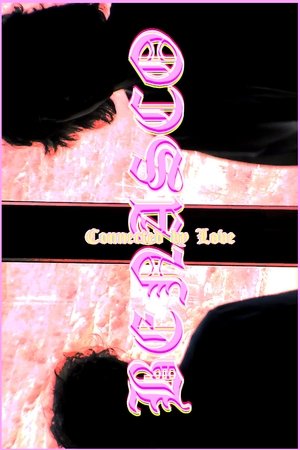
'Is it a plaisir' is an experimental short film that explores femininity and the body as a sharp territory, crossed by the tension between desire and imposition. Through symbolic, sound and visual saturation, the film acts from pleasure (plaisir), revealing a liberation that emerges in the midst of excess, where intensity and lightness, dark and light, intertwine, collide and converge.
Untitled Fall '95 takes the form of a wryly humorous video diary of an art school student (sharply played by Bag) in the midst of “finding herself” in New York City. We can see the diarist physically and emotionally evolving throughout her eight semesters in the Big Apple. Such onscreen “confessionals” stem from the first major example of reality TV, The Real World. Interspersed throughout are commercial-like vignettes that further critique what it’s like to live in the world today. In Untitled Fall '95, Bag displays a profound self-awareness that evokes empathy on behalf of the viewer, despite her work’s glaring artificiality.
This isn’t a film. It’s a leaked ritual. Somewhere between analog prayer and digital disease, a collection of gestures tried to become human again. They failed. Children orbit the fence like insects around an electric hymn. A figure holds a violin but never plays — his silence is louder than the sound. The man in the branches hasn’t fallen in years. The killer appears, or doesn’t — but you’ll feel him beneath the cuts, mouthing things you’ll wish you didn’t understand. There are bodies, sometimes clothed in flesh, sometimes not. There is scripture, mangled and reversed — not to mock it, but to unlock it. The voice speaks, but only when you stop listening. This is the place where lost footage remembers you. Where noise prays back. CHOKE ECHO was compiled under duress by 0xHamza in 2025 using material never meant to be rearranged. Watch it if you must — but it will keep watching after you close the tab.
Sagesse Celestiale
Minotavr II
The art of experiencing an individuals creativity and the way their minds form the movement to express themeselves;the best people will always help bring out your individual creativity and your way of expressing your mind.
These 131 video monitors stacked in a grid present simultaneous, continuous footage of the German artist during the last year of his life. In this filmed diary-project that Dieter Roth executed while convalescing in Reykjavik and Basel, we see him not only working in his studio but also while he sleeps, bathes, and uses the bathroom. It is nearly impossible to pay attention to only one video without becoming distracted by an unexpected sound or movement coming from one of the many other screens. Each monitor broadcasts a different point in the artist's daily routine, while the gridlike arrangement of monitors reinforces a sense of order and chronology.
The quixotic journey of Nam June Paik, one of the most famous Asian artists of the 20th century, who revolutionized the use of technology as an artistic canvas and prophesied both the fascist tendencies and intercultural understanding that would arise from the interconnected metaverse of today's world.
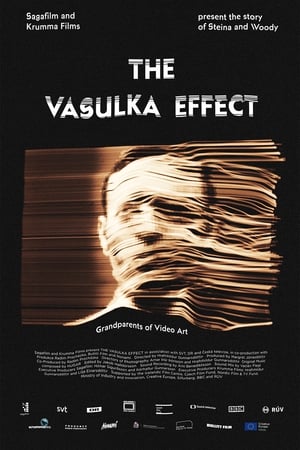
The opening of The Vasulka Effect couldn’t be more apt: Steina Vasulka addresses her husband Woody through various TV screens. He does the same and replies. A perfect image of the relationship between the free-spirited, groundbreaking pioneers of video art. After meeting in Prague in the early 1960s, they relocated from Czechoslovakia to New York, where they later founded The Kitchen, their legendary art and performance gallery.
Religions are like cactus. They look like flowers, but with bare blades.
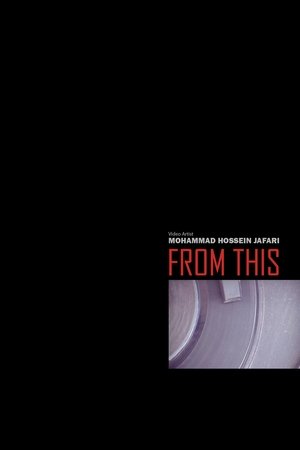
“From This” is a permanent cycle. This video intended to be timeless in its original action plan, to be played constantly in a particular place, with a TV, a player and a power generator.
A botany of cookie packaging.
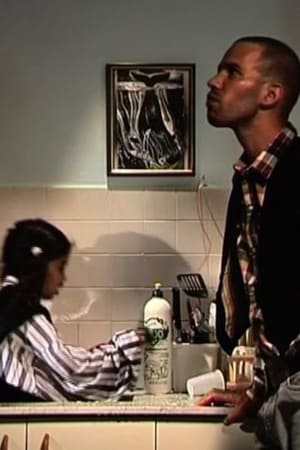
Guy Ben-Ner, one of Israel's foremost video artists, gained international recognition with a series of low-tech films, starring his family in absurdist settings carved out of their intimate spaces and their everyday surroundings. Many of his videos are inspired by screenplays for films, folktales and novels. Analyzing these literary and cinematographic passages allows him to exploit the conventions of film narrative: how to tell a story, captivate an audience through a tale, sustain a degree of tension and entertainment, and so on. At the same time, he corrupts the magic of fiction by openly showing us the entrails of everything he records, without worrying about revealing the tricks of the trade. A large part of his filmic oeuvre features a conglomeration of cinematic and literary references which the artist quotes, adapts or interprets. Ben-Ner self-referentially links the great themes and their literary, cinematic and artistic realization.
Enclosed by a civilised landscape, society reduces the problem of human survival to a minimum. The sidewalk, the fence, the clearing, demarcate a treaty between man and nature whereby neither one of us shall pass these thresholds lest we become subject to the law of the other.
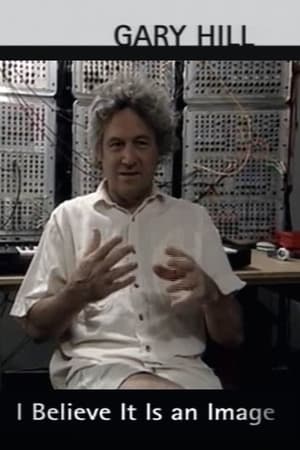
In this program video artist Gary Hill uses a number of his pieces to investigate otherness and ambiguity, dislocation of the senses, the boundary between words and comprehension, the physicality of text, and figurative interactivity.
From his photo-text canvases in the 1960s to his video works in the 1970s to his installations in the 1980s, John Baldessari’s (b.1931) varied work has been seminal in the field of conceptual art. Integrating semiology and mass media imagery, he employed such strategies as appropriation, deconstruction, decontextualization, sequentiality, and text/image juxtaposition. With an ironic wit, Baldessari's work considers the gathering, sorting, and reorganizing of information. “Something that is part of my personality is seeing the world slightly askew. It’s a perceptual stance. The real world is absurd sometimes, so I don’t make a conscious attempt, but because I come at it in a certain way, it seems really strange,” Baldessari says in this interview with Nancy Bowen. A historical interview originally recorded in 1979 and re-edited in 2003 with support from the Lyn Blumenthal Memorial Fund.
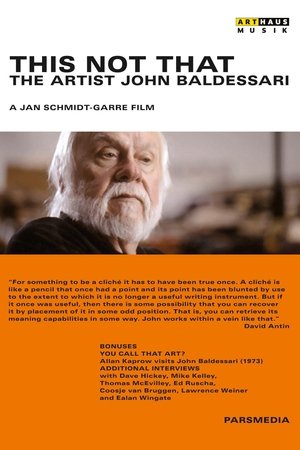
John Baldessari is one of the pioneers of conceptual art, which revolutionized contemporary art in the 1960s, and is still a profound influence on young artists today. The film shows John Baldessari in all aspects of his work: as an artist in his studio, with the technicians he collaborates with, as a teacher interacting with his students, as a passionate observer of the contemporary scene and visiting the Biennale in Venice as well as the Basel Art Fair. This film provides us with insights into the work of a radically modern-thinking artist and sharpens our perception of the often inaccessible world of contemporary art.
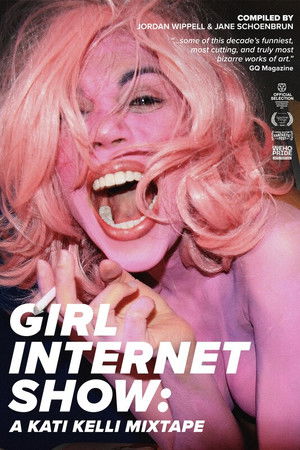
This feature-length “mixtape” curated by Jane Schoenbrun and Jordan Wippell reintroduces a stunning body of work by Kati Kelli, an outsider YouTube artist who ran “Girl Internet Show” before her passing in 2019.
Art Punks is a song directly attacking the antics of famous conceptual body artists of the day.
Kiart, Scoops, Yeepa, and the Queerbaiter take a trip to a different dimension (Huesca)