A 20-minute documentary film about the Kyrgyz people living by the Narym River.
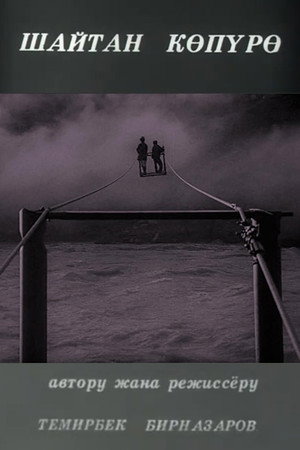
Life in a Kyrgyz aul (village) in the mountains connected to the rest of the world by a cable bridge, and the teenage boys who are constructing the rope of the bridge. A rope bridge which the locals call “The devil’s bridge” forms part of each and every event which takes place in a small village lost in the mountains of the Kyrgyz Republic. A platform driven by a huge winch which they have to pull with their own strength to cross the torrent is their only link with the outside world. But the director of the documentary wondered something else: “Does this bridge unite or does it actually separate?” Through the mist and over the thrashing waters, the inhabitants of the area glide along their ropes. A film, in the director’s own words, about ordinary people who live in an extraordinary place.
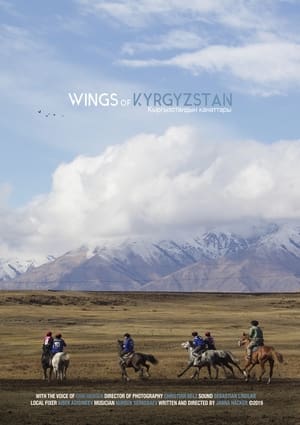
As „wings of men“ they became the faithful companion of a great nomadic nation thousands of years ago. Today, 28 years after the Soviet occupation, the little horse is an essential part of the cultural heritage and the search for identity of the modern Kyrgyz people. Based on its own story, a so called „good brown horse“ leads through the film and offers an insight of what it could mean to be „todays wings of men“. Told by a horse’s voice and through its eyes, this short film still is a documentary, but also a poetic journey to a nomadic culture.
One of the highest achievements of the new wave of Kirghiz cinema, which emerged in the mid-1960s. This story of a boy building sandcastles on the shores of the Issyk-Kul Lake becomes a documentary parable on the tensions between an artist and society.
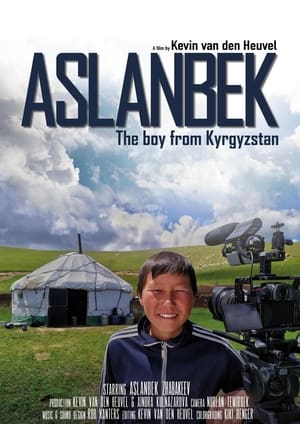
We get to meet Aslanbek—a teenage shepherd in the mountains of Kyrgyzstan. “Aslanbek” is a story exploring the dynamics of relationship between humans and animals, what we can learn from the mountains, and about dreams. In short, it's a story about our forgotten values.
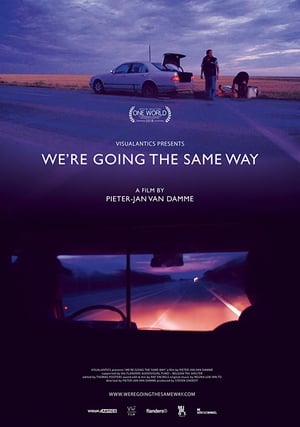
At the non-places of this world lie the struggles of nobodies, to improve, overcome and survive. Their struggles suffocate them, they forget to live. They dislocate them, bring them together and pull them apart. Father and son share simple dreams and a lifetime on the road. Along an unromantic Silk Route they try to make some come true. Searching for a more livable future they break apart. As working class heroes they accept their fate. The film examines the added value of honesty in our actions.
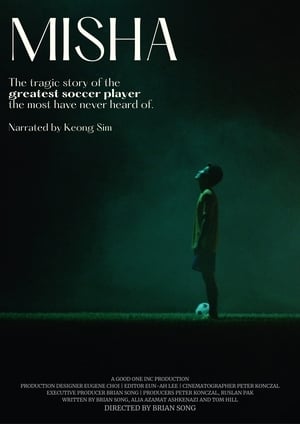
The tragic story of the greatest soccer player the most have never heard of.
A documentary film about the representation of the Kyrgyz culture in the USSR, as well as the reality of Kyrgyz dancers in Russia.
LEICA - A CENTURY OF VISION shows how the invention of the 35mm format revolutionized documentary photography. Featuring legendary and contemporary photographers the film reveals the camera's enduring power to capture history as it unfolds.
Tashkent: The End of an Era reconstructs the complex history of Tashkent by means of archive footage which has never been shown before and the testimonies of its inhabitants.
An audiovisual letter that connects an imagined Kyrgyzstan with the filmmaker’s inner world, blending personal illness, memory, and political echoes into a poetic reflection on distance and belonging.
The film story follows the international group of researchers who are performing the scientific expedition in a remote high altitude Kyrgyz village named Sary Mogol.
Kirgistan - Hochgebirgsland voller Schätze
Pokser TV short-film
Documentary feature about Kyrgyzstan, the home of the poet Tschingis Aitmatov and his characters, encounters with nomads, Kyrgyz traditions and the impressive scenery.
You will discover a mysterious world where monuments of the great civilizations of the past intertwined with the corners of unspoiled nature, you will conquer the highest peaks and fantastic caves, you will dive into the refreshing coolness of emerald lakes and living fairy tale medieval east. The roar of wind and the murmur of flowing mountain streams complement the playing of the Kyrgyz music, taking you in the wonderful world - Kyrgyzstan. Travel Documentary hosted by Vitaliy Podstrechniy and Yulia Podstrechnaya
In a remote village in Kyrgyzstan, the paths of an immigrant filmmaker from Belarus and a spirited ten-year-old local girl intersect, unfolding an intimate and visually rich cinematic journey. “I Lit the Fire!” premiered at Doclisboa 25, where it received an Honourable Mention from the Green Years jury — recognition for its poetic approach and strong visual storytelling. In 2026, the film received the Grand Prize for Best Film at Punto de Vista — International Documentary Film Festival of Navarra.
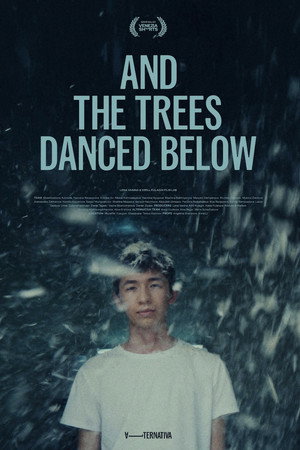
Uzbek youth confess their dreams, take flight, and negotiate the reality around them. Directed by Kirill Kulagin. In this documentary directed by Kirill Kulagin, Uzbek teenagers share their innermost dreams. And rather than talk of only fantasies, these dreams unearth the reality these youth face and how they negotiate with it. In Central Asia, talking about oneself can seem impolite. From an outsider perspective, emotions in this culture are only spoken about indirectly, lest they “air [their] dirty laundry in public.” But talking about dreams can break through this social barrier. For the film, Kulagin ran filmmaking labs with Uzbek youth to explore their real stories and real feelings surrounding dreams. These dreams served as jumping-off points to discuss deeper fears and desires, which turned into metaphors and a visual language based on how they navigated the boundaries of intimacy.
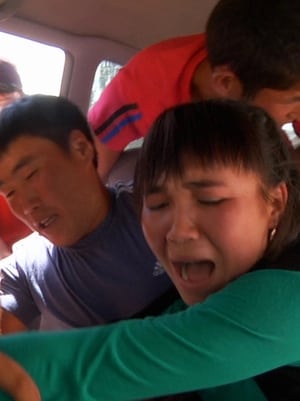
In the Issyk-Kul region of Kyrgyzstan, tradition is king. Polo's still played with a freshly killed goat and the men still marry their women the old-fashioned way: by abducting them off the street and forcing them to be their wife. Bride kidnapping is a supposedly ancient custom that's made a major comeback since the fall of Communism and now accounts for nearly half of all marriages in some parts.
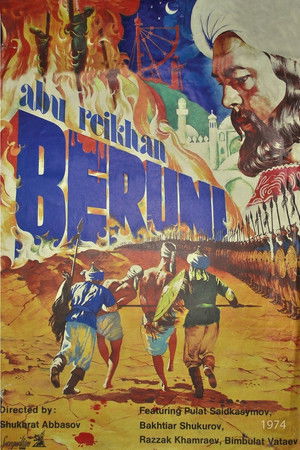
A biographical film about one of the greatest Medieval scientists and scholars, Al-Biruni.