Bas Jan Ader rides his bike into a canal in Amsterdam.
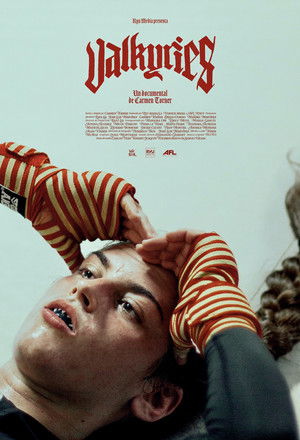
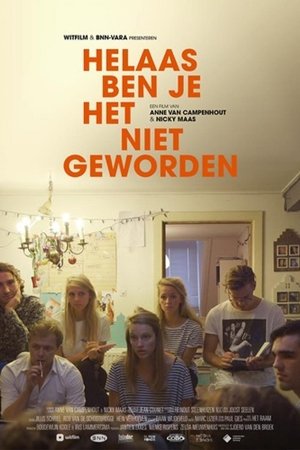
Documentary about four maffia-like friends based in Amsterdam.
You don't have to travel to faraway countries to observe wildlife, because the fauna of the big city also provides surprises every day. Contrary to expectations, many bird, mammal and insect species have adapted to the concrete jungle. They have become experts of the urban space. “My Wild Neighbors” takes a poetic look at the lives of animals in the city.
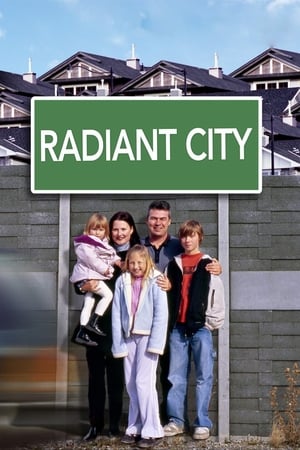
Since the end of World War II, one of kind of urban residential development has dominate how cities in North America have grown, the suburbs. In these artificial neighborhoods, there is a sense of careless sprawl in an car dominated culture that ineffectually tries to create the more organically grown older communities. Interspersed with the comments of various experts about the nature of suburbia
A short animated documentary exploring the immigration experience through the eyes of children learning how to swim with clothes on in the Netherlands.
Bruin has a new mission: to become a superstar, just like his idol Michael Jackson. Although singing is not his greatest talent, he starts - supported by friends and colleagues - to build a music career.
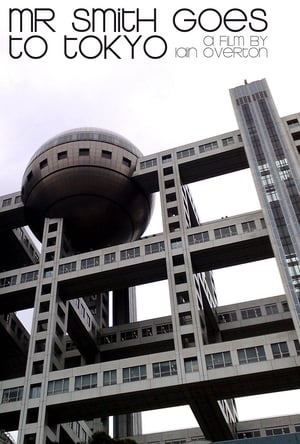
When Tomoko finds some messages for a 'Mr Smith' on a lost mobile phone, she finds herself on an 'Alice in Wonderland' journey through Tokyo's boulevards and back alleys. From the tyranny of symmetry in soaring office blocks - to buildings that look like space-ships, this creative documentary shows us the city's soul.
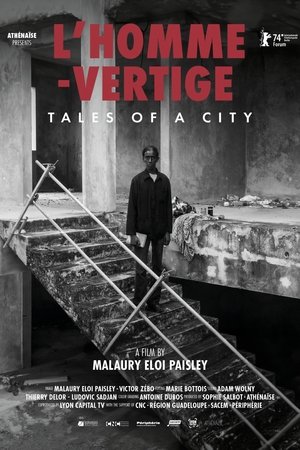
A patchwork of millions of lives, urban spaces are not only streets and concrete. They are where our dreams and deepest worries unfold. Chronicle of a City drifts and strolls through time and chance encounters, moving between fantasy and reality, echoing the intimate and ghostly voices of our metropolises, reminding us that we inhabit The City as much as it inhabits us. This roaming essay is a visual and sonic meditation that invites us to see urban life as a web of sensations that move through us and draw us closer to one another, even in the midst of solitude.
The heatwave of 2003 remains etched in our memories. We remember an angry emergency doctor, crowded hospital corridors, and a health minister in a polo shirt who seemed completely out of touch with reality. Between August 1 and 20, 2003, the heatwave claimed 15,000 lives. One in three victims lived in the Ile-de-France region, which was hardest hit by this deadly heatwave. This tragedy revealed many shortcomings. First, the lack of preparedness of the public authorities to deal with such a health crisis. Second, the way in which the elderly are treated. Climatologists estimate that from 2050 onwards, the summer of 2003 will be the norm. Hyper-urbanization, poor insulation in homes, and a lack of green spaces are all factors that exacerbate the effects of high temperatures.
Private-sector rented accommodation for the Surinamese and Antillean Dutch who increasingly moved to Amsterdam from these former colonies in the early seventies was woefully inadequate. In 1982, André Reeder graduated from The Netherlands Film Academy (NFTVA) with Onderneming onderdak (The Price of Shelter) – a documentary about this appalling situation.
Caged. Invisible. Shamed. Trapped. These words mark the tenants, clerks and even the owners of Chicago's last remaining Singe Room Occupancy (SRO) hotels. These small spaces are home for many at the bottom of Chicago's housing ladder. Cloaked in darkness and secrecy, these hotels are often maligned as drug dens and havens for prostitution but the people who live, work and own these hotels have never fully shared their stories. Caged Men is a feature-length documentary which examines the disquieting stories of near-homeless Americans living on the margins and their invisibility in a largely indifferent and, at times, hostile community. It attempts to lend a voice to SRO residents, clerks, owners and to the hotels themselves.
Pak Mokum Terug is the name of a group of Amsterdam activists that refuse to accept that the basic right to housing no longer appears to apply. The group’s name means “Take Back Amsterdam,” Mokum being the traditional nickname for a capital city in which today, for more and more people, a home is becoming unaffordable. Against this background, Hotel Mokum reports on the squatting of a dilapidated hotel in the city center, narrated in the voice of a fictitious activist.
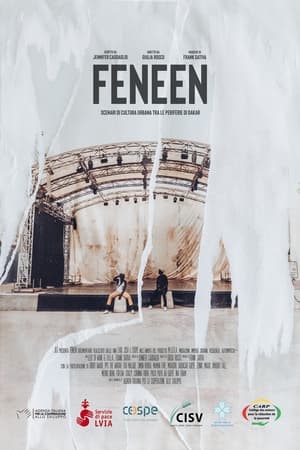
FENEEN is a journey into Senegal's urban music scene. This project was born from the meeting of Italian producer Frank Sativa with Senegalese pop-star Leuz Diwane G and Italian-Senegalese rapper F.U.L.A. This gave rise to a song, a video clip and a documentary with the same name (Feneen). Feneen portrays the current urban and music subculture of Dakar suburbs. The documentary highlights the fundamental rule of the urban subculture in debunking the stereotypical image of the African continent.
Presents a day in the life in Amsterdam, a city in transformation, captured shortly after the turn of the millennium, and shortly before the digital revolution would speed up the pace of life considerably. Shot in a fly-on-the-wall style.
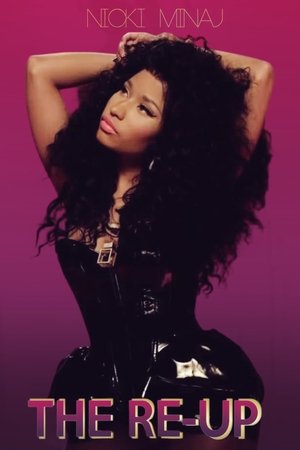
A merger of megastar music. Discover the story of multi-genre performer and fashion promoter, Beyonce Knowles sand the world's first hip hop billionaire, Jay-Z.
Make No Little Plans: Daniel Burnham and the American City reveals the fascinating life and complex legacy of architect and city planner Daniel Hudson Burnham. In the midst of the late nineteenth century urban disorder, Burnham offered a powerful vision of what a civilized American city could look like, one that provided a compelling framework for Americans to make sense of the world around them. A timely, intriguing story in the American experience, Make No Little Plans explores Burnham's impact on the development of the American city as debate continues today about what urban planning means in a democratic society.
“Shellmound” is the story of how one location was transformed from a sacred center of pre-historic cultures to a commercial mecca for modern people. What began as a Native American burial ground three thousand years ago, was transformed first into an amusement park, and later an industrial age paint factory. Now, the tainted ancient soil sits beneath the glittering lights of Banana Republic, Victoria’s Secret, and the AMC movie theaters. “Shellmound” examines the decisions made during the recent toxic cleanup, excavation, and construction of the Bay Street mall through the eyes of the city of Emeryville, the developer, the archaeologists, and the native Californians who worked on the site.
Targeted for several failed redevelopment plans dating back to the days of Robert Moses, Willets Point, a gritty area in New York City known as the “Iron Triangle,” is the home of hundreds of immigrant-run, auto repair shops that thrive despite a lack of municipal infrastructure support. During the last year of the Bloomberg Administration, NYC’s government advanced plans for a “dynamic” high-end entertainment district that would completely wipe out this historic industrial core. The year is 2013, and the workers of Willets Point are racing against the clock to forestall their impending eviction. Their story launches an investigation into New York City’s history as the front line of deindustrialization, urban renewal, and gentrification.
La ciudad es nuestra
Corvin variációk