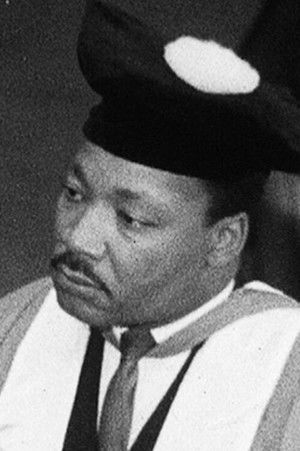
A haven for Black intellectuals, artists and revolutionaries—and path of promise toward the American dream—Black colleges and universities have educated the architects of freedom movements and cultivated leaders in every field. They have been unapologetically Black for 150 years. For the first time ever, their story is told.
A fist-person story of the director of the documentary, who talks about the loneliness that entails living with an eating disorder and her vision now thar she is entering into adulthood.
A startling expose of rape crimes on US campuses, their institutional cover-ups, and the devastating toll they take on students and their families. The film follows the lives of several undergraduate assault survivors as they attempt to pursue—despite incredible push back, harassment and traumatic aftermath—both their education and justice.
It’s the second semester of junior year for Pierce “Sparni” Sparnroft, a gifted jazz vibraphonist studying at Montclair State University in New Jersey. Sparni’s prospects on the vibes were rejuvenated by their new professor, the world-renowned Steve Nelson, and are to be showcased during a student-driven recital in May 2023. But all the while, Sparni must face a crisis within.
Lexington, Kentucky, 2004. Four young men attempt to execute one of the most audacious art heists in the history of the United States.
Pioneering the harsh landscape of Nebraska was difficult enough in 1869. Pioneering a new university was almost beyond reason. What was a university? Who should go? What should be taught? There were no guidebooks. No road maps. They were building a university out of little more than hopes and dreams.
In 2020 the Hungarian government announced the change of ownership at nine state universities in order to make them maintained by foundations. The so-called “restructuring” comprised the imposition of a board of trustees over the universities, the members of which being loyal supporters of the government holding stable positions in its economic halo. Only one of the nine institutions protested against the forced political takeover of the University of Theatre and Film Arts (SZFE). Our film presents one of the stories of the university blockade.
On September 22, 1998, the Iranian poet Hamid Hajizadeh and his nine-year-old son Karun, whose name symbolically refers to Iran's longest river, were brutally murdered in their home in Kerman. The documentary film, based on the statements of the survivors, tries to sensitively reconstruct one of the many terrible motivated events that took place in Iran at the end of the previous century and draws us into the fateful day with the help of detailed shots of the objects in Hamid's study.
In the summer of 1989, the 13th edition of the World Festival of Youth and Students was held in Pyongyang. Thousands of socialist youth from 177 countries celebrated their belief in a better society and international solidarity.
A written testimony by co-director Jin Ryoo on his experience preparing for Korean compulsory military service is juxtaposed with images of an empty UCSD campus, the desolate construction sites sprawling off of it, and the Mt. Soledad Veterans Memorial.
In the late 1960s, with the triumph of bilingualism and biculturalism, New Brunswick's Université de Moncton became the setting for the awakening of Acadian nationalism after centuries of defeatism and resignation. Although 40% of the province's population spoke French, they had been unable to make their voices heard. The movement started with students-sit-ins, demonstrations against Parliament, run-ins with the police - and soon spread to a majority of Acadians. The film captures the behind-the-scenes action and the students' determination to bring about change. An invaluable document of the rebirth of a people.
A collection of memories from a tumultuous time at University.
Estado de Excepção is a documentary about CITAC (Coimbra Theater Initiation Circle), a university theater group, revealing history since it was constituted in 1956 until the aftermath of the 1974 revolution. It is the history of the theater group university and, through it, the history of theater in Portugal, revealing two remarkable decades of the History of Portugal. Through the Academy of Coimbra, the documentary reproduces student life, the position of women in society, and the change in mentalities of being and being in the world. It reproduces the existing censorship and the fight against the dictatorship, the resistance to an exhausted regime, as well as the emerging contradictions of the democratic revolution. CITAC has a heritage of 50 years of experience in Coimbra. It carries with it the possibility of the theatrical and civic formation of thinking bodies, constituting a proper ball of a possible model, generation by generation, between studies, theater, and social drama.
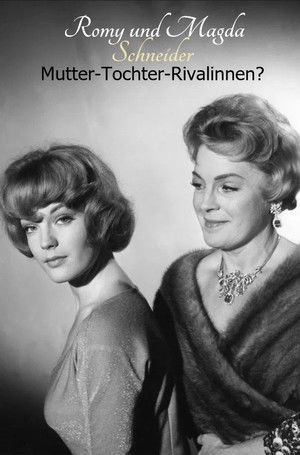
New light is shed on the complex relationship between Romy Schneider and her mother Magda, a German film star of the 1930s admired by Hitler - who welcomed her and her daughter to his chalet in Berchtesgaden.
They're the curvaceous coeds that drive fraternity guys - and everyone else - wild with desire.
Intimate and fragmented moments unfold in a community of zoos and animal rescue centers across Argentina. As histories of these institutions are uncovered, dedicated workers commit both day and night to caring for the remaining enclosed animals, fostering a mutual bond that transcends imagined boundaries between human and animal.
At Tsinghua University's campus, four people are standing at the intersection of their lives. Among them, there are those who just passed the college entrance examination, the first-generation of post-00 college students who entered their favorite universities with twists and turns , some are leaving their ivory towers, PhD graduates facing difficult choices and some have returned from the United States to enter Tsinghua University. Young teachers are full of "viewing the sky" ideal but face challenges, there are old academicians who still stand behind lectern after their retirement. The film tells the life ideals of the four Tsinghua people and the eternal youth that belongs to this university behind them.
Nestor, Aaron, Benjamin and Rafiki are economics undergraduates at the University of Bangui. Navigating between the overcrowded classrooms, the petty trades that allow students to survive, bribery lurking everywhere, Rafiki shows us what students lives are like in the Central African Republic, a shattered society where the youth keeps dreaming for a brighter future for their country.
During a two-day period before and after the University of Alabama integration crisis, the film uses five camera crews to follow President John F. Kennedy, attorney general Robert F. Kennedy, Alabama governor George Wallace, deputy attorney general Nicholas Katzenbach and the students Vivian Malone and James Hood. As Wallace has promised to personally block the two black students from enrolling in the university, the JFK administration discusses the best way to react to it, without rousing the crowd or making Wallace a martyr for the segregationist cause. Preserved by the Academy Film Archive in partnership with The Film Foundation in 1999.
In this documentary, four boys spend their senior year of high school studying for college-entrance exams that only one in five students will pass.