Vers la seconde abolition de l'esclavage dans les colonies françaises de 1802 à 1848
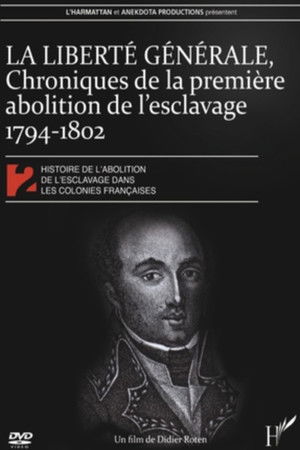
La Liberté générale : chroniques de la 1ère abolition de l'esclavage 1794-1802
Le Diable noir
L'esclavage à Bourbon
La Route des abolitions
La Couleur de l'esclavage
10 mai Africaphonie
Terre marronne
Los Palenqueros du Pacifique colombien : cinq siècles de solitude
Le souvenir dans la peau, esclavage en terre normande
In this short film, in search of a cinematic grammar more in tune with Creole imaginary and oral tradition, we follow Ondine's quest. She returns to La Réunion after an absence of four years, because her Pépé, a local zarboutan, is dying. Just as she has to say goodbye, Ondine has a strange encounter in a pond.
Au nom de nos ancêtres, esclaves et négociants
Ne suis-je pas ton frère ? La Société des Amis des Noirs 1788-1794
A backstage and on-stage look at Nicki Minaj's career during the Pink Friday Tour, festivals, and more.
Throughout history, regimes have used terror attacks as a means of control over their populations, and for the last 100 years, Western governments have employed the same measures.
2 Degrees is about nothing less than the fight for the health of the planet we call home. The abstract idea of climate change is explored through the weaving of real and emotional journeys an audience can relate to. Our characters battle to mitigate the potential disasters of climate change and fight for climate justice, for it will be the developing world that bears the brunt of our profligacy and short sightedness. While An Inconvenient Truth alerted us to the problems facing the earth, 2 Degrees is the gripping and vital fight for a solution.
Von Haider zu Hader
During the more than a quarter of a century that her husband spent in jail, Winnie Mandela was persecuted by the white authorities, first to put pressure on her husband, and then because she developed as a leader in her own right. Under enormous constraints, Winnie Mandela slowly developed a heroic public relations campaign that kept Nelson's image alive, and the attention of the world on South Africa.
Documentary made as part of the exhibition “Materiais de Construção” (FCG, 1998). The exhibition's curator, Jorge Molder, and the participating artists, Markus Raetz and Pieter Laurens Mol, are interviewed. Topics such as the artists' biography and the works presented are covered. Includes images from the exhibition (CAM Gallery and Hall).
Hollywood film music has its roots in Europe. Three composers who fled war and National Socialism to the USA created the sound that still shapes film music today: Erich Wolfgang Korngold, Max Steiner and Franz Waxman. In the early 20th century, these classically trained composers transformed the methods acquired in Vienna and Berlin into a new American art form: film music. They balanced the relationship between image and sound and developed techniques and dramaturgical tricks to achieve the greatest possible effect on the viewer. Their influence is visible in the work of contemporary US composers such as John Williams and Jerry Goldsmith. Today, Oscar winner Hans Zimmer, Ramin Djawadi and Harold Faltermeyer continue this tradition. Their melodies are part of humanity's collective memory and reflect the combined traditions of European and American musical history. The documentary accompanies composers in their work and explores the European roots of Hollywood.