A man is haunted by the mysterious CHICKENMAN after he chooses not to order a takeaway.
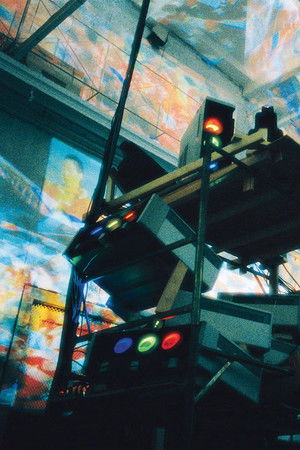
Sistine Chapel is an audio-visual collage of new footage and samples from Paik’s past videos, which featured many of his friends, collaborators, and public figures. It was Paik’s own way of summarizing his artistic career with video. The film installation consists of fast-paced and overlapping images that completely cover the gallery walls and ceiling—one of the most under-appreciated parts of architecture, according to Paik. With its electronic visuals and booming audio, interspersed with periods of silence, the immersive installation stands in stark contrast to the experience of its namesake.
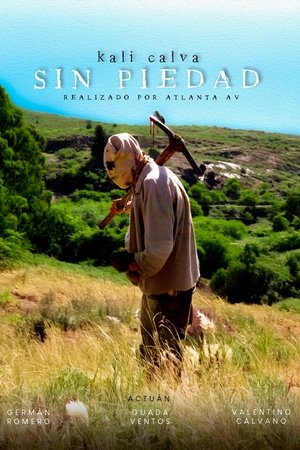
Under the relentless sun, a killer stalks through the mountains, where the innocence of a young couple becomes prey. With no shadows to hide their fate, the hunt is a macabre game in broad daylight, where fear is not hidden in the darkness, but burns with the rawness of the unperturbed noon.
Experimental documentary focusing on the design of the buildings of the Technical High School in Eindhoven. Through the visual means of film and the technical possibilities of camera and photography, reality becomes pure abstraction.
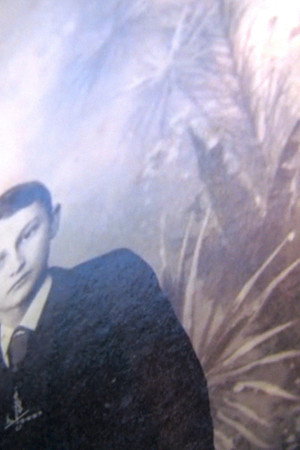
Interrogations of patricide offenders, footage of vandalised statues, and photographs of Victorian children in faux gardens are interwoven into a metaphor for the perverse legacy of privilege and wealth inherited by those who inhabit The Garden.
December Rumbles
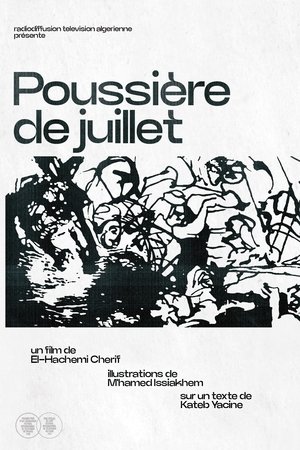
“Poussières de Juillet”, produced in 1967 by Hachemi El-Chérif, is taken from a poem by Kateb Yacine. "We made a film on the return of the ashes of Emir Abdelkader, to Algeria. It was the opportunity to make a film on the ancestors with M'hamed Issiakhem. He designed glass plates on the basis of my texts. Then we had actors collaborate. It was a film which cost us a total of 300 dinars, proof that we could do work for television without too much money. We won two first international prizes at the Belgrade festival. We left the original of the film with the Egyptians in Alexandria and they lost it. We kept a copy but over time I wonder what happened to it, because there is no not even had a screening, they say it still exists, but I don't know in what state." Kateb Yacine, July 28, 1986, interview with Arlette Casas.
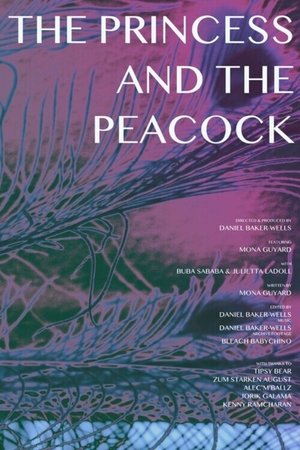
Mona is a 22 year old trans girl from a small village in France. She puts needles attached to peacock feathers in her skin, under bright lights, late at night. She bleeds, half naked, in front of small crowds of people. Sometimes they faint whilst watching her. Why would she do this? How did she learn to do it? And why would someone want to watch?
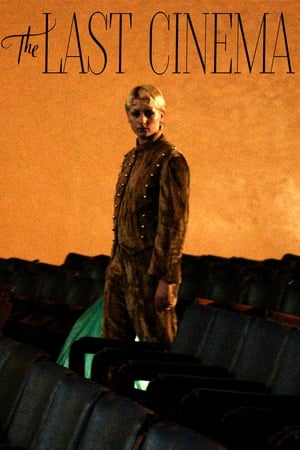
Cinema clerks Silva and Felix work the final night before their beloved cinema is demolished by private investors. An empty final screening allows them to reflect on the meaning of cinema in an age wherein art no longer occupies physical space.
Alone in the cosmic sea, a voice cries out to you.
Originally showcased in the "Cinema Differente" section of Kinomata retrospective, Yannick Arnault’s Orbe is a mesmerizing experimental study of visual perception and light. The film delves into the interplay of reflections, where the "real" is constantly deferred and modified, gaining a life of its own through the surfaces it inhabits. Arnault explores the fluidity of appearance, bridging the gap between external reality and an inner, more abstract truth. By liberating the object from traditional narrative constraints, Orbe creates a unique sensory experience that challenges how we see and interpret the world around us—a quintessential example of 1970s avant-garde filmmaking.
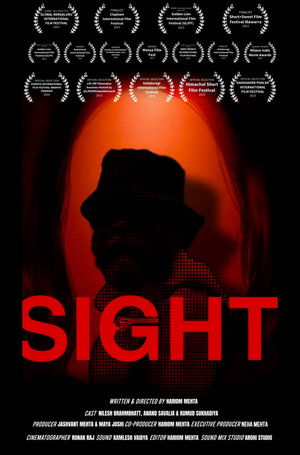
In a city gripped by fear and crime, a blind person becomes an unexpected and mysterious avenger, leaving behind a trail of deception and death, forcing the police to unravel the truth that lies beyond the darkness.
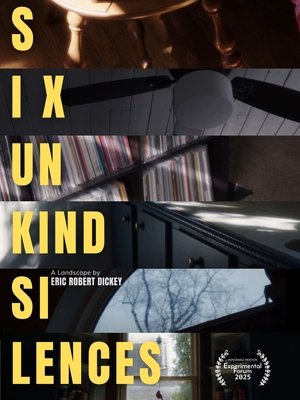
A Landscape documentary about the silent voids the living inhabit after everyone they love has gone.
When Aziza finally shares a recurring dream, it’s what she leaves unsaid that reveals her fractured sense of self. Aziza’s dream – in which she must sing a song – takes her on a journey through the post-industrial hills of the American Rust Belt, the eternal fields of Egypt, and the most repressed parts of her mind.
Born from steel and glass Kino Kopf is created by two inventors. They are assembled by their mother, a nurturing artist, and their Father a greedy entrepreneur. Kino Kopf is the first of its kind a sentient humanoid VHS camera. They are given a life by their mother but presented to the world by their father. Kino Kopf is the next big sensation and spurs a technological revolution. They are soon forgotten and alone as new models surpass them. Kino Kopf is left alone to contemplate if they ever had a soul, as visions of an electric cowboy dance through their dreams.
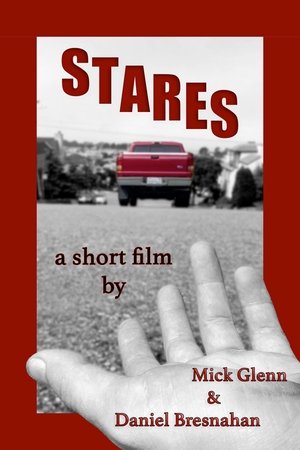
A motorist is haunted by a wayfarer he has accidentally wronged.
A man breaks in a house, in which he never went before. However, he seems to got some memories of it...
A closeted transgender woman is comforted by dancing to confront her sexual demons.
1974, b/w, sound, 10 min., aka Express Implication
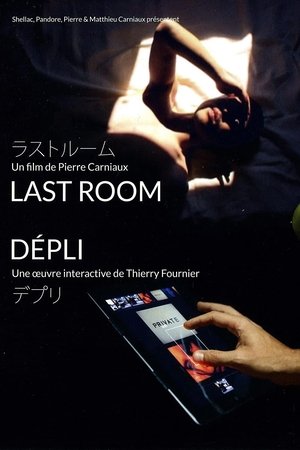
Made in Japan, Last Room is both fiction and documentary. The occupants of the love-hotels and capsule-hotels tell their own intimate, dreamlike stories, interspersed with journeys through the archipelago's landscapes. Soon, these personal stories resonate with a collective history: that of Gunkanjima, the abandoned ghost island of Nagasaki, and then that of Japan as a whole.