The movie Okht al-Reza (Reza's sister) narrates the journey of the Lady of Dignity, Hazrat Masoumeh PBUH from Madinah to Qom. While portraying the events of the Prophet's path, her time, Ma'mun's conspiracies and efforts for her martyrdom, the work tries to express a mystical narrative of the character of Hazrat Masoumeh. It deals with the story of this journey, and includes passages about the political and social atmosphere of the time, where the general atmosphere of the storytelling is somewhat close to the documentary.
Julia Sweeney's third autobiographical monologue, Letting Go of God takes the audience through her Catholic upbringing and how personal events in her life and that of her family led her to a disbelief in a personal universal deity.
From Belgium, Jialai Wang maintains contact via smartphone and camera with her mother and grandmother in China. When her grandmother’s health deteriorates, Jialai returns to Shanghai, but when she arrives, her grandmother has already died, and she is left alone with her mother. A devout Buddhist, her mother seems to pay more attention to her daily prayers, Maoist past and dog Dongdong than she does to her daughter. She herself had been abandoned as a child by her own mother, when she divorced Jialai’s grandfather and moved to the city.
The film examines the modern-day phenomenon of religious "intentional communities," or as they are often called, "cults." It takes as its focus "The Church," also known as "The Brotherhood," the 35-year-old ministry of shadowy messianic figure Jim Roberts. Since 1971, this secretive organization has recruited (hundreds) of adherents who live together in austere, separatist, communal groups, preaching salvation and damnation, and turning their backs on the outside world except when proselytizing for new members. A powerful exploration of a 35-year-old American religious sect known as “The Church” or “The Brotherhood.” It also outlines the struggles of families whose children turn away from them to become “Brothers” and “Sisters” in the group, renouncing their past lives and the world – often, without ever turning back.
A man confronts the trauma of past sexual abuse as a boy by a Catholic priest only to find his decision shatters his relationships with his family, community and faith.
They call it religion. It's been branded a cult. The lethal handling of serpents. In the name of God. Immolation, speaking in tongues, ecstasy, self injury and the dangerous snakes. The bible belt of the very South. Backyard churches. In West Virginia, Kentucky and Tennessee. Appalachia.
The public and private life of Eugenio Pacelli, elected Pope Pius XII.
An extraordinary voyage of discovery to see the most impressive collection of works of art built up over two thousand years of history. VATICAN MUSEUMS 3D, a SKY production in collaboration with the Vatican Museums Directorate, for the very first time brings Ultra HD 4K/3D film cameras inside the Vatican Museums and the Sistine Chapel, to show the masterpieces in these collections as they have never been seen before.
Terrence McNally’s Corpus Christi is a play retelling the Jesus story, with Jesus as a gay man living in the 1950s in Corpus Christi, Texas. This documentary follows the troupe, playwright, and audience around the world on a five-year journey of Terrence McNally’s passion play, where voices of protest and support collide on one of the central issues facing the LGBT community: religion.
In 2012, Stephen Vaughan and Kay Ferreter are invited to address the congregation at St. Joseph's Redemptorists Church in Dundalk, Ireland for the Solemn Novena Festival. In a powerful speech, the pair describe their experiences being gay and lesbian in Ireland, feeling excluded by Catholic doctrine, and the importance of a more inclusive church.
Ten years after establishing New Heights, the pastors, their families, and other influential members of the church sit down for roundtable discussions to look back on the past decade and forward toward their future plans for the congregation.
The moral dimension of humanity's interaction with nonhuman animals and the industries that profit from their exploitation, as informed by world religions. A historical explanation of how the current global situation came to be.
Mother India is home to many castes, tribes and religions and one common factor that brings this diverse country all together is Jewelry. Come explore the deep history and culture of the jewelry of India dating back more than 5000 years. As we explore the history we also take you into Bangalore, India and talk to local Jewelry Stores and Jewelry Artisans as they share their stories and their family history of their involvement in jewelry going far back into their family ancestry.
This intimate ethnographic study of Voudoun dances and rituals was shot by Maya Deren during her years in Haiti (1947-1951); she never edited the footage, so this “finished” version was made by Teiji Ito and Cherel Ito after Deren’s death.
Part documentary, part expose, this film follows one-time child evangelist Marjoe Gortner on the "church tent" Revivalist circuit, commenting on the showmanship of Evangelism and "the religion business", prior to the start of "televangelism". Preserved by the Academy Film Archive in 2005.
Were the eleven official witnesses—twelve if you include Joseph Smith himself—of the Book of Mormon reliable? What about the unofficial witnesses who interacted with the plates in various ways—including a number of women? Were the plates actually made of gold? How could witnesses really hear the voice of God and yet come to doubt His prophet?
MAXIMÓN - Devil or Saint is a documentary about the controversial Maya deity, also known as San Simon or the drinking and smoking saint of Guatemala. He is a mixture of ancient Maya beliefs and Christianity. The movie concentrates on the people who surround Maximón with their strong personalities, opinions and faith. The documentary gives us a rare view into the rituals and fiestas honoring Maximón. The cult of Maximón is flourishing because he performs miracles. He is also feared and despised because he is used to cast curses that can result in death. Ultimately, Maximón transcends the duality of good and evil, reflecting the Maya cosmovision in which everything in the universe co-exists.
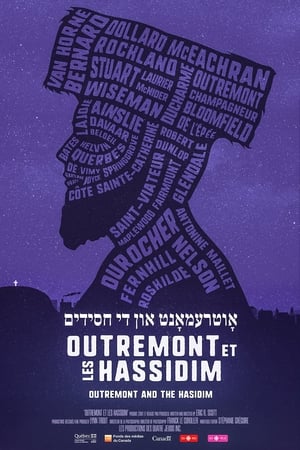
OUTREMONT AND THE HASIDIM reveals the challenges of accommodating the “Hasidim” – or ultra-Orthodox Jews – in the affluent Montréal borough of Outremont.Some 7,000 Hasidim live in or near this choice neighbourhood of Québec’s Francophone elite. After settling there more than 70 years ago, the Hasidim are a rapidly growing minority group which today represents about 23% of Outremont’s population.Thanks to unprecedented access to this self-isolated community, the film lifts the veil on its practices, traditions, music and life as they had never before been seen on Canadian television, without ignoring the community’s expectations, fears. and hopes.
Varanasi is the Indian city where Hindus go to die. Stretching along the Ganges, Varanasi holds great spiritual significance because Hindu scriptutres say that anyone who dies there will attain moksha—liberation from the cycle of rebirth. Berlin-based director Dan Braga Ulvestad captures life and death in India’s heartland in this moving documentary filled with exquisite cinematic moments. By the River starts its narrative journey with the city’s “death hotels,” dedicated apartments where people wait to die, sometimes for decades, so they can be cremated on the banks of the Ganges.
Members of the First Presidency and the Quorum of Twelve Apostles of the Church of Jesus Christ of Latter-day Saints share their testimony that Jesus Christ was the son of God.