Including world-class artists such as Bryn Terfel, Cecilia Bartoli, Anne Sofie von Otter, Jose Cura, Simon Keenlyside and Agnes Letestu, this 50-minute sampler will give you a taste of many beloved classics in opera and ballet.
Gounod's Faust at the Bavarian State Opera: Jonathan Tetelman plays Faust, the scholar who makes a pact with Mephistopheles (Kyle Ketelsen) before seducing Marguerite (Olga Kulchynska). The unfortunate woman descends into madness but ultimately achieves redemption. Lotte de Beer directs this production, which marks Nathalie Stutzmann's debut in Munich as conductor.
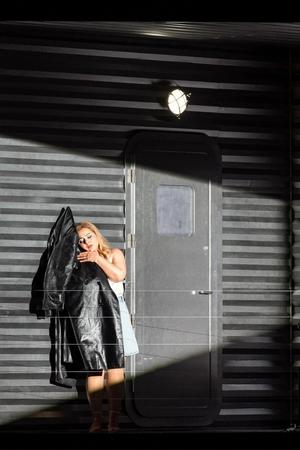
Isabella is a strong, independent woman who has no intention of giving in to the clumsy advances of the powerful Mustafà. In this production by Mosh Leiser and Patrice Caurier, which plays on preconceptions about culture clash, Mustafà is no longer a handsome Ottoman, but a shady gangster who traffics in electronic goods in the port of Algiers. Make of it what you will...
The history of the gypsy Aleko who couldn't forgive the betrayal of his wife.
Directed by Ursel Hermann, this 2005 production of Mozart's last opera stars a remarkable cast with Susan Graham in the role of Sesto, Christoph Prégardien giving life to Tito and Catherine Naglestad embodying the ambitious Vitellia. Premiered in September 1791 for the coronation of Leopold II, King of Bohemia, La Clemenza di Tito celebrates the figure of the merciful sovereign
Verdi’s monumental score is fully the equal of Shakespeare’s famous tragedy—and both demand great actors. This is one performance where both playwright and composer are well served. Plácido Domingo’s Otello is one of the glories of the operatic world, beautifully sung and so commandingly acted that audiences are devastated by the end. Renée Fleming’s ravishingly beautiful Desdemona is deeply moving, and as Iago, James Morris is as beguiling as he is menacing. Under James Levine’s conducting the Met orchestra and chorus are vital characters in the drama.
Nikolaus Harnoncourt is the conductor in this 2004 production of Beethoven's only opera staged at the Zurich Opera House. Finnish soprano Camilla Nyland takes the title role, with performances by Jonas Kaufmann, Laszlo Polgar and Alfred Muff.
The film takes place in Baku in 1918-19 and then several years later. The film is based on the opera of the same name by Fikret Amirov. Sevil became the first film opera in the history of Azerbaijani cinema.
This ever-popular opera is given a fresh point of view in Barrie Kosky’s highly physical production, originally created for Frankfurt Opera. The Australian director is one of the world’s most sought-after opera directors, whose Royal Opera debut with Shostakovich’s The Nose in 2016 was greeted with delight. For Carmen he has devised a far-from-traditional version, incorporating music written by Bizet for the score but not usually heard, and giving a new voice to the opera’s endlessly fascinating central character.
Verdi: Falstaff - Teatro Real
Enrico Caruso's only passion is to sing. For that, he leaves his hometown of Naples, Italy, and travels to America to sing for the Metropolitan Opera. At first, his lack of education and poor background make him an outcast in the high-class opera world. Eventually, his voice wins him both fans and the hand of his love, Dorothy. But his nonstop pace and desire to perform at any cost eventually take their toll on the singer's health.
Live from La Scala Saturday 07 July 2007. In this live performance of Giuseppe Verdi's opera, Violetta, a courtesan much wooed by Parisian society, organises a grand party that is attended, amongst others, by the young Alfredo Germont. He confesses his feelings to Violetta, who is already suffering from consumption. She vacillates between genuine affection and a realistic assessment of her situation as a "fallen woman", which precludes any lasting relationship with a man.
After over a century out of the Met’s repertoire, audiences were thrilled to discover just what a sensational evening in the theater Thomas’s Hamlet can be. Simon Keenlyside’s riveting performance as the tortured Prince of Denmark in Patrice Caurier and Moshe Leiser’s starkly brooding production had critics raving that Keenlyside’s superb singing, coupled with his deftly delineated three-dimensional Hamlet, was one of the greatest examples of operatic drama of our time. The cast includes Marlis Petersen as the long suffering Ophélie, who brilliantly shows why her mad scene is so justly famous, along with Jennifer Larmore and James Morris as Gertrude and Claudius.
Lively scenes of Paris, all narrated by Maurice Chevalier, link together four dramatic ballet choreographies by Roland Petit: La Croqueuse de diamants (The Gold Digger), Cyrano de Bergerac, Deuil en 24 heures (A Merry Mourning), and Carmen.
Imbuing the familiar Don Juan myth with a captivating combination of comedy, seductiveness, danger, and damnation, Mozart created an enduring masterpiece that has been a cornerstone of the repertory since its 1787 premiere. An early entry in the Met’s series of PBS telecasts, this 1978 performance captures a young James Morris in a smooth portrayal of the title role, with the legendary Joan Sutherland showing off her unsurpassed technique as Donna Anna and Gabriel Bacquier as a masterful Leporello.
Prince Tamino promises the Queen of the Night that he will rescue her daughter Pamina from the enchanter Sarastro. He begins his quest, accompanied by the bird-catcher Papageno – but all is not as it seems… Tamino and Papageno discover Sarastro is a wise and kind leader. They undergo three ordeals. By the end they are united with their true loves: Tamino with Pamina, and Papageno with his Papagena.
Live performance from Schwetzinger Festspiele, 1988. What sets this IL BARBIERE DI SIVIGLIA apart from all others available is its elegant realism. None of its visuals are the least bit cartoonish or blatantly designed for comedy. Dr. Bartolo’s house is a stark, stern-looking structure of plastered brick with a comfortable yet plain, white-curtained interior, while the costumes are highly realistic 18th century garb in subdued colors. Yet despite its fairly austere appearance the production is delightful, thanks to its performers and staging. The stage business is lively, witty and free of excessive slapstick, and every singer brings his or her character to life, all offering rich, vibrant characterizations that strike a perfect balance between comedy and humanity.
AIDA, an Ethiopian princess, is captured and brought into slavery in Egypt. A military commander, Radamès, struggles to choose between his love for her and his loyalty to the Pharaoh. To complicate the story further, Radamès is loved by the Pharaoh's daughter Amneris, although he does not return her feelings. Sonja Frisell’s production captures all the grandeur and excitement of Verdi’s monumental opera, particularly the great triumphal scene where the Egyptian army, led by Radamès (Plácido Domingo), returns victorious from war. Aprile Millo is Aida, the slave girl whose love for Radamès has her squaring off with Amneris (Dolora Zajick), the Egyptian princess who also loves him. Sherrill Milnes is Amonasro, and James Levine leads The Metropolitan Opera Orchestra, Chorus, and Ballet.
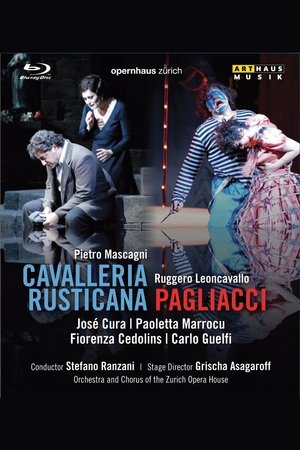
The story is set in southern Italy and recounts the tragedy of Canio, the lead clown (or pagliaccio in Italian) in a commedia dell'arte troupe, his wife Nedda, and her lover, Silvio. When Nedda spurns the advances of Tonio, another player in the troupe, he tells Canio about Nedda's betrayal. In a jealous rage Canio murders both Nedda and Silvio. Although Leoncavallo's opera was originally set in the late 1860's, Zeffirelli's production is updated to the period between World War I and World War II.
The great Italian opera composer recalls his eventful life on his deathbed: his childhood in Busseto, his studies in Milan, his first opera "Oberto, conte di San Bonifacio", the death of his wife and his children killed by smallpox.