Over 32 years of archives, patterns emerge and stare back. Will they shape the films I'm trying to make – or haunt their edges?
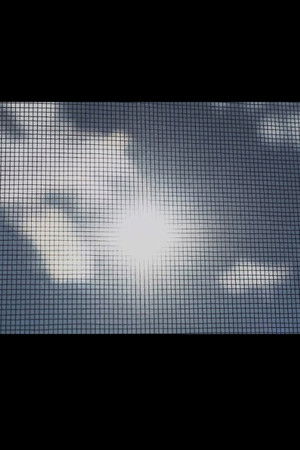
Two layers of mesh overlap on the left. One rotates over the course of a day, its speed shifting gradually. On the right, a single mesh remains still. Digital interference is continuously superimposed onto the physical rotation. Where no rotation occurs, motion persists through digital interference alone. Under different conditions, the two images arrive at similar shimmering forms. The sound drifts with the sky. Tremolo. Pulse.
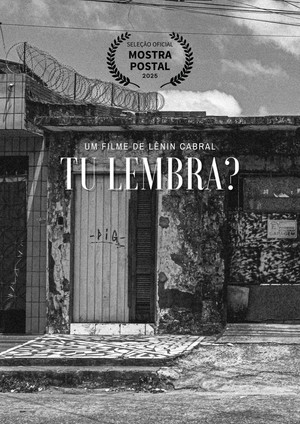
Tu lembra?
Melting shows the natural monostructural disintegration of a strawberry sundae, its passage from rigidity to softness, from edibility to waste. The spoon resting on the plate refers to the human presence, which lurks behind the screen, declining to interfere with what transpires. Preserved by the Academy Film Archive in 2009.
"Now Eat My Script is a precipice, a fluid solution in which some spectral noises of the self float adrift. Narration takes the role of a pregnant writer who continuously affirms her hunger and clumsiness towards language and history. Her body is crossed over by both the years to come and the stories that have been buried. As a would-be pirate, she navigates through the tumult of familiar waters."
Short avant garde film. Views of rippling water.
Images of the Church of the Sagrada Familia by Antoni Gaudí confronted with brief flashes of housing projects and industrial areas. The furious display of a effervescent imagination is opposed to a grey functionality.
In Buenos Aires a group of acclaimed dancers create the first Contemporary National Company of Dance under their collective leadership. This is the story of four talented dancers, Ernesto, Bettina, Victoria and Pablo, along six years of their journey. We follow their lives, we attend their rehearsals and performances in the emblematic building of the National Library, along with their premiere and backstage in the historical National Theatre of Cervantes. They expose their dreams as dancers, individuals and members of our society, as we observe the fulfilment of their biggest dream: the demand of a National Dance Law. Amazing choreographies, beautiful folklore songs and original Latin-American contemporary music reveal the beauty of dance becoming life.
A symphony of found footage scenes, each shot loosely connected to the one before.
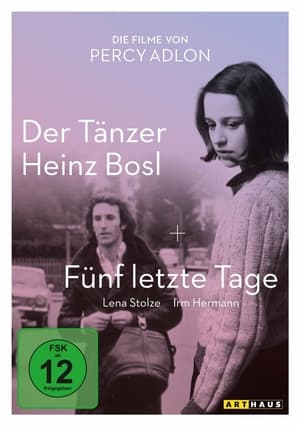
A documentary about dancer Heinz Bosl who died in 1975 - aged 28.
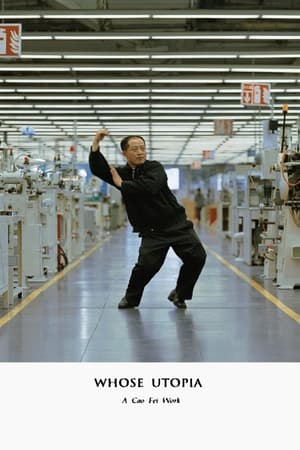
A three-part film by Cao Fei. Part one, 'Imagination of Product', shows workers and machines at the OSRAM lightbulb factory in China's Pearl River Delta. In the second part, 'Factory Fairytale', dancers and musicians appear in the factory, as work continues around them. Finally, 'My Future is Not a Dream' consists of portraits of the factory workers facing Fei's camera.
Narrated by Deocampo in English, the film documents the anti-Marcos revolution, the life of Oliver (a transvestite who was the subject of the first film in the trilogy), child prostitution, and the filmmaker's own personal history, including his homosexuality, his filmmaking, and his travels abroad.
Modified flashlights and stripped down video projectors explore the visual complexities of the ordinary world: a tunnel, a clump of grass, a discarded table, the underside of a bridge, fog, a piece of rock and a tree. All the images were shot in real time, there is no animation, but through the power of a peculiar form of illumination they become mysterious and evocative.
Experimental short film.
Short experimental film.
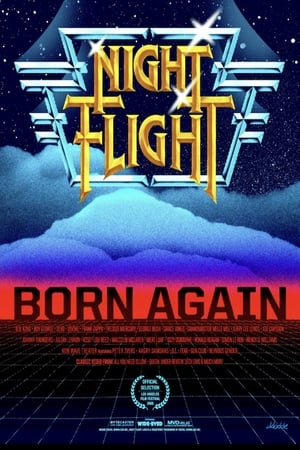
Documentary tribute to what VH1 called “the single greatest rock omnibus program ever aired” and Brooklyn Vegan named “the most consistently weird and awesome thing on cable television in the ’80s.” This ‘Best Of’ episode features some of the most memorable moments of Night Flight's near-decade long run including restored interviews and segments from Kate Bush, New Wave Theatre, David Lynch, Prince, Wendy O Williams, Divine, Billy Idol, Johnny Rotten, and much more Night Flight treasures from the archive.
16mm film by Paul Clipson, and music by Sarah Davachi. Filmed in New York, Los Angeles, Hong Kong, Brisbane, Krakow, Sidney, Portland, Napa, Oakland and San Francisco.
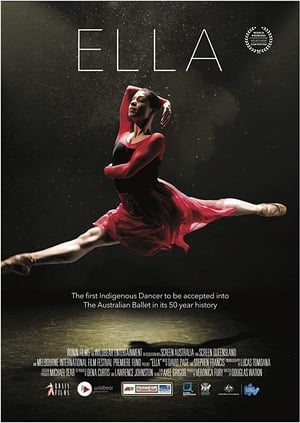
Ella Havelka made history in 2013 by becoming the first Indigenous dancer at the 50-year-old Australian Ballet. In this engaging, MIFF Premiere Fund-supported world premiere, Ella – a descendant of the Wiradjuri people – charts her inspiring journey from growing up in modest circumstances as the only child of a single mother in rural Australia to gaining entry to National Ballet School, then spending formative years with the acclaimed Bangarra Dance Theatre before accepting the invitation of The Australian Ballet's artistic director David McAllister to join one of the world's foremost ballet companies.
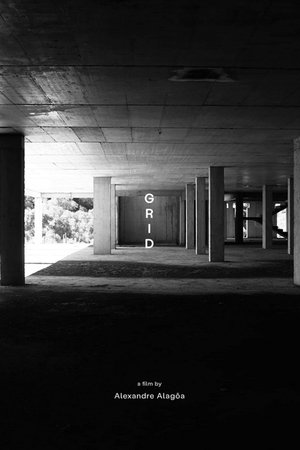
A ritual of grids, reflections and chasms; a complete state of entropy; a space that devours itself; a vertigo that destroys the gravity of the Earth; a trap that captures us inside the voids of the screen of light: «That blank arena wherein converge at once the hundred spaces» (Hollis Frampton).
A day in the life of a group of stray cats, who live in a wealthy neighborhood