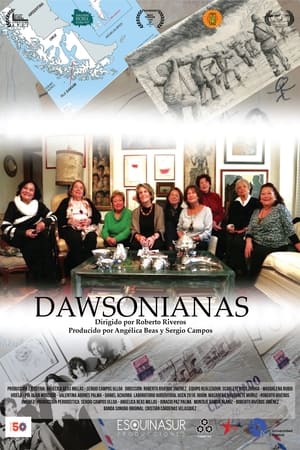
During the first days after the 1973 Chilean coup d’état, the political leadership of the Popular Unity government was arrested and transferred to Dawson Island, Magallanes Region, extreme south of Chile and the mainland. The wives of the then political prisoners began an incessant effort to find out the whereabouts of their husbands and then try to return them alive. In these circumstances, they meet and spontaneously organize into a group they call the “Dawsonianas.”
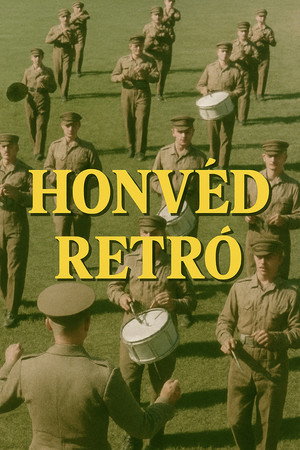
A feature length, lively - montage style - documentary, capturing the essence of what life was like in socialist Hungary's conscript army, using contemporary videos.
A feature length, lively - montage style - documentary, capturing the essence of what life was like in socialist Hungary - dubbed the "The most cheerful barrack" back then - using contemporary music, interviews, adverts and news footages.
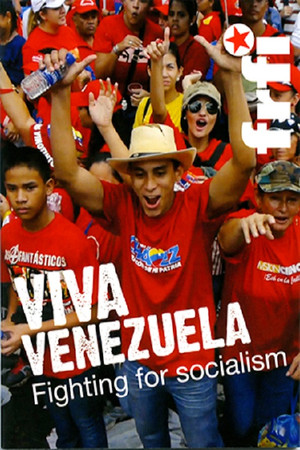
We live in a world dominated by crisis, imperialist war and exploitation. We're told there is no alternative to cuts, privatisation, hunger and homelessness. The Bolivarian Revolution illustrates what can be achieved when governments and people working together, put human need before capitalist profits. Despite Chavez's death in 2013, the process is being built every day by President Maduro and millions of Venezuelans working to create a society built on collective socialist organisation and production. Venezuela provides an inspiring example of how the fight against austerity can develop into a fight for socialism. This film takes you on that journey through the barrios, universities and workplaces to meet the political activists, students and workers who are changing their future. Alongside the achievements of socialist Cuba, Venezuela shows that not only is another world possible, but this world is being built today in Latin America.
This anthology film, whose Chinese title begins with a romantic name for human excrement, premiered internationally at Rotterdam and won Best Screenplay from the Hong Kong Film Critics Society. A variety of Hong Kong people wrestle with nostalgia when facing an uncertain future. Their stories give way to a documentary featuring a young barista turned political candidate.
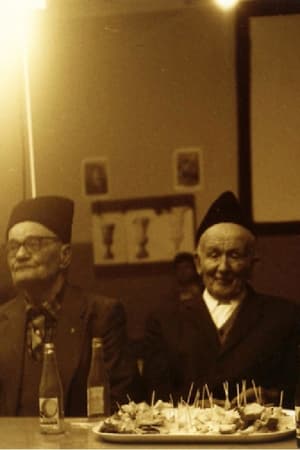
The protagonists of this docudrama are old farmers who migrated to Banat after the First World War, in 1922. The film is focused on a couple of important events in their impressive lives, which are woven into lively scenes and stories full of wise instances. Their statements become spontaneous recounts of the lives of people in this region.
Trzeci zjazd
Composed of stills by renowned Magnum photographer Susan Meiselas taken in 1978 and 1979 during the overthrow of the fifty-year dictatorship of the Somoza family. Written in the form of a letter from Meiselas to Karlin, it is a ruminative and often profound exploration of the ethics of witnessing, the responsibilities of war photography and the politics of the still image.
Shot in 1983–84 and focusing on the work of the Historical Institute, this film witnesses how Nicaraguans are recovering their history, the memory of Sandino’s struggle, to transform their sense of identity.
Through the eyes of journalists and photographers working at Barricada, the official publication of the FSLN, the film observes the problems of putting socialism into practice, with reports on the war, the economy, the prison system and the political process leading up to the 1984 elections.
A portrait of a remote area in the rural north of Nicaragua facing difficulties with the revolutionary process. It follows Marlon Stuart, the regional FSLN political organiser, at the time of the 1984 elections.
The film is about aftermaths and reckonings. Revisiting material for his earlier 4-part series, Karlin returns to Nicaragua to examine the history of the Sandinista government, consider its achievements, and assess the prospects for democracy following its defeat in the general election of 1990.
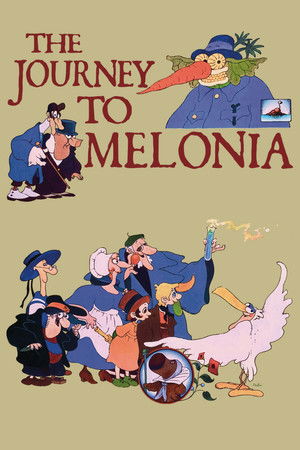
When a ship sinks during a storm, a slave from the industrial island of Plutonia is washed up on the beaches of paradise island Melonia, where the "all-powerful" wizard Prospero and his strange friends reside.
Un homme de Parole
The early struggles of the working class are placed under a microscope in Plutocracy III: Class War, the latest chapter in an exceptionally well produced series which explores the origins of America's growing economic divide.
Documentary about Margit Nielsen and her work at the Malmö chocolate factory.
Bollwerk
A documentary on the rise and fall of Project Cybersyn, an attempt at a computer-managed centralized economy undertaken in Chile during the presidency of Salvador Allende.
There was also flower power under socialism. From the late 1960s to the late 1980s, hippies from East Berlin, Warsaw, Prague and Budapest dreamed of conquering a world that was actually closed to them. They wore long hair, beards and parkas, squatted houses, lived in communes, listened to blues and rock 'n' roll - music was their philosophy and world view. The documentary looks back at the flower children of the East, for whom Woodstock was further away than the moon.
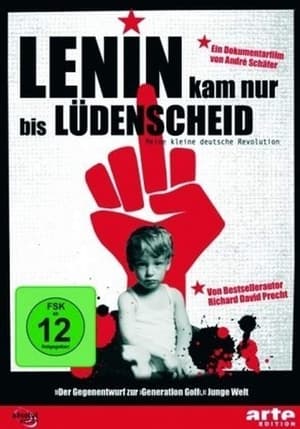
The free, almost naive view from the perspective of a child puts the "68ers" in a new, illuminating light in the anniversary year 2008. The film is a provocative reckoning with the ideological upbringing that seemed so progressive and yet was suffocated by the children's desire to finally grow up. With an ironic eye and a feuilletonistic style, author Richard David Precht and Cologne documentary film director André Schäfer trace a childhood in the West German provinces - and place the major events of those years in completely different, smaller and very private contexts.