David Attenborough and scientist Johan Rockström examine Earth's biodiversity collapse and how this crisis can still be averted.
Albert Camus died at 46 years old on January 4, 1960, two years after his Nobel Prize in literature. Author of “L'Etranger”, one of the most widely read novels in the world, philosopher of the absurd and of revolt, resistant, journalist, playwright, Albert Camus had an extraordinary destiny. Child of the poor districts of Algiers, tuberculosis patient, orphan of father, son of an illiterate and deaf mother, he tore himself away from his condition thanks to his teacher. French from Algeria, he never ceased to fight for equality with the Arabs and the Kabyle, while fearing the Independence of the FLN. Founded on restored and colorized archives, and first-hand accounts, this documentary attempts to paint the portrait of Camus as he was.
The film explores the turbulent lives of homeless persons in Cologne, Germany. Through their personal belongings the homeless share with the viewer their memories and emotions, and provide insight into the secrets of survival on the street.
Portraits the crude reality a young and troubled teenage mother faces, while searching for her identity. It is the story of a young woman facing the challenge of raising a little girl on her own, while trying to reinvent herself each day in a relentless social environment towards the least mistake.
In 1978, Tom Lewis appeared in the Australian feature film, The Chant of Jimmie Blacksmith. The life of the character he played was hauntingly close to his own, a young, restless man of mixed heritage, struggling for a foothold on the edge of two cultures. Tom's mother is a traditional Indigenous woman of southern Arnhem Land, his father a Welsh stockman who he never really knew. Yellow Fella is a journey across the land and into Tom's past, as he attempts to find the resting place of his father and to finally confront the truth of his most inner feelings of love and identity.
When Sarah accidentally proposes to her girlfriend in Provincetown, the mixup turns their loving relationship into a minefield of marital exploration.
Viramundo shows the saga of the northeastern migrants that arrive in São Paulo, beginning with a train arriving and ending with a train leaving São Paulo in a cycle repeated every day. Viramundo's aim was to question why the military coup d'état in Brazil happened without any popular resistance or revolution or reaction of the society.
For almost 50 years, the world's population has grown at an alarming rate, raising fears about strains on the Earth's resources. But how true are these claims? Taking cues from statistics guru Hans Rosling, Misconception offers a provocative glimpse at how the world—and women in particular— are tackling a subject at once personal and global. Following three individuals, director Jessica Yu focuses on the human implications of this highly charged political issue, inspiring a fresh look at the consequences of population growth. In English, Hindi, Mandarin, and Russian with subtitles.
An in-depth portrait of British composer, pianist and singer Elton John, pop star and myth of modern culture.
102 Years in the Heart of Europe: A Portrait of Ernst Jünger (Swedish: 102 år i hjärtat av Europa) is a Swedish documentary film from 1998 directed by Jesper Wachtmeister. It consists of an interview by the journalist Björn Cederberg with the German writer, philosopher and war veteran Ernst Jünger (1895-1998). Jünger talks about his life, his authorship, his interests and ideas. The actor Mikael Persbrandt reads passages from some of Jünger's works, such as Storm of Steel, The Worker, On the Marble Cliffs and The Glass Bees.
In the course of Alaide Foppa's life, she became a precursor of feminism in Mexico. She was an immigrant who, in her own way, tried to break the molds established by her upper-class upbringing. Her sensitivity and intellectual development made her question matters of social injustice, educational and gender inequalities, the importance of socially-committed art forms and the vindication of democracy throughout Latin America. Her tragic end reveals much about the history of Guatemala.
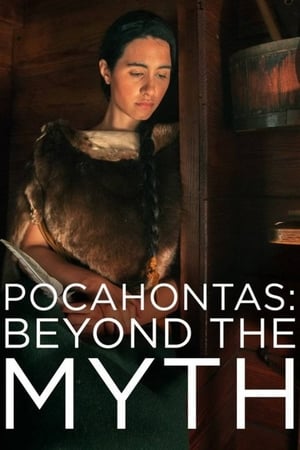
The story of Pocahontas has been passed down through the centuries. Her relationship with John Smith has been characterized as a romance that united two cultures and created lasting peace. However, the life of this American Indian princess was anything but a fairytale. Join us as we look beyond the fiction and reveal the real story of Pocahontas, a tale of kidnapping, conflict, starvation, ocean journeys, and the future of an entire civilization.
Kazuo Hara follows Ayumi Yasutomi, a transgender candidate, who is also a Tokyo University professor, as she embarks on a national campaign for a seat in Japan's Upper House.
The first uncensored documentary about the Soviet Union ever made by an outsider. The film takes viewers to 12 of the 15 states of the former USSR.
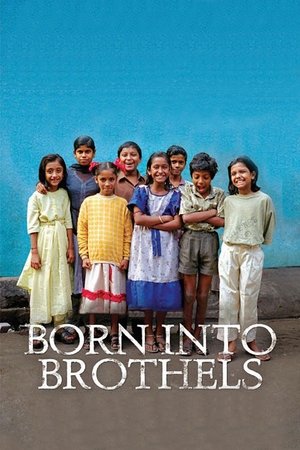
Documentary depicting the lives of child prostitutes in the red light district of Songachi, Calcutta. Director Zana Briski went to photograph the prostitutes when she met and became friends with their children. Briski began giving photography lessons to the children and became aware that their photography might be a way for them to lead better lives.
Filmmaker Jonathan Caouette's documentary on growing up with his schizophrenic mother -- a mixture of snapshots, Super-8, answering machine messages, video diaries, early short films, and more -- culled from 19 years of his life.
The film describes the microcosmos of the small village Wacken and shows the clash of the cultures, before and during the biggest heavy metal festival in Europe.
Kalo (taro) production on each of the major islands of Hawai'i circa 1994. Meet the amazing people who love and continue to cultivate taro on lo'i that in some cases has been in the family for generations and centuries! Young, old, and family growers on Maui, Moloka'i, Hawai'i, O'ahu, and Kaua'i islands. Includes history/culture of kalo, Issues related to land and water, uses of kalo, and prospects for the future.
French documentarist Sonia Kronlund follows actor and director Salim Shaheen, an Afghan movie star who produced more than 110 low-budget movies in a country devastated by war.
Five acclaimed photographers travel the world to provide detailed insight into the difficult conditions faced by refugees who dream of a better life.