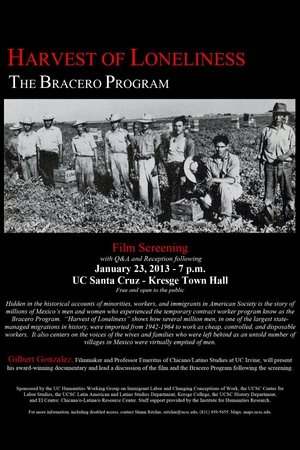
Shedding light on the current debate over immigration reform and the use of "guest workers" in American agriculture, this historical documentary, "Harvest Of Loneliness: The Bracero Program," examines what was known as the Bracero Program-a system put in place from 1942 to 1964 to recruit Mexican farm laborers for temporary work in the United States.
Featuring Michael Pollan and based on his best-selling book, this special takes viewers on an exploration of the human relationship with the plant world — seen from the plants' point of view. Narrated by Frances McDormand, the program shows how four familiar species — the apple, the tulip, marijuana and the potato — evolved to satisfy our yearnings for sweetness, beauty, intoxication.
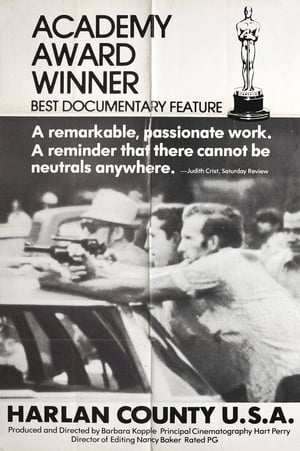
This film documents the coal miners' strike against the Brookside Mine of the Eastover Mining Company in Harlan County, Kentucky in June, 1973. Eastover's refusal to sign a contract (when the miners joined with the United Mine Workers of America) led to the strike, which lasted more than a year and included violent battles between gun-toting company thugs/scabs and the picketing miners and their supportive women-folk. Director Barbara Kopple puts the strike into perspective by giving us some background on the historical plight of the miners and some history of the UMWA. Preserved by the Academy Film Archive in partnership with New York Women in Film & Television in 2004.
Through first person narration, Tari reveals personal stories related to her decision to work in Taiwan, her strained family relationships, the risks involved in working abroad and the traps she has fallen into.
With the energy of the dying, those in power apply themselves to reasserting the value of work – with force, if need be. But more and more workers have understood that, to truly value their work, they have to do without it. They also have to get rid of the society of consumption that goes along with it. It may not be easy, but it is certainly amusing. We present a panorama of a mass desertion destined to spread.
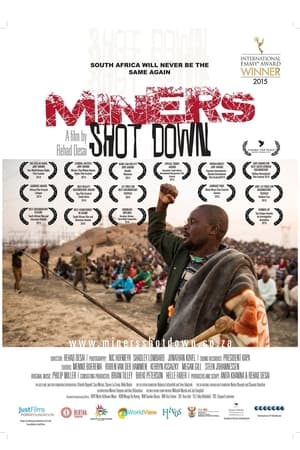
In August 2012, mineworkers in one of South Africa’s biggest platinum mines began a wildcat strike for better wages. Six days later the police used live ammunition to brutally suppress the strike, killing 34 and injuring many more. Using the point of view of the Marikana miners, Miners Shot Down follows the strike from day one, showing the courageous but isolated fight waged by a group of low-paid workers against the combined forces of the mining company Lonmin, the ANC government and their allies in the National Union of Mineworkers.
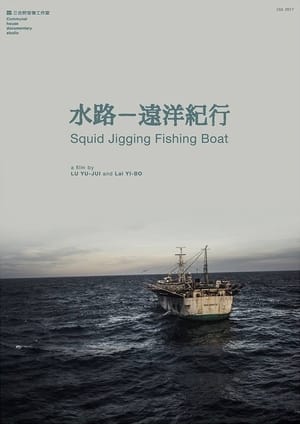
Every December to January, almost a hundred squid fishing boats from Ch'ien-chen Fishing Harbor in Kaohsiung will sail from East 120 to West 60 to work at Falkland Islands in the South West Atlantic. The sailing takes 35-40 days and crew members named it "waterway." January 1st, 2015, a 65 meter long, 11 meter wide fishing boat began its journey to Falkland island. This is a documentary about 60 crew members from south-east Asia to work far away from Taiwan.
This documentary follows 8 teens and pre-teens as they work their way toward the finals of the Scripps Howard national spelling bee championship in Washington D.C.
Inside the life of former baseball star Curt Flood whose fight against MLB's 'Reserve Clause' led to reform, but destroyed his career.
Federico Fellini died on October 31st, 1993. Thirty years later, he is still considered as one of the most irreverant moviemaker in the history of cinema. Through a long-previously-unseen interview, directed by Jean-Christophe Rosé in 1981, through extracts of his films and through behind-the-scenes, this documentary draws an intimate portrait of Fellini by himself.
A exploration of the fanaticism that surrounds the Apple brand, featuring interviews with Mac evangelists and members of the Mac community.
In a secluded village surrounded by forests and a river, an elderly beekeeper and a livestock farmer live alone, their lives shaped by tireless work and quiet harmony. Through one day in their hidden world, this documentary reveals the beauty and mystery of their bond with nature, far from the reach of modern life.
Vince Collins tells of his animation history—looking to the past and eventually to AI and beyond.
A documentary about Dutch shipbuilders and their work. Hundreds of jobs at shipyards are on the line and their craftsmanship is under threat. The labourers have to watch and stand by as their future becomes more and more uncertain.
On 9 July 2021, the 422 workers at the GKN factory in Campi Bisenzio near Florence received their dismissal, by email. They immediately met in front of the factory, scared away the management's bodyguards and have been holding an open-ended meeting at the factory ever since. In June of 2022, they talk about how they are rooted in the territory, why 30,000 people demonstrated with them. They explain why they put their struggle under the slogan "Insorgiamo!" ("Let's rise up!"), the slogan of the italian partisans who liberated Florence in 1944. But they also talk about their collaboration with climate activists and what they would like to produce. But as things stand today, it is not the workers who are responsible for the ecological damage caused by production: "Nobody asked me what I would like to produce when they hired me. They hired me and that was it."
Filmed in the Inner Mongolian portion of the Gobi Desert, this film follows a group of oil field workers as they go about their daily routine.
A Berlin street corner is slowly changing: an aging supermarket turns into a construction site and finally a new building. People restock shelves, demolish walls, take breaks and count money. Those who work here participate in the making and unmaking of the place. How does it shape the conditions of their labor? Between supermarket aisles, construction scaffolding and exposed concrete, different versions begin to overlap. Repetitions appear like echoes between worlds, both playful and eerie.
In the wake of the hottest year on record, the Coalition of Immokalee Workers (CIW) and WeCount! are pursuing different strategies to secure heat protections for Florida's outdoor laborers. As lawmakers move to block new regulations, the groups are coming together through CIW's Worker-driven Social Responsibility model (WSR) to expand enforceable protections across the state's fields and nurseries.
Burning Out is literally a drama about life and death. For two years, the Belgian director Jérôme le Maire followed the members of a surgical unit in one of the biggest hospitals in Paris. Constantly under severe stress, understaffed and subject to severe budget cuts, employees fight each other for resources. Meanwhile the management imposes ever more stringent efficiency and profitability targets. All over Europe burnout has reached epidemic proportions among employees in the public and private sectors. Will we end up killing ourselves? Or will we be able to find meaning and joy at work?
In response to the Detroit riots of 1967, where racial tensions in the city reached a breaking point, the city decided that the way to resolve these tensions would be to put more resources into employing Black people. Namely, chronically unemployed Black men who they refer to as "the hardcore." And predominantly, employing them on the line in auto assembly plants. But in the words of Lloyd Love, a young Detroiter interviewed in the film, this PBS documentary poses the question, "Do you think a job is the answer?" The film explores this question in 1968, by speaking with workers, unemployed people, union activists, students, people who implement city-run employment programs, members of DRUM (Dodge Revolutionary Union Movement), and the Detroit Industrial Mission.