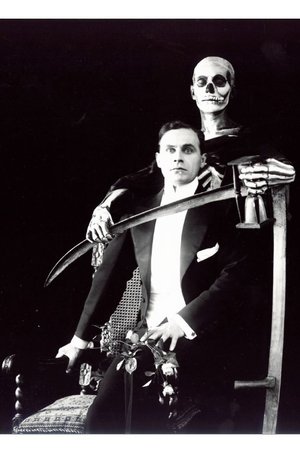
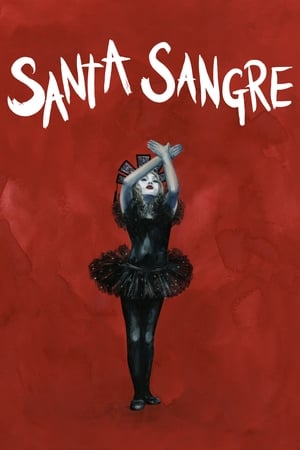
"Assassination" - Adaptation of Hermann Hesse's novel "Demian". A young man's detachment from and revolt against the superficial ideals of the world of appearances and eventually awakens into a realization of self. Max Demian is his childhood friend and mentor.
Dissipated youth Tommy Hilgrade is sent to the lumber lands in the Northwest by his father who hopes that hard living will reform his son. Accompanying Tommy is his sister Marion. Upon their arrival in Canada, lumber foreman Jack Macy is attracted to Marion but, unknown to her, he contributes to Tommy's addiction to drink and gambling. When Marion falls in love with French Canadian Jules Bonnivet after he rescues her from a fall through the ice, Macy schemes to destroy their romance by fabricating the story that Jules is responsible for Tommy's downfall.
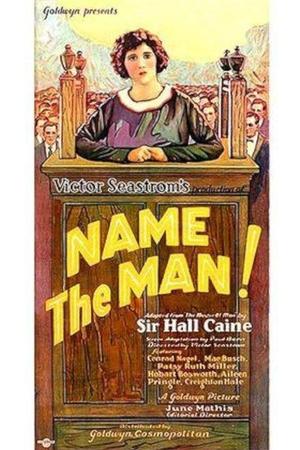
Victor Stowell, son of the deemster of the Isle of Man, is engaged to Fenella Stanley. He becomes involved in an intrigue with local girl Bessie Collister, becomes the deemster on his father's death, and is forced to try Bessie for killing her illegitimate child.
When her grandson is kidnapped during the Tour de France, Madame Souza and her beloved pooch Bruno team up with the Belleville Sisters—an aged song-and-dance team from the days of Fred Astaire—to rescue him.
Andrew Gibson inherits problems when his father dies and leaves shares of his piano manufacturing business to his workmen. To add to his troubles, Andrew's girl, Nora Gorodna, is being pursued by José Ferra, one of the workmen; and Lila Normand, a society girl, tricks Andrew into proposing.
In 17th-century Tuscany, a church play is performed for the benefit of young aristocrat Cosimo. In the play, a grotesque old woman gives birth to a beautiful baby boy. The child's older sister is quick to exploit the situation, selling blessings from the baby, and even claiming she's the true mother by virgin birth. However, when she attempts to seduce the bishop's son, the Church exacts a terrible revenge.
Children's Souls Accuse You is a 1927 German silent drama film directed by Curtis Bernhardt and starring Albert Steinrück, Nathalie Lissenko and Walter Rilla. It was made with an anti-abortion theme.
An aging doorman, after being fired from his prestigious job at a luxurious hotel, is forced to face the scorn of his friends, neighbours and society.
Young Cabiria is kidnapped by pirates and sold as a slave in Carthage. Just as she's to be sacrificed to Moloch, Cabiria is rescued by Fulvius Axilla, a good-hearted Roman spy, and his powerful slave, Maciste. The trio are broken up as Cabiria is entrusted to a woman of noble birth. With Cabiria's fate unknown, Maciste punished for his heroism, and Fulvius sent away to fight for Rome, is there any hope of our heroes reuniting?
The film consists of a series of tightly interlinked vignettes, the most sustained of which details the story of a man and a woman who are passionately in love. Their attempts to consummate their passion are constantly thwarted, by their families, by the Church and bourgeois society in general.
In 1921, we follow two women - Marie and Grete - from the same poor Viennese neighborhood, as they try to better the lives of themselves and their families during the period of Austrian postwar hyperinflation.
Adrift in the vast expanse of the ocean, a solitary boat carries three castaways—a man and two women. Stranded and devoid of any glimmer of rescue, they find solace in recounting the tales of their lives to one another. As they delve into their personal narratives, reminiscing about the circumstances that led them to this desolate predicament, they navigate through the depths of three distinct destinies. Bound by the confines of their shared space, every aspect of their existence becomes a boundary, underscoring their plight.
Five lonesome cowboys get all hot and bothered at home on the range after confronting Ramona Alvarez and her nurse.
A sheep farmer brings his new wife to his father's ranch and the old man takes an instant dislike to her.
The Alchemist assembles together a group of people from all walks of life to represent the planets in the solar system. The occult adept's intention is to put his recruits through strange mystical rites and divest them of their worldly baggage before embarking on a trip to Lotus Island. There they ascend the Holy Mountain to displace the immortal gods who secretly rule the universe.
Professional forger Bill Butters realizes one day that the police are closing in on him, and convinces his daughter Peggy to flee.
The Chronicle of a on-and-off relationship between two young men, plagued by alcoholism, violence, and too many second chances.
Robin Hood is a 1912 film made by Eclair Studios when it and many other early film studios in America's first motion picture industry were based in Fort Lee, New Jersey at the beginning of the 20th century. The movie's costumes feature enormous versions of the familiar hats of Robin and his merry men, and uses the unusual effect of momentarily superimposing images different animals over each character to emphasize their good or evil qualities. The film was directed by Étienne Arnaud and Herbert Blaché, and written by Eustace Hale Ball. A restored copy of the 30-minute film exists and was exhibited in 2006 at the Museum of Modern Art in New York City.
Sergei M. Eisenstein's docu-drama about the 1917 October Revolution in Russia. Made ten years after the events and edited in Eisenstein's 'Soviet Montage' style, it re-enacts in celebratory terms several key scenes from the revolution.
This pioneering documentary film depicts the lives of the indigenous Inuit people of Canada's northern Quebec region. Although the production contains some fictional elements, it vividly shows how its resourceful subjects survive in such a harsh climate, revealing how they construct their igloo homes and find food by hunting and fishing. The film also captures the beautiful, if unforgiving, frozen landscape of the Great White North, far removed from conventional civilization.