Tells the adventures and misfortunes of Demodoco, a projectionist, who discovers by chance a one-of-a-kind way to get pleasure. However, abusing it leads to risky consequences.
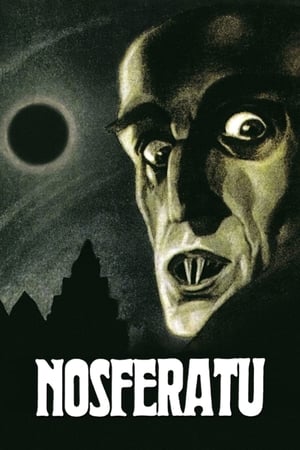
The mysterious Count Orlok summons a happily married real estate agent to his castle, located up in the Transylvanian mountains, to finalise a terrifying deal.
Abraham Cadabra, an unconfident young man buys a magic book and top hat in the hope of using magic to impress the girl of his dreams, Penelope Predicament. However, when he meets her for a date, he discovers that his rival, Jock Strong has beaten him to it. Abraham tries to use magic to win Penelope over, but magic may not be the solution.
A nervous and unsettling young boy takes a mysterious old suitcase across London... to a twisted and surreal conclusion.
L. Frank Baum would appear in a white suit and present his live actors, slide shows and films as a live travelogue presentation of his popular fantasies. Highlights include Dorothy being swept to Oz in various ways, such as with back-projection tornadoes and storms in a chicken coop. Lack of financial backing forced the show to fold after appearing in only two cities, despite being a critical and commercial success. This film is lost.
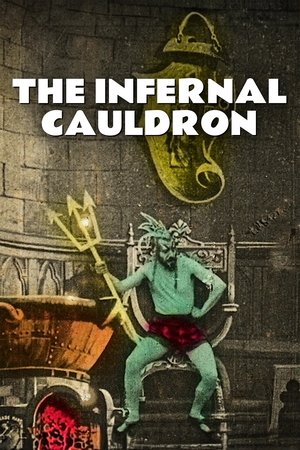
At the royal court, a prince is presenting the princess whom he is pledged to marry when a witch suddenly appears. Though driven off, the witch soon returns, summons some of her servants, and carries off the princess. A rescue party is quickly organized, but the unfortunate captive has been taken to a strange, forbidding realm, from where it will be impossible to rescue her without some special help.
A man wakes up in a blue room. He's stuck and he can't escape. A window is his only connection to the outer world. It filters the reality in a very mysterious way.
A mysterious thief has stolen the prosperous Happy Valley's most prized possession: the musical Singing Harp. Can Mickey, Donald, and Goofy find the answer in the irritable Willie the Giant's magnificent castle up in the blue sky?
Amidst the chilly white winter, bright-eyed Alma, wanders through Barcelona’s cobblestone streets. Suddenly, she spots an unassuming toy shop. Her gaze is drawn to a nearly identical figure staring back at her from the storefront window. As if by magic, the shop’s door swings open. But to her bewilderment, her elusive twin is nowhere to be found.
As a young couple stops and rests in a small village inn, the man is abducted by Death and sequestered behind a huge doorless, windowless wall. The woman poisons herself in order to join him and is met by Death, who gives her three opportunities to prove that love is stronger than death, thereby freeing her beloved from his fate.
A young woman, Margaret Dauncey, is caught between the forces of a charlatan magician, Oliver Haddo, whom she is unable to resist, and the love of a handsome surgeon, Arthur Burdon, who has saved her from being a helpless cripple by performing a delicate operation on her spine.
Siegfried, son of King Siegmund of Xanten, travels to Worms, capital of the Burgundian kingdom, to ask King Gunther for the hand of his sister, the beautiful Kriemhild.
This film begins with the invocation of 'almighty god' at a river where several people are gathered. The child god Krishna rises out of the water astride the demon snake Kaliya. Then we see Yashoda as she rocks the sleeping Krishna's crib and imagines the god as Gopala. The next scene shows Kamsa fantasizing about Krishna threateningly duplicated many times around him. Kamsa then imagines himself dead as his severed head rises up and descends again. People of all castes pay obeisance to the deity with the title-card: 'may this humble offering be accepted by the Lord'.
The seven short films making up GENIUS PARTY couldn’t be more diverse, linked only by a high standard of quality and inspiration. Atsuko Fukushima’s intro piece is a fantastic abstraction to soak up with the eyes. Masaaki Yuasa, of MIND GAME and CAT SOUP fame, brings his distinctive and deceptively simple graphic style and dream-state logic to the table with “Happy Machine,” his spin on a child’s earliest year. Shinji Kimura’s spookier “Deathtic 4,” meanwhile, seems to tap into the creepier corners of a child’s imagination and open up a toybox full of dark delights. Hideki Futamura’s “Limit Cycle” conjures up a vision of virtual reality, while Yuji Fukuyama’s "Doorbell" and "Baby Blue" by Shinichiro Watanabe use understated realism for very surreal purposes. And Shoji Kawamori, with “Shanghai Dragon,” takes the tropes and conventions of traditional anime out for very fun joyride.
This film is the pearl of his pioneer work in Madeira Island and captures the most of his methodology: good stories taking the most of Madeira's natural scenery, and provoking the audience with some ironic and "double-sense" scenes. The film tells the story of an English girl travelling with her father, a botanic, and a guide from madeira in the deep mountains of the island. The girl has some mental disturbs and is always scaring about an attack from the native man, appearing as a half-man/half-monster.
A homeless bum, bored of eating the same food every night, promises his girlfriend a special dinner. He plans to take her out with money robbed from a passing stranger. But the bum’s in for a surprise when the man he targets for his mugging turns out to have special – and hilarious – powers.
One of the earliest cinematic adaptation of Chinese classic novel Journey to the West. When seeking for food alone, Tang Xuanzang was kept prisoner by seven spider monsters who took the form of seven beautiful women. The Monkey King and the other two of Xuanzang's disciples managed to rescue him with the help of Avalokitesvara Bodhisattva/Guanyin. They renounced the desire for lust and continued the quest for Buddhist Scriptures.
Explores a fleeting moment between two strangers, revealing their brief connection in a hyper real fantasy.
A reel of the Noh drama Momiji-gari, in which Danjuro Ichikawa played opposite Onoe Kikugoro V as an ogress who has disguised herself as the Princess Sarashina. Filmed by Shibata Tsunekichi in the open air on a windy day in November 1899, Danjuro would allow only the one take, so that when his fan blew away in mid-performance the scene had to stay. The film re-emerged at the Kikikan theatre in 1907 where it was a great success and inspired a wave of fiction filmmaking based on traditional Japanese narratives.
In this fragile yet frightening poetic fantasy set against a dark industrial landscape, a woman sits knitting on the porch of her home when a man appears and takes the knitting from her.