Ventanas
A display of flower bouquets, rotating to show the Kinemacolour process.
"Danse serpentine" (Gaumont #588) is part of the "Miss Lina Esbrard. Danseuse cosmopolite et serpentine" series of 4 films, and should not be confused with "Danse excentrique" (Gaumont #587), "Danse fantaisiste" (Gaumont #589) or "La Gigue" (Gaumont #590).
A silent succession of black-and-white photographs of the city of Montreal.
The lives of Stan Laurel (1890-1965) and Oliver Hardy (1892-1957), on the screen and behind the curtain. The joy and the sadness, the success and the failure. The story of one of the best comic duos of all time: a lesson on how to make people laugh.
A day in the city of Berlin, which experienced an industrial boom in the 1920s, and still provides an insight into the living and working conditions at that time. Germany had just recovered a little from the worst consequences of the First World War, the great economic crisis was still a few years away and Hitler was not yet an issue at the time.
In 1953 the Canadian government relocated Inuit families from Northern Québec to the High Arctic, promising an abundance of game and fish and assuring them they could return home after two years if things didn't work out. They would not see their ancestral lands for 30 years. Abandoned in flimsy tents, the Inuit were left to fend for themselves in the desolate settlements of Resolute Bay and Grise Fiord, where the sea was nearly always frozen and darkness reigned for months on end.
On August 3rd, 1979, a Vietnamese refugee shoots and kills a white crab fisherman at the town docks in Seadrift, TX. What began as a fishing dispute erupts in violence and ignites a resurgence of the KKK and open hostilities against the Vietnamese along the Gulf Coast. Set during the early days of Vietnamese refugee arrival, “Seadrift” examines the circumstances that led up to the shooting, its tumultuous aftermath, and the unexpected consequences that continue to reverberate today.
This pioneering documentary film depicts the lives of the indigenous Inuit people of Canada's northern Quebec region. Although the production contains some fictional elements, it vividly shows how its resourceful subjects survive in such a harsh climate, revealing how they construct their igloo homes and find food by hunting and fishing. The film also captures the beautiful, if unforgiving, frozen landscape of the Great White North, far removed from conventional civilization.
With a blend of poignant flashbacks and present-day reflections, the film follows Pete on his 50th and final season fishing for salmon in Southeast Alaska. With day-in-the-life scenes on his fishing vessel, Njord, he emphasizes the critical need for ethical fishing practices, grassroots political organizing, and direct consumer relationships to thrive in an increasingly challenging economy. Featuring powerful moments from the 2001 battle to protect Seattle’s Fisherman’s Terminal for working vessels, this documentary not only showcases the fight for economic survival but also underscores the personal and collective resilience that sustains small family businesses in the face of adversity.
Film historians, and survivors from the nearly 30-year struggle to bring sound to motion pictures take the audience from the early failed attempts by scientists and inventors, to the triumph of the talkies.
The first woman to appear in front of an Edison motion picture camera and possibly the first woman to appear in a motion picture within the United States. In the film, Carmencita is recorded going through a routine she had been performing at Koster & Bial's in New York since February 1890.
Of Maine’s more than 5000 commercial lobstermen only 4% are female. The Captain celebrates that fearless minority through the lens of Sadie Samuels. At 27 years old, she is the youngest and only female lobster boat captain in the Rockport, Maine harbor. Despite the long hours and manual labor of hauling traps, Samuels is in love — obsessed even — with what she calls the most beautiful, magical place on the planet. Her love for lobster fishing was imparted early in her childhood by her dad Matt, who has been her mentor and inspiration since she was a little girl in yellow fishing boots.
Late 1800s cigarette advertisement produced by Thomas Edison Manufacturing.
A documentary from Erkki Karu, one of the earliest pioneers of Finnish cinema: This government-produced propaganda film introduces the nature, sports, military, agriculture and capital of Finland.
Living with Giants delves into the imaginative world of Paulusie Kasudluak, a young Inuk facing responsibilities as he transitions into adulthood. The film portrays his thoughts, his dreams, and his beliefs, and allows for an intimate immersion into his life. Paulusie is a caring son to his ailing father and a good boyfriend. But what begins as the story of an innocent teenager quickly becomes the struggle of a young man coping with the guilt of having made a huge mistake. Tragically, Paulusie takes the most dramatic decision and takes his own life. Living with Giants remains a poetic journey of resilience that echoes issues that are far greater than Paulusie's personal story.
An account of the journey that King Alfonso XIII of Spain made to the impoverished shire of Las Hurdes, in the province of Cáceres, in the region of Extremadura, in 1922.
This film records the vast public response to the early death of Vera Kholodnaya, the first star of Russian cinema.
A modern geisha travels through Japan trying to find a job as entertainer, and ends up by finding love and a job as ama, a pearl diver.
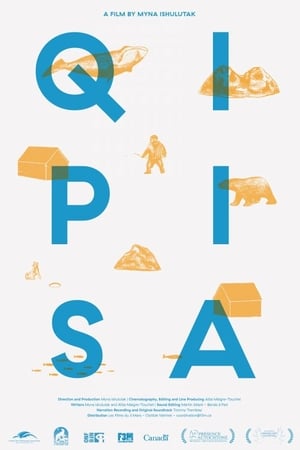
The director goes back to her roots in Pangnirtung, amongst her family and community. It leads her to another journey: to Qipisa, the outpost camp from where they were uprooted.