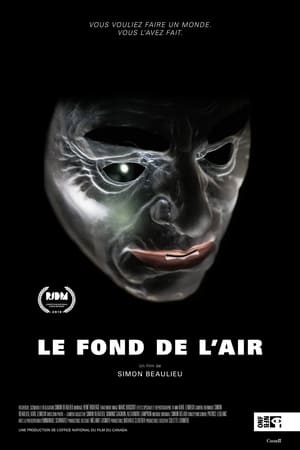
Iggy Pop reads and recites Michel Houellebecq’s manifesto. The documentary features real people from Houellebecq’s life with the text based on their life stories.
A tribute to a fascinating film shot by Alfred Hitchcock in 1958, starring James Stewart and Kim Novak, and to the city of San Francisco, California, where the magic was created; but also a challenge: how to pay homage to a masterpiece without using its footage; how to do it simply by gathering images from various sources, all of them haunted by the curse of a mysterious green fog that seems to cause irrepressible vertigo…
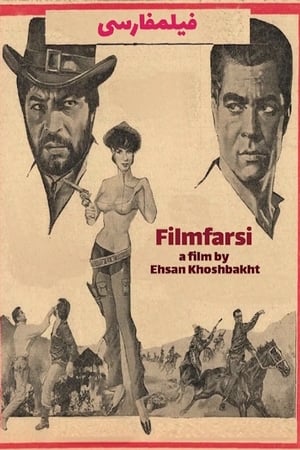
A found-footage essay, Filmfarsi salvages low budget thrillers and melodramas suppressed following the 1979 Islamic revolution.
The Post(?) Feminist Dissonance Project uses a quote by Kathleen Hanna as a prompt, a voicemail box as an interviewing device, found footage as a tool, and text as a character. it is a study in the cacophony of the inner life tuned against the perception of reality. i made this piece to see if i was alone, and i discovered that for better or for worse, i am not. this is above all about the process, not the resolution.
A labyrinthine portrait of Czech culture on the brink of a new millennium. Egon Bondy prophesies a capitalist inferno, Jim Čert admits to collaborating with the secret police, Jaroslav Foglar can’t find a bottle-opener, and Ivan Diviš makes observations about his own funeral. This is the Czech Republic in the late 90s, as detailed in Karel Vachek’s documentary.
Basically an artist is also a terrorist, the protagonist thinks in an unguarded moment. And if he is a terrorist after all, then he might just as well be one. Not an instant product, but an experimental feature in which diary material is brought together to form an intriguing puzzle.
A personal essay which analyses and compares images of the political upheavals of the 1960s. From the military coup in Brazil to China's Cultural Revolution, from the student uprisings in Paris to the end of the Prague Spring.
A look at the Brazilian black movement between 1977 and 1988, going by the relationship between Brazil and Africa.
Twenty-five films from twenty-five European countries by twenty-five European directors.
A behind-the-scenes look at Céline Dion's opening night in Las Vegas.
In an open letter to the most influential modern Indian political leader, the Late Mohandas Karamchand Gandhi, the filmmaker sequentially narrates the stories of three distinct individuals - that of a confused filmmaker who flows with time, a dedicated social reformer who guides the stratified masses into social upliftment and a divisive and regressive politician. The juxtaposition of their disfigured trajectories provokes a pertinent question: Did Gandhi ever foresee the dehumanized shape that his legacy has now dangerously morphed into?
A strippers' convention and a major contest. The movie focuses on a few strippers, each with her own strong motive to win.
A fragmented collection of independent closed cinemas, in London during lockdown, captured on Super 8mm film.
Stream of consciousness awakened by the shots of an inauspicious summer.
In Humberstone (Chile), little was left of the saltpeter's prosperity. Near the old Fordlandia (PA), squatter houses are the last signs of the city built by Henry Ford. Armero (Colombia), had its population wiped out by the eruption of the Nevado del Ruiz volcano in 1985. Twenty-five years after a flood, ruins of Villa Epecuén (Argentina) expose the remains of the old water station.
The fascinating story of the rise to power of dictator Benito Mussolini (1883-1945) in Italy in 1922 and how fascism marked the fate of the entire world in the dark years to come.
Il n'y aura jamais assez d'images
In an essay and archival intervention, questions arise about the images of the 1968 national strike council.
Born June 8, 1964, Frank Matter films four "twins", born the same day as him, but in other latitudes. Interweaving their life stories with rich archival material, the filmmaker links these Parallel Lives with elements from his own biography, to compose a fascinating fresco where intimate trajectories are part of the advent of the global village.
The cooking show is as old as television itself. But why do we like watching the making of a meal that most of us will never cook, let alone eat? Dirty Furniture’s jam-packed video essay is a rollercoaster ride through the history of the genre, at once a staple of television viewing and a hotpot of shifting perspectives and sociocultural values.