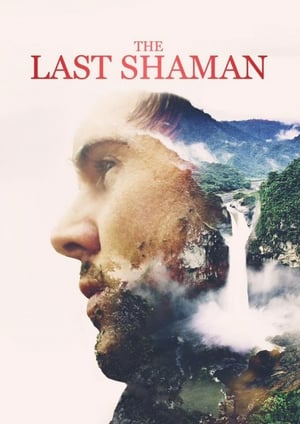
Out of love for Huskies, nature and cold winters Dave and Kristen Olesen moved from Minnesota to the North West Territories in Canada 25 years ago to create their own little universe on the magnificent East arm of Great Slave Lake. With their two daughters Annika 15 and Liv 12 and their 37 dogs, the Olesens enjoy a unique lifestyle in the wide open wilderness far away from civilization. One winter they all leave their self-built homestead with ten dogs on a two and a half thousand mile family expedition allowing Annika to run the Junior Iditarod in Alaska. As unexpected obstacles all along the trip culminate in three heavily injured dogs the whole endeavor is at risk. Optimism, love and loyalty prevail on this exciting epic family voyage.
A cameraman wanders around with a camera slung over his shoulder, documenting urban life with dazzling inventiveness.
The stand-up comedy concert film Latham Entertainment Presents features a handful of African-American comedians including D.L. Hughley, Bruce Bruce, Earthquake, and Rickey Smiley.
What happens when you travel to the birthplace of green slime? For an entire generation of classic Nickelodeon fans, it's like finding the Holy Grail.
For the first time, audiences get a behind-the-scenes glimpse into NYC's famed improv show by UCB: Asssscat.
Film historians, and survivors from the nearly 30-year struggle to bring sound to motion pictures take the audience from the early failed attempts by scientists and inventors, to the triumph of the talkies.
In the 1968 movement in Paris, Jean-Luc Godard made a 16mm, 3-minute long film, Film-tract No.1968, Le Rouge, in collaboration with French artist Gérard Fromanger. Starting with the shot identifying its title written in red paint on the Le Monde for 31 July 1968, the film shows the process of making Fromanger’s poster image, which is thick red paint flows over a tri-color French flag. —Hye Young Min
The life and career of one of comedy's most inimitable modern voices, Mr. Gilbert Gottfried.
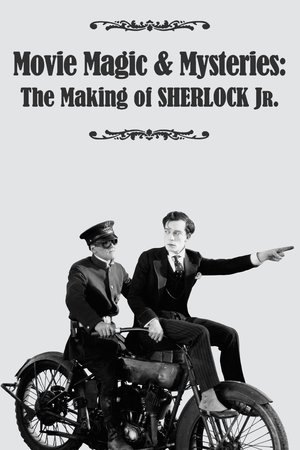
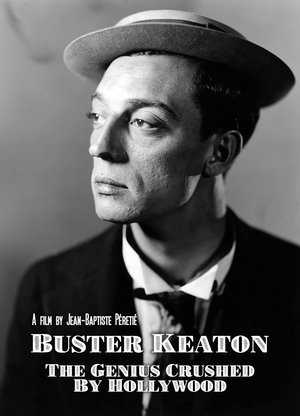
In 1926, Buster Keaton was at the peak of his glory and wealth. By 1933, he had reached rock bottom. How, in the space of a few years, did this uncontested genius of silent films, go from the status of being a widely-worshipped star to an alcoholic and solitary fallen idol? With a spotlight on the 7 years during which his life changed, using extracts of Keaton’s films as magnifying mirrors, the documentary recounts the dramatic life of this creative genius and the Hollywood studios.
In front of a live audience at the Raleigh Memorial Auditorium at the Progress Energy Center for the Performing Arts in Raleigh, North Carolina, the Emmy-nominated host of Real Time with Bill Maher performs an all-new hour of stand-up comedy. Among the topics Bill discusses in his ninth HBO solo special are: Whether the "Great Recession" is really over; the fake patriotism of the right wing; what goes on in the mind of a terrorist; why Obama needs a posse instead of the secret service; the drug war; Michael Jackson; getting out of Iraq and Afghanistan; racism; the Teabagger movement; religion; the health-care fight; why Gov. Mark Sanford will come out looking good, and how silly it is to ask "Why do men cheat?"; and why comedy most definitely didn't die when George Bush left office.
A comedy documentary about performing stand-up comedy for U.S. Troops stationed in Afghanistan, Kuwait and Iraq. Heartfelt interviews with top professional comedians are woven in with filmmaker Jordan Brady's first-hand experience going to the Middle East. While traveling (Spring 2016) brutal terrorist attacks in Brussels, Turkey and Iraq remind us of the dangers in thew world, and underscore the mission to provide laughter for the men and women serving the military.
A fascinating pictorial document: On an old, cluttered work ship, a man is helped on with a bulky, old fashioned diving suit. It's a complicated process, many layers and sections are carefully applied. He goes over the side. Some men row out to what looks like a wrecked barge and set dynamite. Then the diver returns and now laughs and acknowledges the camera. The other men, now safely away, blow up the barge.
Most movie fans know that the first filmmakers liked to shoot trains entering stations. This example by Sussex film pioneer George Albert Smith illustrates why. The train's rush towards the audience brings movement and visual drama. The flurry of human activity offers plenty for the audience to engage with - who are these people and where are they going? And the time pressure exerted by the fact that the train must soon depart adds narrative tension - will everyone get on and off in time?
A documentary about some of the comedians of the silent era featuring clips from their films and biographical information.
Grave robbing, torture, possessed nuns, and a satanic Sabbath: Benjamin Christensen's legendary film uses a series of dramatic vignettes to explore the scientific hypothesis that the witches of the Middle Ages suffered the same hysteria as turn-of-the-century psychiatric patients. But the film itself is far from serious-- instead it's a witches' brew of the scary, gross, and darkly humorous.
Documentary by Portuguese Silvino Santos, about the Amazon, its flora, fauna, its inhabitants and among other wonderful images from the beginning of the 20th century with alternating close-up shots of caimans, jaguars and tropical flora with footage of Indigenous rituals--including some of the earliest known moving images of the Indigenous Witoto people--and longer sequences showcasing the region’s extractive industries: rubber, the Brazil nut, timber, fishing, even the egret feathers that were a staple of women’s fashion at the time.
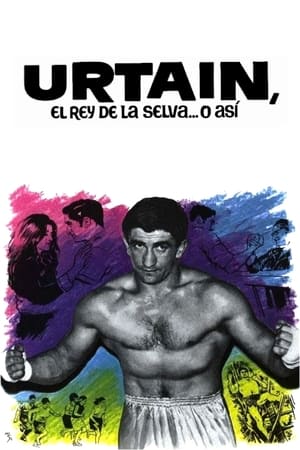
A humorous visit to the turbulent world of the controversial Spanish boxer José Manuel Urtain.
William K.L. Dickson brings his hat from his one hand to the other and moves his head slightly, as a small nod toward the audience. This was the first film produced by the Edison Manufacturing Company to be shown to public audiences and the press.
Interviews with T.J. Miller, Pete Holmes, Marc Maron, Doug Benson, Jim Norton, Judah Friedlander, Alonzo Bodden, Maria Bamford, Jen Kirkman, Auggie Smith, W. Kamau Bell, Nikki Glaser, Wayne Federman, Seth Milstein, Oni Perez, Alysia Wood, Kris Tinkle, Traci Skene, Brian McKim, Tim O’Rourke, Tom Rhodes, Kyle Kinane and yours truly.
Experimental film fragment made with the Edison-Dickson-Heise experimental horizontal-feed kinetograph camera and viewer, using 3/4-inch wide film.