Jan Schmidt and Pavel Juráček turn their attention to the problem of Czechoslovakia's unloved cars in this whimsical documentary short.
A handful of prisoners in WWII camps risked their lives to take clandestine photographs and document the hell the Nazis were hiding from the world. In the vestiges of the camps, director Christophe Cognet retraces the footsteps of these courageous men and women in a quest to unearth the circumstances and the stories behind their photographs, composing as such an archeology of images as acts of defiance.
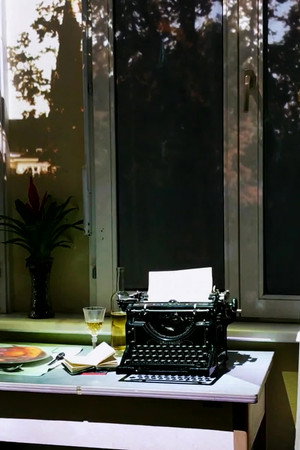
In an evicted apartment, a ghost-like presence remembers its luminous past and its progression towards its current state of decay. It yearns to be what it once was.
Video art of sculpture is the real life story of Rumi (Mevlana) and Shams Tabrizi. Rumi and Shams are well known international poets of Persian language. One day, Rumi invites Shams Tabrizi to his house, Shams throws the book into the pool of water and Rumi is worried and Shams returns the book to Rumi without any trace of water. The lost half of the sculpture in the film is a representation of the same concept. "Sculpture" has won more than 69 International Awards, third place (semi-final) in called Flickers' Rhode Island International Film Festival (Academy Award ® Qualifying, BAFTA Qualifying, Canadian Screen Award Qualifying) , Winner of the 2025 Jury Award for Best Short Documentary – Toronto International Nollywood Film Festival (TINFF) – A Canadian Screen Award-Qualifying Festival , Crown Point International Film Festival(Chicago),(US),Gold Star Movie Awards (US),One-Reeler Short Film Competition (US),Accolade Competition (US), and many other events.
Errol Morris examines the incidents of abuse and torture of suspected terrorists at the hands of U.S. forces at the Abu Ghraib prison.
Canadian author, humorist and storyteller W.O. Mitchell talks about his career as a writer and performer. Known for his witty radio and television appearances, Mitchell shows a more serious side as he reveals his personal views on writing and on the meaning of life and death.
Twenty-five films from twenty-five European countries by twenty-five European directors.
A fist-person story of the director of the documentary, who talks about the loneliness that entails living with an eating disorder and her vision now thar she is entering into adulthood.
This short documentary follows Frank Ladouceur, a man who lives alone for months at a time, trapping muskrat in the vast, desolate wilderness of northern Alberta. He receives no visitors, and rarely voyages to his family home in Fort Chipewyan. What some may consider an unthinkably lonely, isolated existence is the calling of this fiercely independent Métis man. Remarkably determined and self-sufficient, Frank makes his home in the wild bush.
A science fiction fantasy on skis with spectacular glacier skiing, extraordinary acrobatics, unique optical effects, and an original score. The world's polarity is mysteriously reversed, requiring the skiers to regain the realm of normal perception by performing maneuvers inspired by the ambiguous nature of the "Moebius Strip."
University of Washington professor Noam Pianko and his students collaborated with Citizen Film, the Pacific Northwest Jewish Archive and Seattle’s Jewish Community Federation to unpack and digitize archival photos and documents, then turn them into shareable digital content.
Robert Altman's first film was this 26-minute short, which has a football coach explaining how to play the sport. This is basically an educational short where the viewer learns about the various rules of the sport as the narrator explains them while we see reenactments.
Filmmaker Alain Resnais documents the atrocities behind the walls of Hitler's concentration camps.
There are 36 days left before Russia's full-scale military invasion of Ukraine. On another Baptism of Christ holiday an ice hole was made in a pond in a bedroom suburb of Kyiv. Church bells are heard on the shore, people are undressing, standing in line... In this short observational film, closeups of people of different ages, lines of naked bodies and short conversations tell us about the fragility of life, the contradictions of human faith and the joy of existence.
A disorienting realm where reality itself flickers and fragments. Through a visceral exploration of digital distortion and failing verification processes, this challenges your perception and dares you to question what lies beneath the surface. Are we truly awake to the genocides and wars raging beyond our privileged bubbles, or are we content to remain ensnared by manipulated realities? This is a personal call to shatter the illusions, to seek deeper truths, and to recognize the profound fortune of our existence amidst global turmoil.
301
In 1967, de Andrade was invited by the Italian company Olivetti to produce a documentary on the new Brazilian capital city of Brasília. Constructed during the latter half of the 1950s and founded in 1960, the city was part of an effort to populate Brazil’s vast interior region and was to be the embodiment of democratic urban planning, free from the class divisions and inequalities that characterize so many metropolises. Unsurprisingly, Brasília, Contradições de uma Cidade Nova (Brasília, Contradictions of a New City, 1968) revealed Brasília to be utopic only for the wealthy, replicating the same social problems present in every Brazilian city. (Senses of Cinema)
The Bokelberg photographic collection brings to life the Paris of the Belle Époque (1871-1914), an exhibition of workshops and stores with extremely beautiful shop windows before which the owners and their employees proudly pose, hiding behind their eyes the secret history of a great era.
Hannas baby
Elem Klimov's tribute to his late wife, director Larisa Shepitko, killed in a car accident a year earlier. Features excerpts from all of her films, and archival audio of her discussing life and art.