Holly Grant has learned a long time ago not to rely on Santa Claus leaving Mr. Right in her Christmas stocking. But Holly is in for a surprise when a handsome man arrives on her doorstep with a twinkle in his eye and Yuletide tree in tow.
In the early 70s Greek cinema entered in a period of crisis. One of its aspects was said "crisis of issues" and one of the exits heard in the name "erotic cinema". The genre was already acquaintance from the abundance of foreigner films, that was distributed in the grindhouses under the "adults only" motto and its Greek version had a lot of variants.
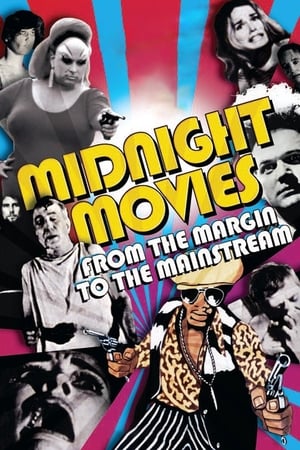
From 1970-1977, six low budget films shown at midnight transformed the way we make and watch films.
A chilling depiction of a series of violent killings during the Troubles in Northern Ireland.
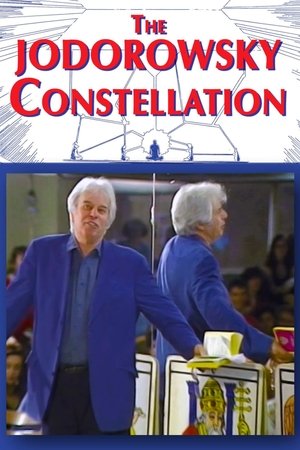
This documentary depicts the filmmaker Alejandro Jodorowsky talking about his life, his loves, his career as a filmmaker, graphic novelist, and workshop leader, and his eccentricities including tarot reader and theatrical director during The Panic Movement. Directed by Louis Mouchet, La Constellation Jodorowsky includes a lengthy on-camera interview with Jodorowsky in Spanish with subtitles. Marcel Marceau, Fernando Arrabal, Peter Gabriel, Jean "Moebius" Giraud, and Jean Pierre Vignau make appearances discussing their various projects with the director. In addition to the interview and film clips, Mouchet features some bizarre footage from Jodorowsky’s absurdist plays in which topless women splattered with paint writhe around the stage in a theatrical production meant to represent The Panic Movement, i.e., an artistic expression in which reason cannot fully express the human experience.
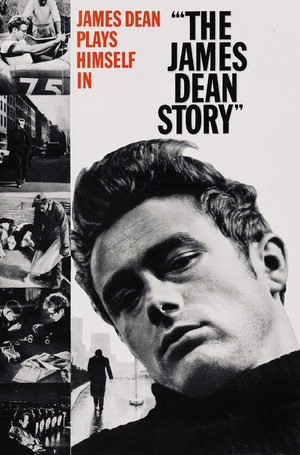
Released two years after James Dean's death, this documentary chronicles his short life and career via black-and-white still photographs, interviews with the aunt and uncle who raised him, his paternal grandparents, a New York City cabdriver friend, the owner of his favorite Los Angeles restaurant, outtakes from East of Eden, footage of the opening night of Giant, and Dean's ironic PSA for safe driving.
2nd Edition of Loose Change documentary. What if...September 11th was not a surprise attack on America, but rather, a cold and calculated genocide by our own government?We were told that the twin towers were hit by commercial jetliners and subsequently brought down by jet fuel. We were told that the Pentagon was hit by a Boeing 757. We were told that flight 93 crashed in Shanksville, Pennsylvania. We were told that nineteen Arabs from halfway across the globe, acting under orders from Osama Bin Laden, were responsible. What you will see here will prove without a shadow of a doubt that everything you know about 9/11 is a complete fabrication. Conspiracy theory? It's not a theory if you can prove it.Written and narrated by Dylan Avery, this film presents a rebuttal to the official version of the September 11, 2001 terrorist attacks and the 9/11 Commission Report.
The earliest surviving motion-picture film, and believed to be one of the very first moving images ever created, was shot by Louis Aimé Augustin Le Prince using the LPCCP Type-1 MkII single-lens camera. It was taken on paper-based photographic film in the garden of Oakwood Grange, the Whitley family house in Roundhay, Leeds, West Riding of Yorkshire (UK), on 14 October 1888. The film shows Adolphe Le Prince (Le Prince’s son), Mrs. Sarah Whitley (Le Prince’s mother-in-law), Joseph Whitley, and Miss Harriet Hartley walking around in circles, laughing to themselves, and staying within the area framed by the camera. Roundhay Garden Scene is often associated with a recording speed of around 12 frames per second and runs for about 2 to 3 seconds.
Unable to purchase a $50,000 digital projector, a group of film fanatics in rural Pennsylvania fight to keep a dying drive-in theater alive by screening only vintage 35mm film prints and working entirely for free.
A look at the first years of Pixar Animation Studios - from the success of "Toy Story" and Pixar's promotion of talented people, to the building of its East Bay campus, the company's relationship with Disney, and its remarkable initial string of eight hits. The contributions of John Lasseter, Ed Catmull and Steve Jobs are profiled. The decline of two-dimensional animation is chronicled as three-dimensional animation rises. Hard work and creativity seem to share the screen in equal proportions.
This short was released in connection with the 20th anniversary of Warner Brothers' first exhibition of the Vitaphone sound-on-film process on 6 August 1926. The film highlights Thomas A. Edison and Alexander Graham Bell's efforts that contributed to sound movies and acknowledges the work of Lee De Forest. Brief excerpts from the August 1926 exhibition follow. Clips are then shown from a number of Warner Brothers features, four from the 1920s, the remainder from 1946/47.
A tribute to the late, great French director Francois Truffaut, this documentary was undoubtedly named after his last movie, Vivement Dimanche!, released in 1983. Included in this overview of Truffaut's contribution to filmmaking are clips from 14 of his movies arranged according to the themes he favored. These include childhood, literature, the cinema itself, romance, marriage, and death.
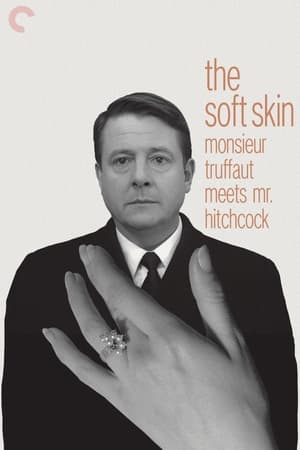
When Francois Truffaut approached Alfred Hitchcock in 1962 with the idea of having a long conversation with him about his work and publishing this in book form, he didn't imagine that more than four years would pass before Le Cinéma selon Hitchcock finally appeared in 1966. Not only in France but all over the world, Truffaut's Hitchcock interview developed over the years into a standard bible of film literature. In 1983, three years after Hitchcock's death, Truffaut decided to expand his by now legendary book to include a concluding chapter and have it published as the "Edition définitive". This film describes the genesis of the "Hitchbook" and throws light on the strange friendship between two completely different men. The centrepieces are the extracts from the original sound recordings of the interview with the voices of Alfred Hitchcock, Francois Truffaut, and Helen Scott – recordings which have never been heard in public before.
Spider-Man and Daredevil team up to fight Kingpin.
A short documentary about the making of "The Great Dictator."
Footage from the premiere of Charlie Chaplin's 1928 film 'The Circus'.
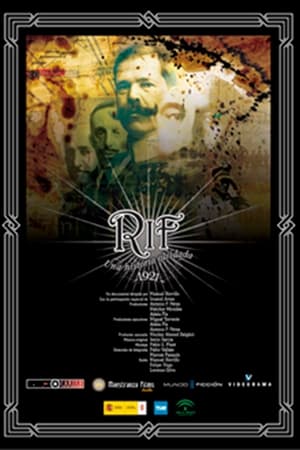
The film shows the genesis of the El Rocío pilgrimage and unveils the economic, socio-political and religious reasons and interests that nurture the phenomenon.
The film features a conversation between Lucas and Francis Ford Coppola, producer of THX 1138. They discuss Lucas' vision for the film, including his ideas about science fiction in general and in particular his concept of the "used future" which would famously feature in his film Star Wars. Intercut with this discussion is footage shot prior to the start of production of THX 1138 showing several of its actors having their heads shaved, a requirement for appearing in the film. In several cases the actors are shown being shaved in a public location. For example, Maggie McOmie is shaved outside the Palace of Fine Arts in San Francisco, while Robert Duvall watches a sporting event as his hair is cut off. Another actor, Marshall Efron, who would later play an insane man in the film, cut off his own hair and was filmed doing so in a bathtub.
Kyra Gardner's loving tribute to growing up in the world of the psycho killer doll, Chucky.
A biographical documentary about the great British actor and director Charlie Chaplin (1889-1977), from rags to riches, from the slums of London to glory.