A moving portrait of one of the most loved and read Danish poets, Halfdan Rasmussen. The film covers both the early years with poverty and wartime on to success and the humorous nonsense verses that has made Rasmussen one of the most read authors in Denmark.
Ron Padgett (1942- ) is a poet and editor whose artistic career took off during his teenaged years in Tulsa, Oklahoma. There, along with Joe Brainard and Dick Gallup, he produced The White Dove Review, an art and culture magazine. Both Padgett and Brainard serendipitously moved together to New York City, where Padgett studied at Columbia University under the tutelage of Kenneth Koch and interacted with various Beat poets. He has taught poetry at various schools in the City, edited volumes such as the Full Court Press and Teachers & Writers Magazine and written volumes of poetry including 2013’s Collected Poems which won the Los Angeles Times Book Prize. He also wrote “memoirs” of both Brainard and fellow Tulsan Ted Berrigan.
Legendary short story writer Lucia Berlin (1936-2004) captured moments of grace in the cafeterias and laundromats of the American Southwest, in the homes of the Bay Area upper class, among switchboard operators and struggling mothers, hitchhikers and bad Christians.
1990 TV adaptation of a 1979 biographical play by Ned Sherrin & Caryl Brahms, based on the life of conductor and impresario Sir Thomas Beecham. With Timothy West as Beecham.
Artist and author Tove Jansson talks about her thoughts and life at home on Tähtitorninmäki in Helsinki and in her cottage in the outer archipelago.
Ralph Ellison was an African-American writer and essayist, who's only novel Invisible Man (1953) gained a wide critical success. Ellison's ambitious journey from a childhood of hardship and poverty to celebrated African American writer is chronicled in this inspiring program through exclusive interviews and personal recollection.
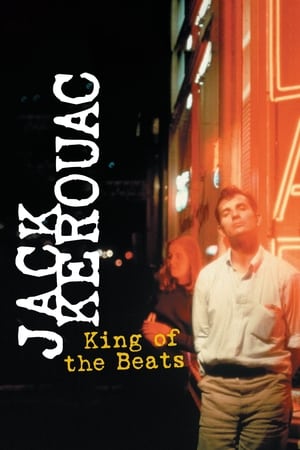
Jack Kerouac's life is examined through interviews with his contemporaries and friends including Allen Ginsberg, Lawrence Ferlinghetti and William S. Burroughs. The film also employs dramatic recreations of Kerouac's life beginning with his early childhood.
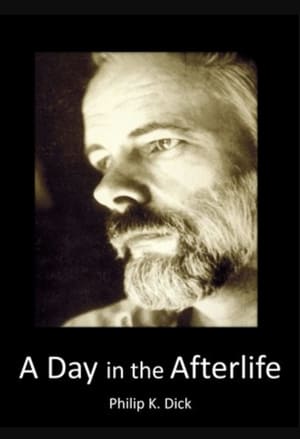
A poetic look at the life and legacy of legendary author Philip K. Dick (1928-1982), who wrote over a hundred short stories and 44 novels of mind-bending sci-fi, exploring themes of authority, drugs, theology, mental illness and much more.
A ritual of grids, reflections and chasms; a complete state of entropy; a space that devours itself; a vertigo that destroys the gravity of the Earth; a trap that captures us inside the voids of the screen of light: «That blank arena wherein converge at once the hundred spaces» (Hollis Frampton).
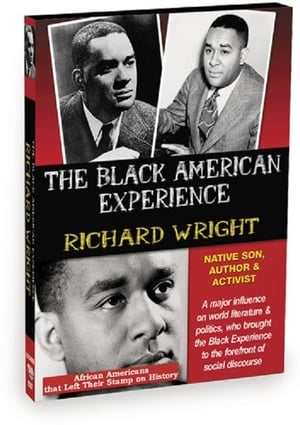
RICHARD WRIGHT was an African-American author of novels, short stories and non-fiction that dealt with powerful themes and controversial topics. Much of his works concerned racial themes that helped redefine discussions of race relations in America in the mid-20th century. Born on a plantation in Mississippi, Wright was a descendent of the first slaves who arrived in Jamestown Massachusetts. This program follows his arduous path from sharecropper to literary giant. Through authors like H.L. Menken, Sinclair Lewis, Theodore Dreiser, he discovered that literature could be used as a catalyst for social change. In 1937 Wright moved to New York and his work began to garner national attention for it's political and social commentary. Much of Wright's writing focused on the African American community and experience; his novel Native Son won him a Guggenheim Fellowship and was adapted to the Broadway stage with Orson Welles directing in 1941.
A portrait of Norwegian poet Odd Børretzen in his own words, featuring musical highlights from Børretzen's work with musicians Alf Cranner and Lars Martin Myhre.
When looking for a gift for his kid, Jon Heder (Napoleon Dynamite) is introduced to the world of Grimdark. In that moment he starts down a journey that will take him all over the world and through interviews with prominent Grimdark authors, game developers, and dedicated fans, he delves into the themes that define the genre—all in an effort to find the man who started it all: John Blanche.
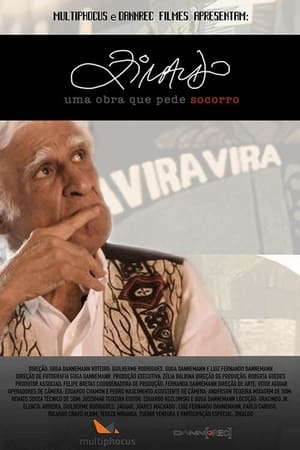
The film seeks to address the risks that Ziraldo's work takes. In a building abandoned ten years ago, the cartoonist's "Santa Ceia", a six-meter-high work painted in 1967, is far from the public and subject to the effects of time
The Mindscape of Alan Moore is a psychedelic journey into one of the world's most powerful minds; chronicling the life and work of Alan Moore, author of several acclaimed graphic novels, including "From Hell," "Watchmen" and "V for Vendetta." It is the only feature film production on which Alan Moore has collaborated, with permission to use his work. Alan Moore presents the story of his development as an artist, starting with his childhood and working through to his comics career and impact on that medium, and his emerging interest in magic.
J.R.R.T.: A Study of J.R.R. Tolkien is a 1992 documentary, narrated by Judi Dench, produced to celebrate the centenary of J.R.R. Tolkien's birth. It is sometimes called "J.R.R. Tolkien: A Portrait" and "J.R.R. Tolkien - An Authorized Film Portrait". It features archive footage and audio recordings of J.R.R. Tolkien, and interviews with three of his children Priscilla, John, and Christopher. It also includes interviews with Baillie Tolkien, Robert Murray, Queen Margrethe II of Denmark, Rayner Unwin, Tom Shippey, and Verlyn Flieger.
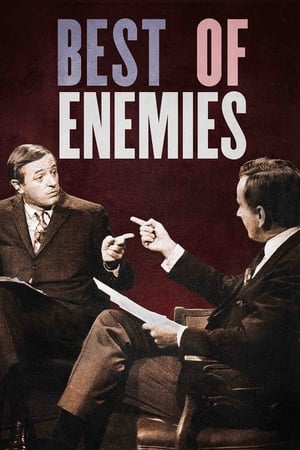
A documentary about the legendary series of nationally televised debates in 1968 between two great public intellectuals, the liberal Gore Vidal and the conservative William F. Buckley Jr. Intended as commentary on the issues of their day, these vitriolic and explosive encounters came to define the modern era of public discourse in the media, marking the big bang moment of our contemporary media landscape when spectacle trumped content and argument replaced substance. Best of Enemies delves into the entangled biographies of these two great thinkers, and luxuriates in the language and the theater of their debates, begging the question, "What has television done to the way we discuss politics in our democracy today?"
She was the first to study gorillas in their natural environment: the high mountains of Rwanda, where she settled in 1967. For nearly twenty years, Dian Fossey lived with the gorillas, observed their behavior, and changed the way people viewed them. Her relentless fight against poaching prevented the species from becoming extinct. But in December 1985, the primatologist was murdered, and the mystery surrounding her death remains unsolved. Former colleagues, scientists, and biographers shed light on the impact of her work, but also on the darker sides of her personality and her uncompromising commitment.
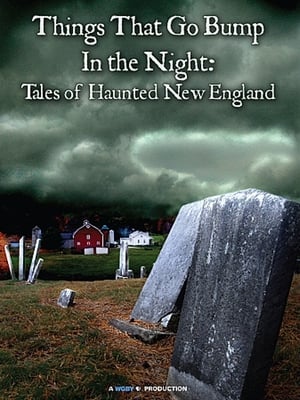
Things That Go Bump in the Night: Tales of Haunted New England takes you on a journey throughout historic New England collecting tales of the supernatural, the unexplained, and the mysterious — spooky stories of ghosts, spirits, witches... and even a vampire!
Emmy Award-winning chronicle of the history of Orchard House, the home in Concord, Massachusetts where Louisa May Alcott wrote and set Little Women.
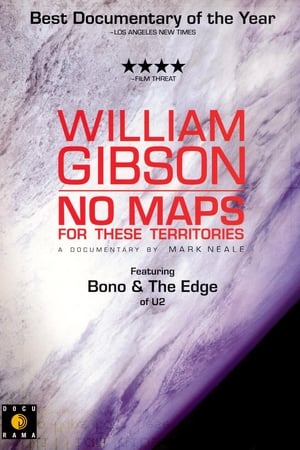
On an overcast morning in 1999, William Gibson, father of cyberpunk and author of the cult-classic novel Neuromancer, stepped into a limousine and set off on a road trip around North America. The limo was rigged with digital cameras, a computer, a television, a stereo, and a cell phone. Generated entirely by this four-wheeled media machine, No Maps for These Territories is both an account of Gibson’s life and work and a commentary on the world outside the car windows. Here, the man who coined the word "cyberspace" offers a unique perspective on Western culture at the edge of the new millennium, and in the throes of convulsive, tech-driven change.