The popular song Chuá Chuá, illustrated with scenes of rural life. Girl observes in window. A fountain drains water. A flower. The cattle grazing. River waters. Man seen from window of wattle and daub house. Girl hangs cage with bird. Man walks towards the gate. Ducks in river drink water. The popular song A Casinha Pequenina, illustrated with scenes from rural life. Hut surrounded by banana trees and a coconut tree. Children walk hand in hand, sit on the riverbank. Birds in cages. Again the little house and the vegetation that surrounds it, especially the coconut tree.
A visual interpretation of Brazilian popular songs "Azulão" and "Pinhal".
A cowboy uses songs to tame and gather his animals.
A look at the now abandoned production farms, substituted by power plants.
Musical rhythms inspired by work activities. Between 1974 and 1976, Leon Hirszman held three documentaries produced by the MEC about the songs of the rural workers in northeastern Brazil. In the trilogy, there is the documentation of the work songs of sugar cane, in Feira de Santana, the growers of cocoa, in Itabuna, and team workers in Chã Preta.
A morning in the farm shown with a beautiful musical background.
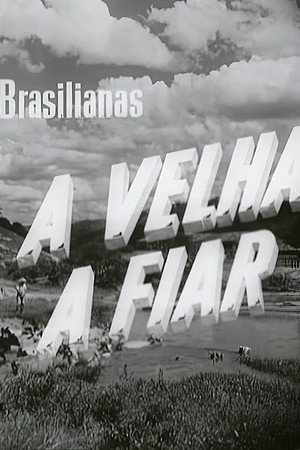
A Velha a Fiar illustrates a Brazilian folk song in which a being or entity is always predating another being, but is in its turn predated by some other animal, until the circle closes. It begins like this: an old woman is quietly weaving and a fly disturbs her; a spider eats the fly; a mouse eats the spider; a cat chases the mouse and so on...
Timo Novotny labels his new project an experimental music documentary film, in a remix of the celebrated film Megacities (1997), a visually refined essay on the hidden faces of several world "megacities" by leading Austrian documentarist Michael Glawogger. Novotny complements 30 % of material taken straight from the film (and re-edited) with 70 % as yet unseen footage in which he blends original shots unused by Glawogger with his own sequences (shot by Megacities cameraman Wolfgang Thaler) from Tokyo. Alongside the Japanese metropolis, Life in Loops takes us right into the atmosphere of Mexico City, New York, Moscow and Bombay. This electrifying combination of fascinating film images and an equally compelling soundtrack from Sofa Surfers sets us off on a stunning audiovisual adventure across the continents. The film also makes an original contribution to the discussion on new trends in documentary filmmaking.
Bruce Brown's The Endless Summer is one of the first and most influential surf movies of all time. The film documents American surfers Mike Hynson and Robert August as they travel the world during California’s winter (which, back in 1965 was off-season for surfing) in search of the perfect wave and ultimately, an endless summer.
Matt, a young glaciologist, soars across the vast, silent, icebound immensities of the South Pole as he recalls his love affair with Lisa. They meet at a mobbed rock concert in a vast music hall - London's Brixton Academy. They are in bed at night's end. Together, over a period of several months, they pursue a mutual sexual passion whose inevitable stages unfold in counterpoint to nine live-concert songs.
For Jimmy Smith, Jr., life is a daily fight just to keep hope alive. Feeding his dreams in Detroit's vibrant music scene, Jimmy wages an extraordinary personal struggle to find his own voice - and earn a place in a world where rhymes rule, legends are born and every moment… is another chance.
A chronicle of country music legend Johnny Cash's life, from his early days on an Arkansas cotton farm to his rise to fame with Sun Records in Memphis, where he recorded alongside Elvis Presley, Jerry Lee Lewis and Carl Perkins.
County Durham, England, 1984. The miners' strike has started and the police have started coming up from Bethnal Green, starting a class war with the lower classes suffering. Caught in the middle of the conflict is 11-year old Billy Elliot, who, after leaving his boxing club for the day, stumbles upon a ballet class and finds out that he's naturally talented. He practices with his teacher Mrs. Wilkinson for an upcoming audition in Newcastle-upon Tyne for the royal Ballet school in London.
In 1959 Hiroshi Teshigahara shot the following 16 mm footage of he and his father’s first trip to Barcelona and the outlying Catalonian countryside, including a visit to the home of Salvador Dali in Port Lligat. The footage was recorded without sound.
The play tells the story of a king who is bored with the ruling. He decides to disguise himself and his minister in search of entertainment among the public. He meets a bankrupt merchant who spends his time in wine and delirium and dreams of being king. The king decides to wear his clothes and make him the king of the day until he laughs at this strange scene. That the merchant is the king, including the queen and the palace guards, and the merchant discovers a plot to overthrow the rule that day, which entrench him more above his chair, and finds the king himself a victim of a recreational game.
An exploration —manipulated and staged— of life in Las Hurdes, in the province of Cáceres, in Extremadura, Spain, as it was in 1932. Insalubrity, misery and lack of opportunities provoke the emigration of young people and the solitude of those who remain in the desolation of one of the poorest and least developed Spanish regions at that time.
Megacities is a documentary about the slums of five different metropolitan cities.
The film is based on interviews with 2,000 women from 50 countries, and covers the status of women all over the world. The topics covered include forced marriages, sexual assault, female genital mutilation, acid attacks, motherhood, sexuality, menstruation, education and the professional success of women.
Documentary in which artist Jeanie Finlay goes behind the closed bedroom doors of four British adolescents on the brink of adulthood and explores their passions, obsessions and their hopes for the future.
The narrative wanders through Rosi’s films, not in the order they were shot but following the chronology of the historical facts they deal with. The documentary therefore not only narrates Rosi’s work, but also portrays half a century of Italian history.