John Wayne, Henry Fonda and James Stewart discuss working with John Ford
The first image is in black and white, upside down and projected into a black box that then becomes the frame. It now hovers like a time capsule near a man’s face. He looks down, listening in on a female guerrilla fighter and translating her words from Fulani. Within the capsule, money is counted and paid out as a new currency, the numbers of the years run backwards in the black box. A 16-mm film glides through the man's hands and is transferred to a laptop screen frame by frame.
Harry Schein was an anomaly in Swedish cultural society. Equal parts playboy, intellectual, and political visionary, his life story could very well be the foundation of a Hollywood film. Citizen Schein is a film about a refugee who refused to look back, a film about powerful men, and the myths that fuel them.
The everyday life of a Belo Horizonte lower class neighborhood.
A chronicle of the production problems — including bad weather, actors' health, war near the filming locations, and more — which plagued the filming of Apocalypse Now, increasing costs and nearly destroying the life and career of Francis Ford Coppola.
This work documents a segment of Singapore’s education history –– the survival of the nation’s first Catholic missionary Chinese girls’ school through adversities during her formative years. It is a tribute to the arduous efforts and contributions of a generation of admirable educators who persevered in delivering the education of love with resilience and steadfastness.
Six blind Tibetan teenagers climb the Lhakpa-Ri peak of Mount Everest, led by seven-summit blind mountain-climber Erik Weihenmayer.
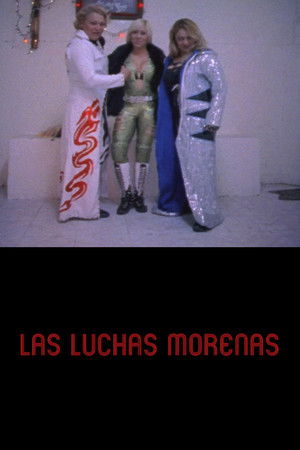
You’d never know this is your home away from home. The surveillance camera outside shows a drab reception area and an unremarkable street in Mexico City; inside, the lights flash, but the tables are empty. Yet preparations are soon underway and fixed categories cease to apply: stubble is removed, make-up applied and strands of hair are teased into place; the camera is trained not on the men themselves, but what they see in the mirror.
$avy investigates the historical, cultural, and societal norms around women and money.
This is the story of Val and Clare: a mother and a daughter. After the tragic death of her eldest daughter, Val left her kids and family behind and escaped into the Colombian jungle in order to search for her identity. Clare was only 11 years old when her mother left and couldn't understand what she was looking for. A son who became an addict, three break-ups and a fractured family remained behind. Now Clare is pregnant and decides to confront her mother, heal the wounds of the past and try to define motherhood on her own terms. Together they go on an intimate journey exploring the boundaries between responsibility and freedom, the power of love and the meaning of family.
A diffraction of the autobiography using family footage filmed between the 1940s and today, this "science fiction documentary" creates multiple "I"s and transcends a story of mourning
A comic, biting and revelatory documentary following a small group of prankster activists as they gain worldwide notoriety for impersonating the World Trade Organization (WTO) on television and at business conferences around the world.
In 1988, Tilda Swinton toured round the Berlin Wall on a bicycle - starting and ending at the Brandenburg Gate - accompanied by filmmaker Cynthia Beatt. As Swinton travels through fields and historic neighborhoods, past lakes and massive concrete apartment buildings, the Wall is a constant presence.
When Ariel was just 33, his legs were shredded by an industrial dough mixer in Mendoza, Argentina. He became a living embodiment of the ongoing duel between man and machine. From that point on, he began to rediscover the meaning of freedom: to rebuild his broken identity, keep his family together and design his own prosthetic legs. Following Ariel for 10 years from the time of the accident, director Laura Bari has created an intimate and metaphorical portrait of Ariel’s newfound transhumanity, juxtaposing his daily life with dreamlike inner worlds—and pushing the boundary between the real and the imaginary.
Filmed clandestinely, Zauberman’s extraordinary documentary exposes South Africa’s insidious apartheid policy of “race classification” by focusing on the love affair of Robert and Doris, and unresolvable, moral fissure with Robert’s children and the country. Winner of the Paris Film Festival Grand Prize.
In the minutes that it takes for a day to lose itself to darkness, we see a house that has suddenly become empty. It is the home of Maria, who has recently passed, and who has left her mark in every corner of every room. A portrait of absence is also an attempt to resurrect the dead, perhaps even a moment of magical thinking. The winter outside is well settled, snow accompanies each thought. Based on a poem by Zofia Bohdanowiczowa.
A look at the state of the global environment including visionary and practical solutions for restoring the planet's ecosystems. Featuring ongoing dialogues of experts from all over the world, including former Soviet Prime Minister Mikhail Gorbachev, renowned scientist Stephen Hawking, former head of the CIA R. James Woolse
Forty years before WikiLeaks and the NSA scandal, there was Media, Pennsylvania. In 1971, eight activists plotted an intricate break-in to the local FBI offices to leak stolen documents and expose the illegal surveillance of ordinary Americans in an era of anti-war activism. In this riveting heist story, the perpetrators reveal themselves for the first time, reflecting on their actions and raising broader questions surrounding security leaks in activism today.
This documentary tells two stories simultaneously: it's a profile of Bernard Tapie, a wealthy man who rises and falls spectacularly in French society and may be on the rise again; and, it's a look at Marina Zenovich's fascination with Tapie, behaving oddly in spite of her awareness that she's being irrational. Politicians, athletes, friends, companions, and journalists comment on Bernard's charm, his rise to prominence in sports and politics, and his subsequent trouble with the law. Zenovich becomes fixated on her need to interview Tapie, becoming virtually a stalker in her quest.
This haunting film comprises of footage shot during WWI from opposite sides of the conflict: Czarist Russia and the Austro-Hungarian empire. The filmmakers tinted the material with sensual colors from sepia to red, blue, and purple and slowed the footage to analyze the material. The total absence of commentary renders the material eloquent and disturbing. - MoMA