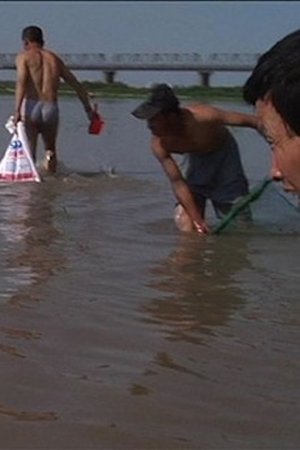
Xu Xin’s film “Dao Lu” (China 2012) offers an exclusive “in camera” encounter with Zheng Yan, an 83 year-old veteran of the Chinese Red Army, who calmly relates how he has navigated his country’s turbulent history over three-quarters of a century.Born to a wealthy family in a foreign concession, Yan joined the Chinese Communist Party (CCP) in 1941 because he sincerely believed in the socialist project, and in its immediate capacity to free China from the Japanese yoke and eradicate deep-rooted corruption.
The Chinese Department of Sun Yat-sen University (Guangzhou) staged the Chinese debut of "The Vagina Monologues" in December 2003. Since then, this feminist play, which came from the US and has been committed to the elimination of gender-based violence, has incited a vagina hurricane that blew all over mainland China.
All There Will Be
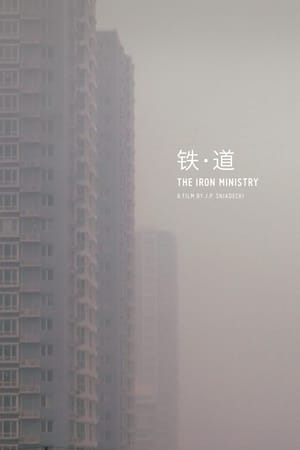
Filmed over three years on China’s railways, The Iron Ministry traces the vast interiors of a country on the move: flesh and metal, clangs and squeals, light and dark, and language and gesture. Scores of rail journeys come together into one, capturing the thrills and anxieties of social and technological transformation. The Iron Ministry immerses audiences in fleeting relationships and uneasy encounters between humans and machines on what will soon be the world’s largest railway network.
At the end of the 1990s, about 40-50 million industrial workers were laid off in China, and the family population involved was hundreds of millions. He Guoping was one of them. After he was laid off, his wife opened a rental house. He became the "housekeeper" who cooks and cooks every day. His son He Huan was also raised by a playful child. Twenty years of follow-up shooting of this ordinary family, this continued "presence", the film has a time tentacle of "seeing the growth of grass". Some people say that this is a "civilian epic".
A microcosm of China past and present flows through Xu Tong’s intimate docu “Shattered,” in which the maverick indie filmmaker continues to refine his techniques and concerns shown in his previous “Wheat Harvest” and “Fortune Teller.”
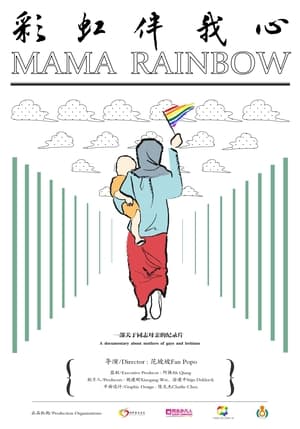
What happens when 300 lesbians from around the world attend the largest United Nations conference? How did two busloads of lesbians headed to an underground nightclub help spark the birth of a lala (LBT) movement in China? At the 1995 Fourth World Conference on Women in Beijing, the first ever lesbian tent at an UN NGO Forum was created. Emerging from hidden shadows of shame and invisibility, Chinese lalas began a hard-fought path of deliverance from themselves, from family, and from an apprehensive environment. In doing so, they sought empowerment and change as they explored concepts and issues from self-affirmation to rights consciousness. The film powerfully moves forward to the present day and shows the drastic change in today’s young feminist lalas – their challenging of sexism and homophobia with daring public street actions on subways – a parallel action to their forerunners in 1995, with much vigor and defiance 20 years later.
“My Life Against Taiwan Sotofuku – 1891~1931” is Taiwan’s first biographical animated documentary. The film combines animation, archival photos, footage, and sound theater to recreate the heroic epic of CHIANG Wei-shui, the “the Savior of Taiwanese People,” during Japan’s colonial rule of Taiwan. Through first-person flashback narrations, Taiwan’s pioneer revolutionary CHIANG Wei-shui tells the turbulent tale of the rise and fall of Taiwan’s non-violent anti-Japanese movements, as well as a lifetime of remarkable resistance against Taiwan Sotofuku (Japan’s colonial government). Cast
"Mazu" or "The Sea God" has been the most important religious belief of ordinary people in my hometown for four hundred years. Along the coast of China and even in the Nanyang region, there is at least one temple dedicated to Mazu in various seaside cities-this geographical and historical distribution coincides with the contemporary economic or industrial area of Chinese society. It is frustrating that rapid economic development has led to global warming. The factories located on the coast of southern China from all over the world will eventually cause flooding and inundate these temples dedicated to Mazu. This is indeed a very ironic discovery for our civilization, "We", not only Chinese or all human beings, now or in the past, how can we Chinese avoid this upcoming tragedy?
Zou Xueping continues to interview old people in her village, this time with the help of local children. They start collecting names and money to erect a memorial for the victims of the famine.
This is my second documentary film, and it is fully composed of old people. One woman, nearing 80, is living out the last two years of her life. From when she is still using a cane to walk, to when she becomes paralyzed. This is my grandmother. We also see other elderly people from the village, their daily activities, the tales of their starvation from 50 years ago.
It is the director's second documentary of "my village" series since she got involved with the "Folk Memory Project". She returned to her hometown to shoot footage, recording the realities she encountered in her search for memories. Her biggest question is: after experiencing the disaster of the tragic famine fifty years ago, the villagers now are not short of food, and are living a better life than before, but is the spirit of this village still starving?
The player of Jia Zhangke's early film "Xiao Wu" and the famous independent film activist Wang Hongwei talked about Chinese independent films at the IFF Independent Film Forum.
I just watch the news of war in a distant country on my mobile. My fingers go back day by day to the day the war broke out and pose to see comments posted on the Facebook News Feed that I follow. Outside, I have friends who participated in anti-war rallies.
Unusually popular religions and extreme secular beliefs, unconstrained power and no authoritarian society, people work hard on the land and live thrifty but do not believe in the meaning of life at all. This is Longwang Village, an empty old farming society, the most essential reality of an ordinary western village. The film does not have a perpetual plot. The images are presented with the changing of the four seasons. There is no great joy or great sadness. Everything is recorded, and no results are produced. Strictly speaking, this is actually just a rural video file, a running account of ordinary western villages without all rhetoric.
Only a few days before the Spring Festival of 2008, several truck drivers set off from Nantong, Jiangsu Province, to Guizhou province to deliver goods. But what they didn't expect was that they ran into a big snowstorm not long after their departure. What would these drivers do after they got caught up in a snowstorm and coudn't do nothing about it but wait? How would they react to this unexpected halt? And what would happen to this convoy?
This is a film about the unison between the four seasons of life and the four seasons of the year, intertwined with the geospatial and temporal dimensions of a small town named Tongchuan situated on the northwest of the Loess Plateau.
An individual's life experience is always a reflection and epitome of the times. Through the environment, literature, oral narration, calligraphy and painting works, this film faithfully records the upbringing background, family circumstances and life of the painter Chen Jiyong. His life experience and mind-watching are an ordinary case of countless intellectuals who have disappeared in the dust of time. At the same time, he has become a sample of images and life statues about this period of history.
Interviews with Dalai Lama and some Chinese intellectuals about Tibet/China relations and related issues.
"China Gate" tells the story of young Chinese fight to change their fate through studying. Right before dawn, students in Huining have already started their self-studying session; hard working youngsters have filled up the space of school ground. This is one of the most poverty-stricken Counties in Western China; here people's only hope is in education, as the way to change their social status. Therefore all their effort point towards the College Entrance Examination, the process is like going through a gate, those who pass can study at urban Universities, and have the chance to build a better life. During the same winter season in Beijing, a graduate student faces a big decision. Should he keep trying to survive in the big city or get back to his countryside home? The exhausted faces at the Beijing underground seem to be revealing the truth about their distance in between. The student comes to see the flag ceremony at Tiananmen Square, where the pulsing symbol of the nation lies.