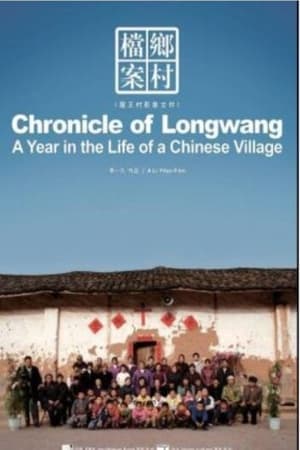
Unusually popular religions and extreme secular beliefs, unconstrained power and no authoritarian society, people work hard on the land and live thrifty but do not believe in the meaning of life at all. This is Longwang Village, an empty old farming society, the most essential reality of an ordinary western village. The film does not have a perpetual plot. The images are presented with the changing of the four seasons. There is no great joy or great sadness. Everything is recorded, and no results are produced. Strictly speaking, this is actually just a rural video file, a running account of ordinary western villages without all rhetoric.
Only a few days before the Spring Festival of 2008, several truck drivers set off from Nantong, Jiangsu Province, to Guizhou province to deliver goods. But what they didn't expect was that they ran into a big snowstorm not long after their departure. What would these drivers do after they got caught up in a snowstorm and coudn't do nothing about it but wait? How would they react to this unexpected halt? And what would happen to this convoy?
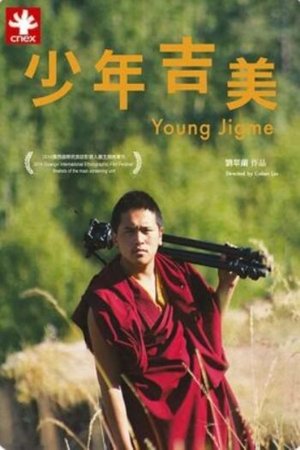
There are two roads in the woods. You can only take one of them, and wonder about the other for the rest of your life. Longwu is a temple of no more than 20 monks. When 17-year-old Jime became a junior monk there, he had no idea whether it's better to renounce or to join the secular world. The temple quietly sits in the depths of a mountain.This year, with only 11 monks left, there are not enough junior monks to officially receive the precepts during summer recluse. The temple seniors decide to have three young monks to do this. Jime is fully aware what this means to him. He patiently waits for an answer to dawn on him. On a dark night, Jime takes out the long roll of sutra that he reads every day, and cleans it carefully by a lamp. This summer, someone has come to the crossroad of life. Of the two roads out there, he can only choose one.
Southside Chicago. Crime reports. A Chinese woman. An investigation.The filmmaker, as a newcomer, explored southside Chicago through the filming of a search for a Chinese woman.
The short film recorded a group of children living status in a brick factory.Their parents work here to earn money.Because of the language barrier, living habits and economic conditions, they didn't go to school. But they are living in a wonderful time and they have extraordinary ability to survive......
Strange boy was a child picked up by guangbin when he was young. He was raised, but one day his biological parents found him and took him away. At that time, guangbin was not at home, and there was no address left, only a phone number left. Guangbin has since made a phone call to guangbin every few days, and there is only answering the phone, never replying. One day, he was reminded by the landlord that he met a strange poet who was also a doctor in the villagers' mind. The doctor told him many things he had never heard. He had more questions and seemed to be the answer. After the strange boy returned to the original family, the original family had been broken, and everyone gradually became more and more unfamiliar with him from the joy of his return, until they found the secret of their father, the emergence of the mysterious girl, and the chance encounter with the poet, with a sudden "eclipse Festival" breaking all plans.
“If there is any chance, I will let him live well No matter where he is.” The old lady cried and said that when I was visited her and her husband one year ago. Her heartfelt wishes are my motivation, I know that I am going to create this documentary work - the son.
A bunch of indie filmmakers came to the grassland,everybody stayed in a tent, just open their mind and be sincere. They made conversations, which were about their confusion for life and be puzzle for artistic creation. Multifaceted sentiments were created. The goats were not vegetarian animal anymore,and the interlocutors were eating goats. An old man wanted to possess a young girl, the so-called artists were actually a tribe of infantile children. The goats were naked and waiting to be sparked…
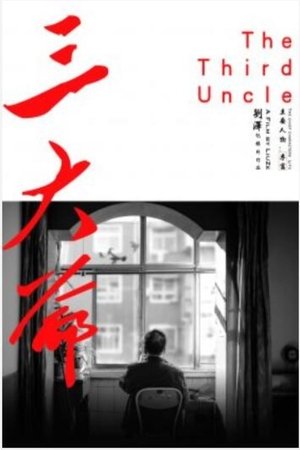
Li is over 70 years old, he sits in front of his window in the afternoon every day and smokes the cigarette to pass the time. The sound of water drops in the kitchen, two pigeons are roosting on roof of the opposite building, and the sunshine comes into the room, which make Li feel alive. His emotions usually could be fluctuated with the plot of the TV programmes, because he even could find out his own fitful memories from it. One was is the whole family, another one also is the whole family. During worshipping of the ancestors, he listened to his mother's arrangements and felt sincere concern from his brother. However, happy time was so short. After he returned to his rental place, the only thing that he can do is to look at the dream which was outlined in the New Year's Gala, and which gradually away from his dream. Everything just was the same as the past in this new year, he was still feel so lonely.
Hakka, a special and little-known ethnic group in Hainan, is a branch of the Chinese Hakka system that has been neglected. They are far from the mainland, and they are rarely mentioned. The relatively closed environment has allowed the Central Plains culture to be completely preserved. After that, it has formed a special change with the ethnic minorities such as Li Miao. However, this unique traditional culture is now fading away in the erosion of modern civilization.
The story took place in 2008. Henan Guo Hui, who was a harvester, went to the provinces to harvest wheat for him. He and his father then invited a driver and set off. I went to Shanxi, Shaanxi, and also included Henan. They met other mairs to talk about the earthquake in Sichuan and talk about the difficulties of collecting wheat. Bargaining with the farmers, thinking of the law less to give the leader a little commission, sometimes to think of the way to get money, sometimes to think of ways to escape the control of the leader. The driver complained that the car owner was too bad, and the owner complained that the driver had eaten too much. In the middle of the road, I also encountered the need to collect the toll, and finally met the young and confused.
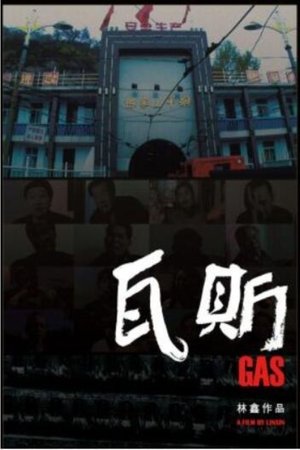
New Castle is a remote rural village where houses and mountains have been distorted due to excessive mining. Under the "New Village" campaign, all the villagers will be moved into the nearly completed Luxury Buildings. The documentary depicts the life of two groups of people, miners and villagers. The miners who are from all over the country, lost their jobs because of the Olympic Games in Beijing - the mine was shut down to make the air less polluted. The villagers had no better luck. Granny Fan lost two sons and two grandsons in a mining accident. Old Han and Old Wang are still farming. Some youngsters are gambling in the house of Han Bin, who was crippled in another mining accident. In the film, you can also see the village election, the service of local Christians, and people worshipping for a better year to come.
A Yangtze Landscape utilizes a non-narrative style, setting off from the Yangtze's marine port Shanghai, filming all the way to the Yangtze River's source, Qinghai/Tibet - filming a total distance of thousands of kilometers. Experimental music and noise recorded live on scene are used in post-production, painstakingly paired with relatively independent visuals, creating a magically realistic atmosphere contrasted with people seeming to be 'decorative figures' right out of traditional Chinese landscape scrolls.
Xilin Gol grassland in Inner-Mongolia is one of few natural grasslands with high-quality pasture in China. When a rich coalfield is discovered under the ground of this beautifully natural scene, the nomadic herdsmen reluctantly migrate into the cities and wave farewell to their grassland. The water levels lower, plants die, and only sandstorms remain on the prairie.
Yu Tian (played by Hu Tian) is a senior this year. He hasn't returned home for a few years while studying in a big city. The estrangement between him and his mother (Lin Jiehua) is somehow getting bigger and bigger. He is immersed in his artistic dreams and is not practical, but his mother, who has always been conservative, does not understand. His friends remained the same, still the same young people in the small town. Friends booed that he would be the most promising one among them, but he himself was convinced. He told his sister (played by Sun Nan) that he would go to the big city to make a fortune.
In the summer of 2007, Gan Xiaoer led an independent film projection team, using projectors and self-made screens, to tour villages in Henan province to show his feature film "Raised from dust" for 8 times, and recorded the process. The 81-minute version of Church Cinema records only one stop, the Qiliying Church, where "Raised from dust" was shot.
A microcosm of China past and present flows through Xu Tong’s intimate docu “Shattered,” in which the maverick indie filmmaker continues to refine his techniques and concerns shown in his previous “Wheat Harvest” and “Fortune Teller.”
A small rural township called Red White was seriously devastated by the May 12th Earthquake in China 2008. A 62-year-old Taoist survived even though his temple was largely torn by the disaster. This documentary tells the story of how the Taoist practices the widely believed Chinese traditional religion and the local people’s daily life during the township’s post-quake reconstruction.
The story happened near the Shuangjing subway station in Beijing. The female stall owner was aggrieved by the selective enforcement of urban management and expressed that she would fight to the end for fairness. When the urban management team forced her to close, she burst into tears and complained of social injustice. Even in the urban management team, she had to ask for fairness. But in the face of institutional chaos, she finally chose to compromise and continue the cat and mouse game. The old man is a Christian, is he helpless in obedience to fate? How many people's melody played by the Huqin sounded in the smog of Beijing?
The year 2003 is a rather turbulent period for Hong Kong – the economy was in recession, the government constantly implemented futile policies, the SARS outbreak, and, on July 1st, 500,000 people went on strike opposing the adoption of Article 23 of the Basic Law. It was against this political atmosphere that YIN Zhao-Jian gave up his social worker job, a 10 year long and steady career, and joined the political circle and participated in the district councilor election, which he had no idea about.