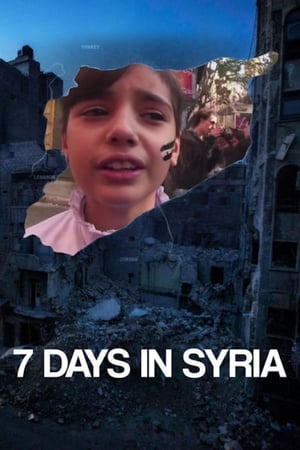
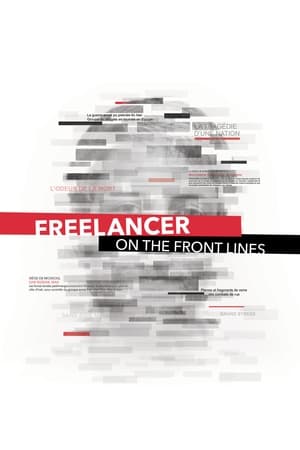
In the most dangerous country in the world for journalists, Newsweek Middle East editor, Janine di Giovanni, risks it all to bear witness, ensuring that the world knows about the suffering of the Syrian people.
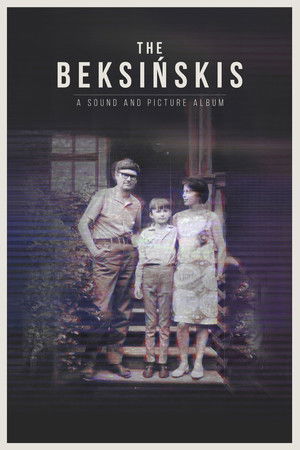
Painter Zdzisław Beksiński, his wife Zofia and their son Tomasz, a well-known radio journalist and translator, were a typical and unconventional family, both at the same time. One of the father’s obsessions was filming himself and his family members. Using archival footage only, shot primarily by Zdzisław, as well many other materials, which have not been presented anywhere so far, the film tells a tragic story of the Beksińskis that has never ceased to fascinate Polish filmmakers.
The film follows the 2023 raid by the Seoul Central District Prosecutors' Office on investigative outlet Newstapa. Director Kim Yongjin, its former head, traces a pattern of political prosecutions against critical journalists—from reports on Yoon Suk-yeol to Cho Kuk and Kim Keon-hee. Combining on-site footage, journalist testimonies, and legal records, the film reveals how special funds were used to pressure the media, silence dissent, and manipulate public opinion. It is a powerful reminder of the ongoing struggle to protect press freedom and democratic values in South Korea.
Entretien politique : Histoire et mode d'emploi
En première ligne, le reporter au cinéma
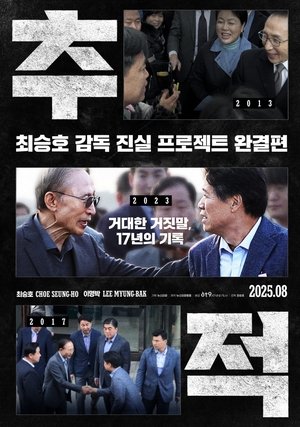
An investigative reporter seeks to expose the whereabouts of a slush fund belonging to the former president of South Korea, Lee Myung-bak.
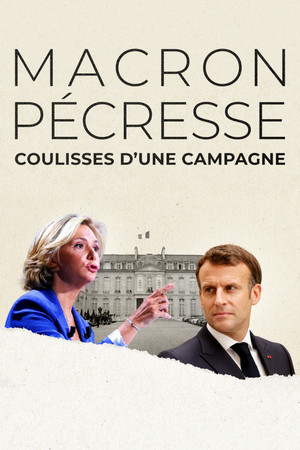
A look behind the scenes of this 2022 presidential campaign. Between the secrets and all the information that escaped the general public, the behind-the-scenes campaign of Valérie Pécresse and Emmanuel Macron allow us to understand all the issues of this election and to discover these candidates.
A day in the life of the Manchester Evening News.
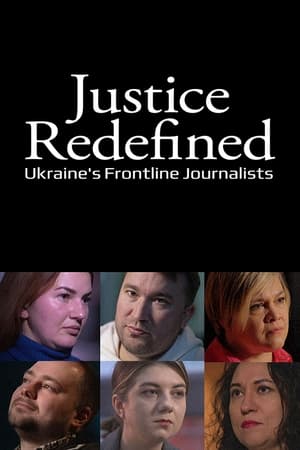
Four journalists talk about their experiences and share their testimonies of the Russian invasion of Ukraine.
An emotive, intimate film on the life and death of acclaimed young Northern Irish journalist Lyra McKee, whose murder by the New IRA in April 2019 sent shockwaves across the world. Directed by her close friend Alison Millar, the film seeks answers to her senseless killing through Lyra’s own work and words.
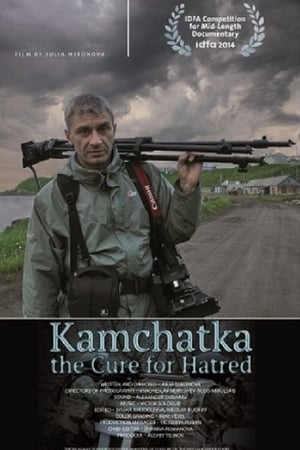
A portrait and self-portrait of the former TV journalist Vyacheslav Nemyshev, who reported on the Chechnyan war in 2001 and now leads a reclusive life on an island.
This fast-paced documentary follows Canadian freelance reporter Jesse Rosenfeld’s journey across the Middle East. Having made the region the focus of his work, he shows us the thorny geopolitical realities on the ground and explores how journalism practices have changed in the age of the Internet. From Egypt to Turkey and Iraq by way of Israel and Palestine, filmmaker Santiago Bertolino captures the ups and downs of a new kind of journalism in action.
From falsehood to mystification to manipulation and false impartiality, the whole logic of disinformation and brutality is brought to light. When the king of the media and his politico-journalistic buffoons are sifted by a radical counter-audiovisual power, the discredit of the "elites" sanctioned by the referendum of May 29, 2005 is better understood. With this film, Zalea TV's team had decided to laugh about it and make them laugh, even if at bottom these discoveries were rather disturbing. By staging a series of very simple techniques of "self-defense", this film is an invitation to self-disengage permanently. The use of the TV-B Gone, an instrument whose sole function is to turn off the television, appears here as the ultimate resort to media criticism.
"Was it the President who ordered the rivers to be six meters deep?" In 2008, under President Lee Myung-bak's administration, South Korea's Four Major Rivers Restoration Project turned the country's beautiful rivers into scenes of devastation. What were once pristine first-grade waters became lifeless rivers, choked with toxic green algae emitting foul odors. Crops irrigated with this contaminated water are now served on the table of Korean people. The government disguised a grand canal project as river restoration, and the media turned a blind eye — together enabling one of the greatest environmental destructions in Korean history. The consequences of this deception will be borne by future generations. To ensure that future generations can once again run freely along the rivers, we must act—now. We must make Korea's rivers flow again.
Documentary examining Bokassa's rule in the Central African Republic using the testimony of witnesses and visits to key sites.
In the summer of 1959, as a magazine correspondent, writer and filmmaker Pier Paolo Pasolini (1922-75) traveled along the Italian coast. In 1963, he documented the sexual behavior of the Italians. In the winter of 1970-71, he witnessed the hardships of the most impoverished Italian population suffering from the boot of state power. After these three trips, he came to the conclusion that Italian society had changed drastically for the worse over the years.
Journalism in times of war has become an increasingly lethal and traumatic endeavor for the men and women who face constant threats to their lives and psyches. With the death toll skyrocketing from only two reporters killed in World War I to almost a journalist a week being killed in the last two decades, UNDER FIRE weaves together portraits, battlefield accounts and combat footage to reveal what the reporters see, think and feel. Martyn Burke, documentary filmmaker whose work has brought him to battlefields around the world, and Anthony Feinstein, the psychiatrist who works with journalists to heal the trauma, delve into the experiences of top tier correspondents from AP, New York Times, BBC, and LA Times, among others, bringing a unique understanding and insight into the psychological cost of covering war
Brooklyn-born Ruth Gruber became the youngest PhD in the world before going on to become an international foreign correspondent and photojournalist at age 24. She defied tradition in an extraordinary career that spanned several decades. The first journalist to enter the Soviet Arctic in 1935, Ruth also traveled to Alaska as a member of the Roosevelt administration in 1942, escorted Holocaust refugees to America in 1944, covered the Nuremberg trials in 1946, and documented the Haganah ship 'Exodus' in 1947. Her relationships with world leaders gave her unique access and insight. This documentary interweaves verite scenes with archival footage.
In a documentary about Samuel Fuller, the spectator gets different impressions about the Hollywood director and his films. The film is divided into the three sections: The Typewriter, the Rifle and the Movie Camera. The first segment covers Fuller's past as a newsman where he began as a copy boy and ended as a reporter. Part two describes Fuller's experiences in World War II, in which he participated as a soldier. The last section focuses on Fuller as director. Tim Robbins interviews Samuel Fuller revealing the director's own memories and impressions. Beside the interview, Jim Jarmusch, Martin Scorsese and Quentin Tarantino accompany the documentary with their comments.
Journalist David Farrier stumbles upon a mysterious tickling competition online. As he delves deeper he comes up against fierce resistance, but that doesn’t stop him getting to the bottom of a story stranger than fiction.