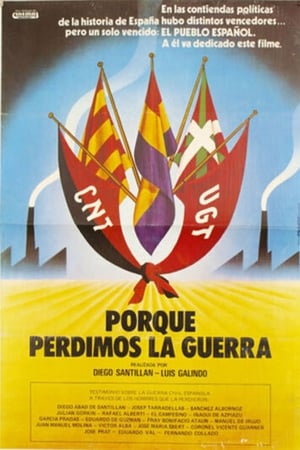
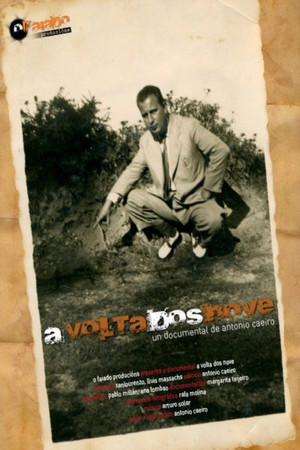
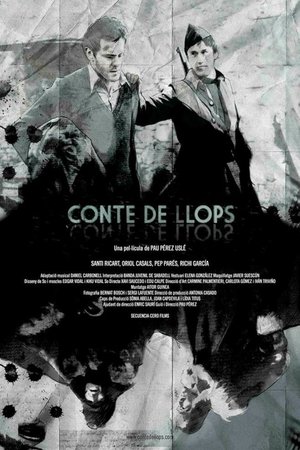
Javier López Cronwell, journalist, son of an American and a Spaniard, comes to Spain to write a series of anti-communist articles. The boy is politically neutral and emotionally and personally cold. He comes into contact with his paternal grandfather and the friends of his father, who died in our Liberation War, who propose that he take the provisional ensigns as a topic for his article. He prepares his return to North America without waiting to see the 25th anniversary Victory Parade, despite the wishes of his father's friends, old ensigns who will parade to show the world that they are still in the breach.
Manuela is left behind when her husband Justo fights for his ideals against Franco's Nationalists during the Spanish Civil War. He is deported to a concentration camp, and upon his release, continues the fight against nationalism in the French resistance. Years pass without a word from him, but his wife never gives up hope of seeing him again.
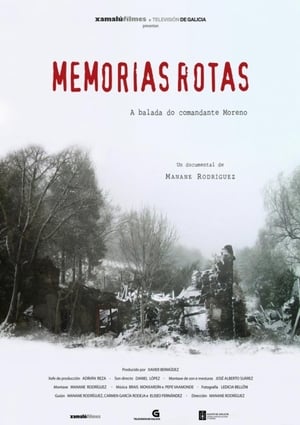
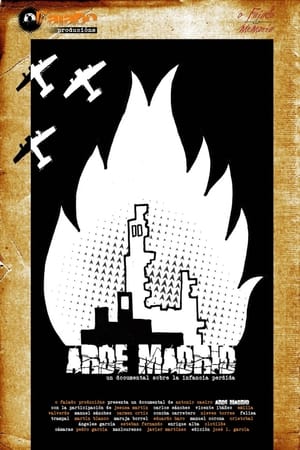
The memory of a defeat, a barbarism: the destruction at the dawn of the civil war of people who fought for freedom, a group of anarchists from A Coruña located in the Atochas area. Through valuable witnesses and historical images a reconstruction of a metaphorical episode in the history of the country. This projection is made in collaboration with its author and the Commission for the Recovery of Historical Memory.
In 1939, just finished the Spanish Civil War, Spanish republican photographer Francesc Boix escapes from Spain; but is captured by the Nazis in 1940 and imprisoned in the Mauthausen concentration camp, in Austria, a year later. There, he works as a prisoner in the SS Photographic Service, hiding, between 1943 and 1945, around 20,000 negatives that later will be presented as evidence during several trials conducted against Nazi war criminals after World War II.
A missing submarine in Spanish Civil War leads to the first German Navy operation before WW2. Republican submarine C-3 was the victim of international secrecy and intrigues, after a torpedo from U-34 sunk it on December 12th 1936.
¿Por qué morir en Madrid?
A dying man in his forties recalls his childhood, his mother, the war and personal moments that tell of and juxtapose pivotal moments in Soviet history with daily life.
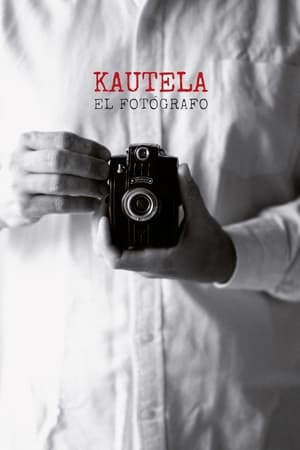
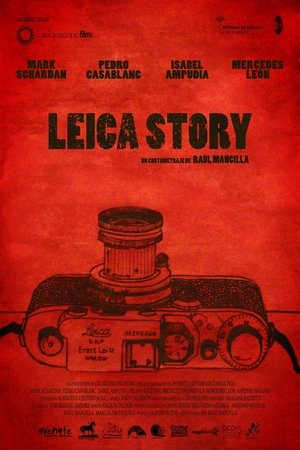
After the discovery of a suitcase hidden in the family home of Francisco Martínez Gascón, known as Kautela, a photojournalist who lived through the Spanish Civil War from the perspective of the rebel side, his granddaughter decides to carry out an investigation into his life and work.
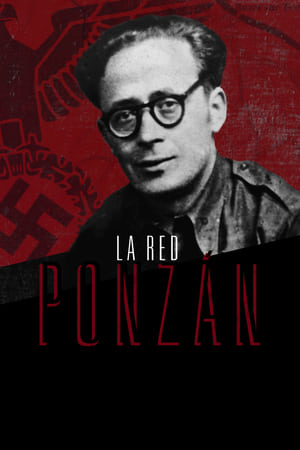
During the Spanish Civil War (1936-1939) and the Second World War (1939-1945), around three thousand people managed to elude their pursuers, and probably also avoided being killed, thanks to the heroic and very efficient efforts of the Ponzán Team, a brave group of people — mountain guides, forgers, safe house keepers and many others —, led by Francisco Ponzán Vidal, who managed to save their lives, both on one side and the other of the border between Spain and France.
A documentary about the recovery of the historical memory of the Malaga town of Archidona, a journey through the history of Archidona from the Second Republic to the last years of the post-war period. A work that speaks, above all, about people, experiences, emotions and feelings.
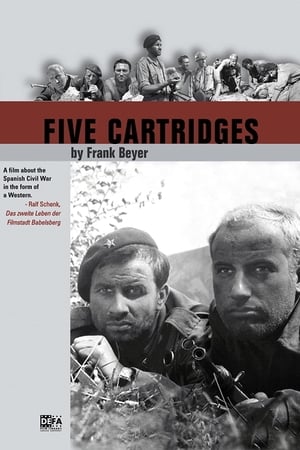
It is the year 1936 and the Spanish Civil War is raging. When the German commander of an international brigade is badly wounded he gives his five comrades a message which he divides up and secretes into in five cartridges. All five shells must reach the battalion in order for the message to be relayed. But Frenchman Pierre can’t bear the heat of the Sierra. When he leaves their hide-out to drink from a well he is hit by an enemy bullet.
The Asturian Valentín Vega is considered one of the most relevant photographers of the last century. He knew how to portray all the essential elements of daily life like no one else and at the same time exercise a devastating display of social criticism. After spending three years in prison for his political affiliation and managing to establish himself as a street photographer, he would continue to offer an unusual image of reality and daily life from the 1940s onwards.
Gilda Bessé shares her Paris apartment with an Irish schoolteacher, Guy Malyon, and Mia, a refugee from Spain. As the world drifts toward war, Gilda defiantly pursues her hedonistic lifestyle and her burgeoning career as a photographer. But Guy and Mia feel impelled to join the fight against fascism, and the three friends are separated.
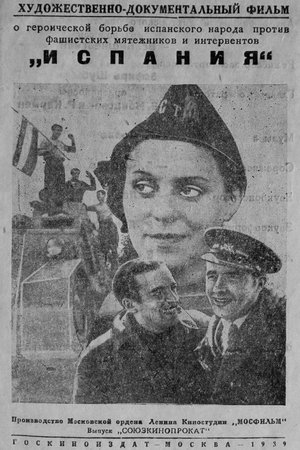
A feature-length documentary based on film reports from the Spanish civil war.
Javier Navarro, a Falangist, is ordered to infiltrate Republican Madrid to deliver a message to a member of the Fifth Column.
Cautivos en la arena
In November 1936, a few months since the beginning of the Spanish Civil War, the government of the Second Republic moves to Valencia. In this situation, several Valencian artists and intellectuals decide to build four fallas — satirical plasterboard sculptures created to be burnt — to mock fascism.
A collection of stories set during the Spanish Civil War, ranging from an account of Republican executions in a Madrid bombarded by Franco's forces and his fascist allies, to an Andalusian marquess who sets out to hunt communists with his personal death squad, to a militia woman who saves the life of a right-wing lawyer out of compassion.
David Carr is a British Communist who is unemployed. In 1936, when the Spanish Civil War begins, he decides to fight for the Republican side, a coalition of liberals, communists and anarchists, so he joins the POUM militia and witnesses firsthand the betrayal of the Spanish revolution by Stalin's followers and Moscow's orders.
Professor Lola Sánchez investigates the truth behind the events experienced by Rafael Sánchez Mazas, one of the founders of the Falange Española party, during the Spanish Civil War.