Narrated by Benedict Cumberbatch, Walk With Me is a cinematic journey into the world of a monastic community who practice the art of mindfulness with Zen Buddhist master Thich Nhat Hanh.
In his new film, Erwin Wagenhofer is looking for the good and beautiful in this world.
Wisdom Fire - Chagdud Tulku Rinpoche's Cremation
Rinzin Jurmey chose to join a monastery and dedicate his life to Buddhism at the age of 11, loving its rituals and traditions. Now 18, he moves harmoniously between mountain village and city, embracing tradition and pop culture, religion and hip-hop, prayer and video games. With guidance from cinematographer Cat Papadimitriou, Jurmey documents the ways in which he – and his country – are striving to preserve ancient practices while embracing modernity.
Des moines en laboratoire
Street art, creativity and revolution collide in this beautifully shot film about art’s ability to create change. The story opens on the politically charged Thailand/Burma border at the first school teaching street art as a form of non-violent struggle. The film follows two young girls (Romi & Yi-Yi) who have escaped 50 years of civil war in Burma to pursue an arts education in Thailand. Under the threat of imprisonment and torture, the girls use spray paint and stencils to create images in public spaces to let people know the truth behind Burma's transition toward "artificial democracy." Eighty-two hundred miles away, artist Shepard Fairey is painting a 30’ mural of a Burmese monk for the same reasons and in support of the students' struggle in Burma. As these stories are inter-cut, the film connects these seemingly unrelated characters around the concept of using art as a weapon for change.
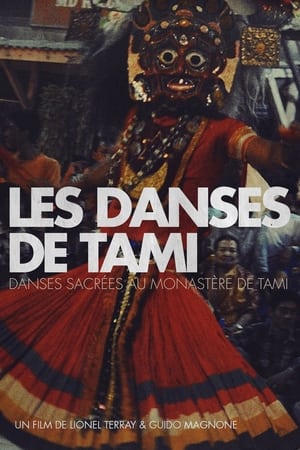
The documentary focuses on the annual Mani Rimdu festival of Tibet and Nepal, an event which encapsulates the Himalayan Buddhist experience.
Following in the footsteps of his father, Folco Felzani embarks on an epic journey on foot in search of Mustang, the last lost kingdom, in northern Nepal. The story of a king without a kingdom. The adventure of a son without a father.
A Zen priest in San Francisco and cookbook author use Zen Buddhism and cooking to relate to everyday life.
Brilliant Moon chronicles the life of the writer, poet, and meditation master Khyentse Rinpoche, one of Tibet's most revered 20th-century Buddhist teachers. Spiritual guide to His Holiness the Dalai Lama and the Royal Family of Bhutan, his life and teachings were an inspiration to all who encountered him. Richard Gere and Lou Reed provide the narration for his dangerous journey out of China, the subsequent spread of his influence and the search for his reincarnation after his death.
A view of the religious tensions between Muslims and Buddhist through the portrait of the Buddhist monk Ashin Wirathu, leader of anti-Muslim movement in Myanmar.
Buddhist monks open up about the joys and challenges of living out the precepts of the Buddha as a full-time vocation. Controversies swirling within modern monastic Buddhism are examined, from celibacy and the role of women to racism and concerns about the environment.
Angdu is no ordinary boy. Indeed, in a past life he was a venerated Buddhist master. His village already treats him like a saint as a result. The village doctor, who has taken the boy under his wing, prepares him to be able to pass on his wisdom. Alas, Tibet, Angdu’s former homeland and the centre of his faith, lies far away from his current home in the highlands of Northern India. On top of that, the conflict between China and Tibet makes the prospect of a trip there even more daunting. Undeterred by these harsh facts, the duo set off for their destination on foot, accompanied by questions of friendship and the nature of life. With its narrative approach steeped in a serene sense of concentration, this documentary film, composed over a period of eight years, stands as a fundamental experience in its own right.
The Kabul National Museum, once known as the "face of Afghanistan," was destroyed in 1993. We filmed the most important cultural treasures of the still-intact museum in 1988: ancient Greco-Roman art and antiquitied of Hellenistic civilization, as well as Buddhist sculpture that was said to have mythology--the art of Gandhara, Bamiyan, and Shotorak among them. After the fall of the Democratic Republic of Afghanistan in 1992, some seventy percent of the contents of the museum was destroyed, stolen, or smuggled overseas to Japan and other countries. The movement to return these items is also touched upon. The footage in this video represents that only film documentation of the Kabul Museum ever made.
The Laddakhis, high up in the Western Himalayas, have a strong connection to the psychic energies of the gods and demons through their belief in Tantric Buddhism. People in the valley say of the Geshe (a methaphysical professor) that he can fly if he wants to. But using magic is immoral for the Buddhist. Nevertheless, a young man seduces the woman of his desire with magical powers. In a breathtaking landscape under a crystal-clear blue sky, a life unfolds in harmony with the universe, carried by an ancient consciousness.
43 Days That Shook the World
An engaging reflection on the meaning of existence and on the theme of death in the different spiritual traditions of the East and West.
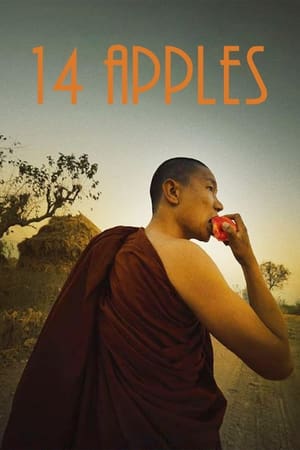
Wang Shin-hong is suffering from insomnia. A fortune teller advises the Mandalay businessman, whose car and bulging wallet suggest that business is going pretty well, to spend 14 days in a monastery, living life as a monk and eating an apple a day. Such a thing is possible in Burma today. Wang Shin-hong arrives at the rural monastery, has his head shaved and dons a red robe, in which he instantly becomes an authority. During the welcome procession, the village women, their poverty clear from their clothing and the huts in the background, put more than they have in his alms bowl. During his fleeting role as their advisor, Wang Shin-hong soon learns of the villagers’ attempts to survive and make a living as legal or illegal migrants in China, Thailand or Malaysia. He also finds out how the other monks try to generate profit and additional income.
This documentary is the third part of The Yatra Trilogy created by John Bush. Vajra is the Sanskrit word signifying the thunderbolt of illumination, and yatra is the word for pilgrimage or spiritual journey. This film offers a cinematic pilgrimage to central Tibet, bearing witness to the indomitable faith of its endangered Buddhist community and the imminent threat to its very survival.
In Nepal, a venerable monk, Geshe Lama Konchog, dies and one of his disciples, a youthful monk named Tenzin Zopa, searches for his master's reincarnation. The film follows his search to the Tsum Valley where he finds a young boy of the right age who uncannily responds to Konchog's possessions. Is this the reincarnation of the master? After the boy passes several tests, Tenzin takes him to meet the Dali Lama. Will the parents agree to let the boy go to the monastery, and, if so, how will the child respond? Central to the film is the relationship the child develops with Tenzin.