The use of embryonic stem cells has ignited fierce debate across the spiritual and political spectrum. But what if we could create manmade stem cells - or find super cells in adults that could forever replace embryonic cells and remove the controversy? Today, we are on the brink of a new era - an age where we may be able to cure our bodies of any illness. Stephen HAWKING has spent his life exploring the mysteries of the cosmos, now there is another universe that fascinates him - the one hidden inside our bodies - our own personal galaxies of cells.
A 12 minute film about the Evoluon [a conference centre and former science museum erected by the electronics and electrical company Philips at Eindhoven in the Netherlands], of which is thought that it was made in 1969 by Bert Haanstra or Pim Heytman. British TV viewers will probably remember this movie, since the BBC used it for test transmissions. In those transmissions a number of films was broadcast every day in the early seventies so technicians could adjust the new color TVs they installed at customers homes. —http://www.dse.nl/~evoluon/film-e.htm
A documentary about the 1999 discovery of a Mastodon skeleton in a Hyde Park backyard.
This 90-minute documentary brings to life Gavin Pretor-Pinney’s international bestseller, “The Cloudspotter’s Guide”, which draws on science, meteorology and mythology for a magical journey through the world of clouds. It is no dry treatise on the science of nephology but a playful trip through the varied beauty and distinctive personalities of the ten principal cloud types From the ethereal cirrus to the terrifying cumulonimbus, the film tells the story of the short but eventful life of clouds and their importance to our planet. Find out how immense quantities of water can stay up in the sky for so long and how lightning and thunder are created.
BP documentary film exploring the natural beauty of oil under the microscope, and through a variety of other techniques.
Dr. Helen Caldicott is the most prominent anti-nuclear activist in the world. She's been featured on CNN, 60 Minutes, CBC and Democracy Now. In the 80s, Helen Caldicott campaigned against nuclear weapons testing in the pacific (still responsible today for the majority of tritium we're exposed to), and against the notion of a winnable nuclear war. She was nominated for a Nobel Peace Prize for her efforts. She has always made inaccurate statements regarding civilian nuclear power. But, since the Fukushima-Diachii radiation release has caused (and is projected to cause) zero fatalities... http://www.unis.unvienna.org/unis/en/... ...her tone has changed when speaking to supporters. This has not been acknowledged by prime-time media, as they continue to use her as a source. Any person or media outlet should check Caldicott's history of statements (on any subject) against a domain expert before using her as a source.
A documentary film that takes us on a scientific and spiritual journey where we discover that by changing one's perceptions, the human body can heal itself from any disease.
Woolly Mammoth: Secrets from the Ice is a documentary presented by English anatomist Dr. Alice Roberts that reveals some of the secrets of one of the most widely known extinct animals ever. Humans have been transfixed by the Wolly Mammoth since the end of the last ice age when there were still herds of them roaming the continents of Asia and Europe. Despite many people knowing about the great Woolly Mammoth until recently very little was known about them despite ancient humans living along side them for so long; few documented accounts exist.
A Cambridge geneticist dispels misconceptions about living with obesity and explores why the epidemic continues to expand across the UK and America.
Join critically-acclaimed author and evolutionary biologist Richard Dawkins and world-renowned theoretical physicist and author Lawrence Krauss as they discuss biology, cosmology, religion, and a host of other topics.
Meet Nikola Tesla, the genius engineer and tireless inventor whose technology revolutionized the electrical age of the 20th century. Although eclipsed in fame by Edison and Marconi, it was Tesla's vision that paved the way for today's wireless world. His fertile but undisciplined imagination was the source of his genius but also his downfall, as the image of Tesla as a mad scientist came to overshadow his reputation as a brilliant innovator.
In 1973 Yorkshire public television made a short film of the Nobel laureate while he was there. The resulting film, Take the World from Another Point of View, was broadcast in America as part of the PBS Nova series. The documentary features a fascinating interview, but what sets it apart from other films on Feynman is the inclusion of a lively conversation he had with the eminent British astrophysicist Fred Hoyle.
On April 25, 1953, James Watson and Francis Crick published their groundbreaking discovery of the double helix structure of DNA. But their crucial breakthrough depended on the pioneering work of another biologist, Rosalind Franklin. 50 years later, NOVA investigates the shocking truth behind one of the greatest scientific discoveries and presents a moving portrait of a brilliant woman in an era of male-dominated science.
To the Least of My Brothers and Sisters is a new documentary on the life of Jerome Lejeune, the Father of Modern Genetics that was made to celebrate the 20th anniversary of his death. Filmed on two continents, it contains numerous interviews with former colleagues, families, current medical researchers, and others, all who express the importance of Jerome Lejeune in both the history of medicine and the defense of the dignity of human life.
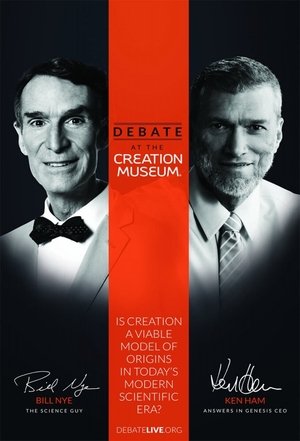
Bill Nye and Ken Ham debate whether creation is a viable model of origins in today's modern scientific era.
Experimental educational film reveals the emergence of some ideas of Biophysics in historical, philosophical and methodological aspects. The first film from the Biophysics Cycle (1982-1989).
While life expectancy is increasing in Western countries, cases of diabetes, hypertension, obesity and cancer are increasing, and the use of medication has exploded. Does this mean that in order to live to a ripe age we are condemned to swallow more and more drugs? What if there was another way? For half a century, in Russia, Germany and the U.S., doctors and biologists have been exploring a different therapeutic approach: fasting. The results are amazing. Soviet researchers have provided a body of clinical studies of exceptional health…only published in Russian, and thus unknown in the West. Young biologists from the University of Los Angeles have overturned conventional wisdom and used molecular biology to demonstrate the powerful effects of fasting. This research suggests a wide-ranging potential, which could include treatments for the disease of the century, cancer. If these scientists are right, maybe our approach to disease and treatment will need a rethink.
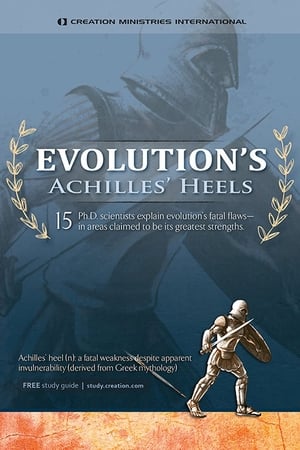
15 Ph.D. scientists expose devastating weaknesses in modern evolutionary theory. Subject areas covered include the fields of genetics, radiometric dating, natural selection, the geologic column, the fossil record, the origin of life, cosmology, and ethics. 3D animations and dramatic footage help to show how the theory's supposed strengths are, in fact, its fatal flaws-Evolution's Achilles' Heels. - Written by Carter, Robert (XXII)
A short doc about how faces are perceived: by scientists, by artists, by animals. How do we remember faces so well if we can barely describe them with words? Why do we see them everywhere? What even are they? What is my face?
Every now and then, we get a teacher who doesn't just connect with us -- they make us a better person in the world. Jeffrey Wright of Louisville, Ky. is one of those teachers. He uses wacky experiments to teach high school kids about science and the universe. But it's his own personal story about his relationship with his disabled son that shows his students the true meaning of life.