Été 44, un train pour l'enfer
Trucking is big business. Cashing in on the boom is Shannan’s trucker driving school. But can she pass her own HGV test?
A day in the city of Berlin, which experienced an industrial boom in the 1920s, and still provides an insight into the living and working conditions at that time. Germany had just recovered a little from the worst consequences of the First World War, the great economic crisis was still a few years away and Hitler was not yet an issue at the time.
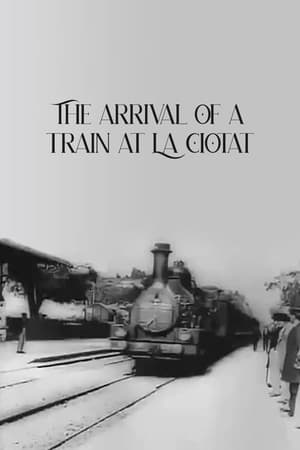
Most movie fans know that the first filmmakers liked to shoot trains entering stations. This example by Sussex film pioneer George Albert Smith illustrates why. The train's rush towards the audience brings movement and visual drama. The flurry of human activity offers plenty for the audience to engage with - who are these people and where are they going? And the time pressure exerted by the fact that the train must soon depart adds narrative tension - will everyone get on and off in time?
A day-to-day record of the construction of the Confederation Bridge linking Prince Edward Island to the mainland, Abegweit reveals some of the innovations that made this mammoth project one of the most impressive engineering feats in Canadian history.
On the purple trains that run through the rapeseed fields of Skåne, anger is growing. The train company is planning yet another cutback. But this time the train staff are ready to back each other! For decades, companies have competed to win lucrative public procurement contracts to run Sweden’s railways. This competition has led to the deteriorating work conditions for employees, as companies seek to establish a competitive advantage over one another. The short documentary, Segertåget (“Victory Train”), follows train drivers and train conductors who, between work shifts and the online meetings of the pandemic, organize themselves in a fight for justice and better working conditions. A story of perseverance and solidarity in a time of constant deterioration.
The world-famous Greyhound bus is almost as old as the Wild West. It is a symbol of North America, of progress, and of nostalgia. Reporter Studs Terkel travelled 2,000 miles across the United States by Greyhound. From Seattle to Chicago, he observes his fellow-passengers. He meets a number of travelers who appear to be very interesting people: a Native American boxer on his way to his birthplace in Montana, a bar owner who was a bank robber in a former 'career', a 99 year old woman who is still running a busy hotel, and, of course, a pedigree cowboy. The spectator of this film listens to their personal stories, watches the beautiful scenery, and is treated to famous feature film fragments in which the Greyhound bus plays a part. Seven states and two time zones later, he is back in his cinema seat.
A family embarks on an annual tormenting journey along with 130 million other peasant workers to reunite with their distant family, and to revive their love and dignity as China soars as the world's next super power.
Documentary about the development of the Boeing 747 jumbo jet. The 747 was a game changer, the airliner that revolutionised mass, cheap air travel. But the first wide-bodied plane was originally intended as a stopgap to Boeing's now-abandoned supersonic jet. This is the remarkable untold story of the jumbo, a billion-dollar gamble that pushed 1960s technology to the limits to create one of the world's most recognisable planes.
The Channel Tunnel linking Britain with France is one of the seven wonders of the modern world but what did it take to build the longest undersea tunnel ever constructed? We hear from the men and women, who built this engineering marvel. Massive tunnel boring machines gnawed their way through rock and chalk, digging not one tunnel but three; two rail tunnels and a service tunnel. This was a project that would be privately financed; not a penny of public money would be spent on the tunnel. Business would have to put up all the money and take all the risks. This was also a project that was blighted by flood, fire, tragic loss of life and financial bust ups. Today, it stands as an engineering triumph and a testament to what can be achieved when two nations, Britain and France put aside their historic differences and work together.
Several films have been made about the lives of train hobos, but Aleksi Pohjavirta's A Good Day to Die is probably the first Finnish documentary on the subject. The film follows Billy, who travels in a pump on freight trains. In the way of life, the feeling of freedom and letting yourself be carried away by chance are attractive and they make the train bomb strive for a windy ride again and again.
"The End of the Line - Rochester's Subway" tells the little-known story of the rail line that operated in a former section of the Erie Canal from 1927 until its abandonment in 1956. Produced in 1994 by filmmakers Fredrick Armstrong and James P. Harte, the forty-five minute documentary recounts the tale of an American city's bumpy ride through the Twentieth Century, from the perspective of a little engine that could, but didn't. The film has since been rereleased (2005) and now contains the main feature with special portions that were added as part of the rereleased version. These include a look at the only surviving subway car from the lines and a Phantom tun through the tunnels in their abandoned state, among others, for a total of 90 minutes of unique and well preserved historical information.
In the first half of the 20th century, America's railroads were radically transformed by the innovation of gargantuan steam locomotives. Pushed by the need to haul ever longer and heavier trains, the nation's locomotive works responded with the invention of awe-inspiring articulated engines. Delivering up to 7,500 horsepower, these steel behemoths could haul mile-long, 15,000-ton trains. In this riveting program, journey back to the golden age of steam for an up-close look at these legendary locomotives. See the Union Pacific's famed "Big Boy" in action and ride the rails of the Chesapeake & Ohio and Norfolk & Western railways. Meet the men who drove engines like the Allegheny and Yellowstone, and visit the museums and yards where the largest steamers ever built remain preserved in time. THE HISTORY CHANNEL' proudly presents this rollicking retrospective, sure to set any rail fan's heart pounding
For the past ten years, Jürgen Henn has filmed over-height trucks crashing into the 11foot8 train bridge affectionately nicknamed the "Can Opener." In that time, millions have viewed the crashes online. Regional, national, and international news organizations have dined out on the story and the goofy crash reels. But why do motorists continue to crash despite the many warnings, sensors, and signs? And what is it about these crashes that holds our attention? In this piece, we look for the humanity in human error.
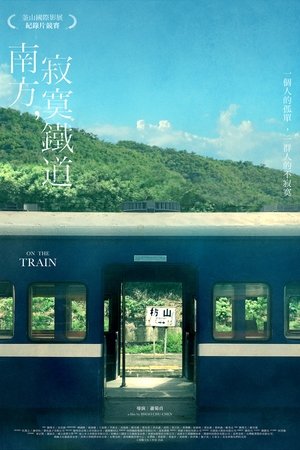
On the Train captures from the birth to the last moment of the railway, 98.2 kilometers long and opened in 1992, crossing southern Taiwan.
An experiment with three dimensions in a moment of clarity: the focus of the camera's lens towards the present, the speed of the train and the material world distorted by the movements of the train.
An intimate insight into the servant culture and lifestyle of the Viceroy of India and family, as they visit Simla (Shimla) and Lahore.
Der Trans-Europ-Express TEE - Legende auf Schienen
Jak se žije převozníkům podle Romana Vávry
A journey along the Inlandsbanan, from Mora to Gällivare, in the last summer of 1991 when the passenger traffic is to be shut down. A decision and its consequences. A film about the view of Norrland in these EC times.