The Channel Tunnel linking Britain with France is one of the seven wonders of the modern world but what did it take to build the longest undersea tunnel ever constructed? We hear from the men and women, who built this engineering marvel. Massive tunnel boring machines gnawed their way through rock and chalk, digging not one tunnel but three; two rail tunnels and a service tunnel. This was a project that would be privately financed; not a penny of public money would be spent on the tunnel. Business would have to put up all the money and take all the risks. This was also a project that was blighted by flood, fire, tragic loss of life and financial bust ups. Today, it stands as an engineering triumph and a testament to what can be achieved when two nations, Britain and France put aside their historic differences and work together.
A Union Pacific production outlining the Big Boy locomotive and the history of the last great steam engine to rule the rails
A travelogue, this film provides a guided tour of pre-World War II Utah and of course does not pretend to cinematic greatness. Recommended viewing for those in search of introductory Utah history. Also valuable for persons seeking insight into the state as it would have looked during this time period. Especially informative for those desiring a window into the past for a view of how Utah was in the days of their pre-World War II progenitors living in the state. Those whose Utah ancestors were involved in mining, railroading, sugar beets, and other featured industries; featured towns, sights, recreational attractions, and industries may find this otherwise banal travelogue a quite valuable addition to their family history.
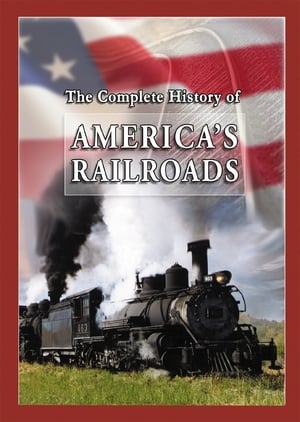
A documentary on the railroads of America produced by the Association of American Railroads
In the first half of the 20th century, America's railroads were radically transformed by the innovation of gargantuan steam locomotives. Pushed by the need to haul ever longer and heavier trains, the nation's locomotive works responded with the invention of awe-inspiring articulated engines. Delivering up to 7,500 horsepower, these steel behemoths could haul mile-long, 15,000-ton trains. In this riveting program, journey back to the golden age of steam for an up-close look at these legendary locomotives. See the Union Pacific's famed "Big Boy" in action and ride the rails of the Chesapeake & Ohio and Norfolk & Western railways. Meet the men who drove engines like the Allegheny and Yellowstone, and visit the museums and yards where the largest steamers ever built remain preserved in time. THE HISTORY CHANNEL' proudly presents this rollicking retrospective, sure to set any rail fan's heart pounding
Take a breathtaking train a ride through Nothern Quebec and Labrador on Canada’s first First Nations-owned railway. Come for the celebration of the power of independence, the crucial importance of aboriginal owned businesses and stay for the beauty of the northern landscape.
"The End of the Line - Rochester's Subway" tells the little-known story of the rail line that operated in a former section of the Erie Canal from 1927 until its abandonment in 1956. Produced in 1994 by filmmakers Fredrick Armstrong and James P. Harte, the forty-five minute documentary recounts the tale of an American city's bumpy ride through the Twentieth Century, from the perspective of a little engine that could, but didn't. The film has since been rereleased (2005) and now contains the main feature with special portions that were added as part of the rereleased version. These include a look at the only surviving subway car from the lines and a Phantom tun through the tunnels in their abandoned state, among others, for a total of 90 minutes of unique and well preserved historical information.
On a train crossing Tanzania, a rolling microcosm of East African society, we follow three main characters, reflecting on the strength to survive.
Trace the history of Hitler's armored private train, a 15-car mobile headquarters boasting state-of-the-art communications and anti-aircraft cannons.
A side-by-side analysis of Buster Keaton's Our Hospitality and S.S. Rajamouli's Maryada Ramanna.
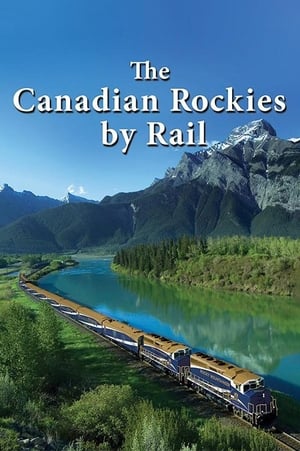
Discover the world's most luxurious trains and relive a bygone era, when the journey was an experience in itself, aboard the opulent carriages of the world's railways. A voyage where the passenger becomes a real traveller, steeped not only in the natural, stunning beauty of the surroundings but also in the romance and opulence associated with the golden age of rail. A classic rail adventure experiencing the thrills of crossing the Canadian Rockies. Torrential waterfalls, soaring eagles and the contrast of sapphire blue lakes and snow-capped peaks are spectacular and can all be viewed from either the magnificent bi-level dome car or the observation carriage. The unmatchable comfort and elegance of the Goldleaf service brings to life the era when the railways were the "only" way to travel.
A study on the uninhabited area of the old railway workers’ district of the village of Setil. The limits in the construction of their history lead us on this journey through the geography of Setil, leaving language behind and plunging into the primary elements. We seek an image of evocation, but also the very construction of the image of the space.
Continuing the study of the normal tasks performed by a permanent-way gang, this film deals with the maintenance of switches, common crossings and obtuse crossings. These are the fundamental units from which all track layouts, however complicated are built up.
Kolem republiky
"Rail" captures British Railways at a major turning-point in its history. In certain respects, this was a period of considerable upheaval and loss. There was a facing-up to the increasing need for a big modernisation drive. Full and speedy electrification, or the wider promotion of diesel-power on remaining lines, became a matter of top priority. Geoffrey Jones recorded a rapidly disappearing world of everyday steam travel, with its labour-intensive rail workforce : some of the footage in "Rail" (recognisable from "Snow") dates from around 1962.
A film about winter railroading in the Canadian Rockies and the men who keep the lines clear. The stretch between Revelstoke and Field, British Columbia, is a snow-choked threat to communications. The film shows the work of section hands, maintenance men, train crews and telegraph operators.
In this travelogue, actor David Suchet journeys across Europe aboard the world famous Orient Express train, as he prepares to play Poirot in an adaptation of Agatha Christie's "Murder on the Orient Express".
Take an epic overland train, boat and car journey through New Zealand’s breathtaking landscapes. The voyage begins in Auckland, but the city soon gives way to rolling pastures, volcanic extremes, tranquil waterways, the snowcapped grandeur of the Southern Alps and the beauty of Fiordland.
Built in 1923, the Flying Scotsman was the first steam locomotive to run at 100 miles an hour and to star in its own feature film. This is the untold story of the iconic Flying Scotsman-the very best in the engineering of its time.
After shooting more short films and documentaries, Deschanel wrote, directed and shot Trains, a short film that won the Silver Bear at the 1976 Berlin Film Festival. Trains is an exquisitely filmed short format documentary on passenger trains throughout the course of one day.