A day in the city of Berlin, which experienced an industrial boom in the 1920s, and still provides an insight into the living and working conditions at that time. Germany had just recovered a little from the worst consequences of the First World War, the great economic crisis was still a few years away and Hitler was not yet an issue at the time.
Kwaï
Take an epic overland train, boat and car journey through New Zealand’s breathtaking landscapes. The voyage begins in Auckland, but the city soon gives way to rolling pastures, volcanic extremes, tranquil waterways, the snowcapped grandeur of the Southern Alps and the beauty of Fiordland.
Edeltraut Hertel - a midwife caught between two worlds. She has been working as a midwife in a small village near Chemnitz for almost 20 years, supporting expectant mothers before, during and after the birth of their offspring. However, working as a midwife brings with it social problems such as a decline in birth rates and migration from the provinces. Competition for babies between birthing centers has become fierce, particularly in financial terms. Obstetrics in Tanzania, Africa, Edeltraud's second place of work, is completely different. Here, the midwife not only delivers babies, she also trains successors, carries out educational and development work and struggles with the country's cultural and social problems.
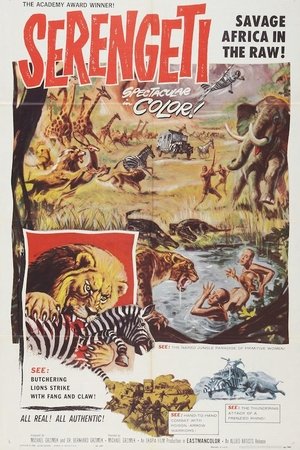
The film tells of the beginnings of the Serengeti National Park in Tanzania. At the end of the 1950s, the Tanzanian National Park Administration wanted to fence in the protected area around the Ngorongoro Crater. Bernhard and Michael Grzimek were invited by the national park administration in 1957 to get a precise picture of the animal migrations and to provide the national park administration with the values they needed for their project. Using a new counting method with two airplanes, the Grzimeks found out that the migration of the herds was different than assumed.
An experiment with three dimensions in a moment of clarity: the focus of the camera's lens towards the present, the speed of the train and the material world distorted by the movements of the train.
Été 44, un train pour l'enfer
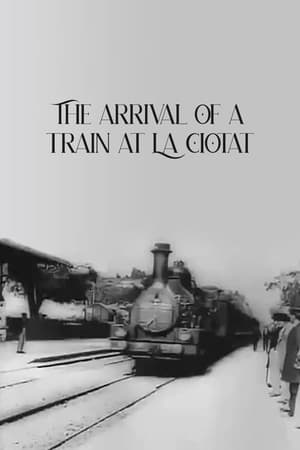
Most movie fans know that the first filmmakers liked to shoot trains entering stations. This example by Sussex film pioneer George Albert Smith illustrates why. The train's rush towards the audience brings movement and visual drama. The flurry of human activity offers plenty for the audience to engage with - who are these people and where are they going? And the time pressure exerted by the fact that the train must soon depart adds narrative tension - will everyone get on and off in time?
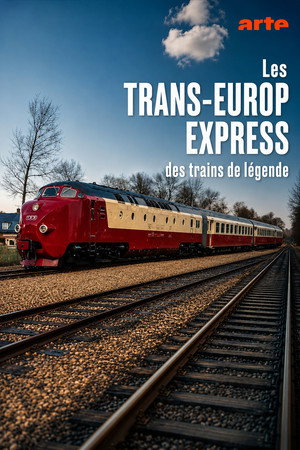
Der Trans-Europ-Express TEE - Legende auf Schienen
A family embarks on an annual tormenting journey along with 130 million other peasant workers to reunite with their distant family, and to revive their love and dignity as China soars as the world's next super power.
Pentrex takes you back in time to the late 1950s and 1960s for a close-up look at the waning years of steam locomotives in operation on America's eastern railroads. On the Norfolk & Western-the last major bastion of steam power in the United States-you'll witness the class Js in passenger service near Cincinnati, Ohio and class K, A, and Y steamers in freight service near Columbus, Ohio, Portsmouth, Virginia, and Bluefield, West Virginia. The mighty class S-1 2-10-2s of the Baltimore & Ohio perform both switching and mainline duty near Willard, Ohio and the durable class T-3s roll along the B&O mainline to Chicago. We even see class EM-1 2-8-8-4 Yellowstones pulling coal drags near Grafton, Ohio. At Columbus, Ohio, on the Pennsylvania Railroad, a wide variety of locomotives are seen in action at the yards and roundhouse. Then we join the chase as a pair of class J-1s doublehead north from Columbus with a long coal drag in tow.
Union Pacific has always been on the cutting edge of locomotive technology. In the 1950s, it became the only railroad ever to place a fleet of gas turbine-electric locomotives into regular mainline service. Here is the whole turbine story, from rare footage of an early steam turbine experiment in 1938 to the first gas turbine demonstrator in 1948. UP put 55 production units into service, the largest rated at 8,500 horsepower each – the most powerful locomotives ever built! You'll see the demonstrators and all three production models (including the unique "Veranda" models) hauling tonnage on scenic mainlines, moving through yards, and being serviced in engine terminals alongside steam engines and classic F-units. Along the way you'll learn how turbine locomotives operate and will explore the differences and similarities between turbine-electric and diesel-electric units. The saga ends with an experimental coal-burning turbine locomotive built by Union Pacific itself in 1962.
Serengeti River Crossing is a stunningly immersive experience that takes the viewer to the heart of Africa to witness an epic natural drama from a new perspective.
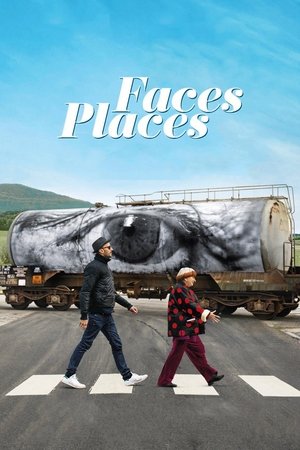
Director Agnès Varda and photographer/muralist JR journey through rural France and form an unlikely friendship.
Follows five trekkers and a local Chagga guide to the top of Kilimanjaro, the largest freestanding mountain in the world. Along their journey this diverse group of trekkers encounter strange landscapes and endure harsh conditions as they travel through five climate zones ranging from the lower rainforest reaches of Kilimanjaro to the summit's arctic glaciers.
Celebrating 200 years of rail, Guy helps to rebuild, and learns to drive, the world’s most important train for a recreation of the journey that changed history: the Stockton to Darlington Railway
Africa's most iconic animals are home to the Serengeti. It is the site of one of the greatest natural spectacles in the world: the migration of millions of wildebeest. Nature has ingeniously ensured that everything that lives here, from the smallest insects to the largest mammals, has a clear role. Together they ensure a balance in the ecosystem.
Final Line
For 2-4 year old children, the Tomika Prarail friendly hiragana first time drill. Learn hiragana characters with the aid of Tomika Prarail trains and cars.
Take a breathtaking train a ride through Nothern Quebec and Labrador on Canada’s first First Nations-owned railway. Come for the celebration of the power of independence, the crucial importance of aboriginal owned businesses and stay for the beauty of the northern landscape.