This Traveltalk series short highlights such Maryland destinations as Baltimore, Johns Hopkins, Annapolis, and Fort McHenry.
Lake Patzcuaro, located 230 miles west of Mexico City, is one of the highest and most picturesque bodies of water in Mexico. The heritage of the indigenous peoples of the area, the Tarascans, still prevails, such as the production of lacquer-ware handicrafts, and the means of hunting and fishing, the latter which uses nets shaped like large butterfly wings. Although most current day Tarascans are Roman Catholic, they have not totally abandoned their indigenous pagan gods. On Janitzio, one of the many islands in the lake, stands a large statue commemorating José María Morelos, a prominent figure in Mexican liberation and a great benefactor to the Tarascans. Janitzio is also the inspiration for many famous paintings. The town of Tzintzuntzan just inland from the lake's shore acts as the regional center for the market and for festivals.
This Traveltalk series short visits various places around the United States. At the first stop, we admire the natural beauty of Crater Lake in Oregon. The next stop is the open pit copper mine at Bingham Canyon, Utah, the world's largest copper mine. We then spend time in Hannibal, Missouri, the hometown of author Mark Twain. After a short visit to a log-rolling contest in Washington State, we cross the country to get a view of Washington, DC from across the Potomac River. The final stop on this tour is Arlington National Cemetery, where we see the Tomb of the Unknown, Arlington House, and the mast of the USS Maine, which was sunk in 1898 in Havana Harbor.
This Traveltalk series short focuses first on the architectural styles found in Arizona, then switches to the natural wonders in the state.
Three juxtaposing stories taking place in Portugal, Austria and Cuba create an intimate and poetic portrait of the daily lives and struggles of the elderly in an unstable world, seen through the eyes of their grandchildren.
A funny walk through the life story of Billy Wilder (1906-2002), a cinematic genius; a portrait of a filmmaker who never was a boring man, a superb mind who had ten commandments, of which the first nine were: “Thou shalt not bore.”
Spalding Gray sits behind a desk throughout the entire film and recounts his exploits and chance encounters while playing a minor role in the film 'The Killing Fields'. At the same time, he gives a background to the events occurring in Cambodia at the time the film was set.
Paleolithic: a mysterious and enigmatic period. Hard to grasp from today's point of view. How did people live then, how did their communities function? What does the statue of the Venus of Willendorf tell us about them? ... The Venus of Willendorf, an ingeniously crafted 29,000-year-old statue of a woman, is a naked and sensual witness to the early Stone Age. Who does he represent? Is it a real depiction of a woman or an ideal? Is it a tribute to women mothers? Analysis of the famous statue and other archaeological finds from Austria and the Czech Republic shows that Paleolithic life was more diverse than previously thought, including the role of women, who very likely performed the same activities as men. They were hunters of big game and guardians of ancient knowledge. Take us back 29,000 years to people who were a lot more like us than we think.
Hong Kong and Taiwan are 2 islands inextricably linked by their huge neighbour. Modern metropolises full of eastern traditions, they're forging forward in the 21st century as China's little dragons. Traveller Megan McCormick begins her journey in Hong Kong, looking out at the incredible skyline from Victoria Peak. She then takes in the contrasts of the city before taking the ferry visit Tap Mum Chau and Lantau Island. After a flight to Taiwan she explores the capital Taipei, ending her trip with a visit to its most remote outpost - Orchid Island.
Tokyo is a fascinating city of extremes, blending the old traditions with visions of the future and an extraordinary pace of life. A shock of skyscrapers and neon, it's a gleaming example of Japan's post World War II success. Traveller Ian Wright begins his stay by experiencing the spiritual side of Tokyo at the peace loving Senso-ji temple. After a gentle introduction he throws himself into the pace of the city and discovers some incredible technology and fashion! He then heads to Mount Fuji for a crowded climb to the summit, before ending his trip experiencing the infamous Tokyo nightlife.
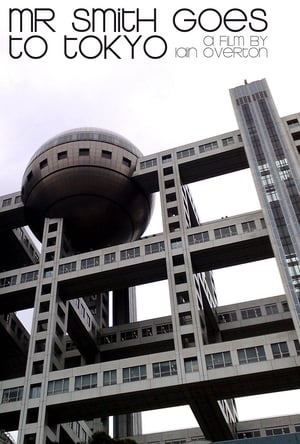
When Tomoko finds some messages for a 'Mr Smith' on a lost mobile phone, she finds herself on an 'Alice in Wonderland' journey through Tokyo's boulevards and back alleys. From the tyranny of symmetry in soaring office blocks - to buildings that look like space-ships, this creative documentary shows us the city's soul.
In the spring of 1902, Viennese working-class daughter Marie König runs away from her beating father and is lured into a high-class brothel by an agent. Instead of the promised self-determined life "with horse-drawn carriage rides and silk dresses", she experiences closed doors, violence and exploitation. Only after years of agony does Marie confide in the journalist Emil Bader, who makes the conditions in the brothel public and takes the owner, Regine Riehl, to court.
Travel journalist Rudy Maxa and Washington, D.C. restaurateur Daisuke Utagawa present three distinct regions of Japan, focusing on the nation's food and food producers. From the ramen of the northern island of Hokkaido, to the sushi of Tokyo, to the Wagyu beef raised on the southern island of Kyushu, food is a window on the soul of Japan.
"The Road to War" uses elaborate and fascinating computer-generated recreations and archives never seen before to examine how the assassination of Archduke Franz Ferdinand in 1914 was used by the Austro-Hungarian Empire to start a war against Serbia. The film investigates how this regional conflict involving the Central Powers and the Triple Entente escalated to become "World War I", a war with more than 17 million dead and More than 20 million injured.
Documentary on conductor Herbert van Karajan, focusing on his early adoption of audio and video recording technology and his impetus to make use of it to preserve his musical legacy for future generations.
IN THE LAND OF GIANT PYGMIES, a diary of Aurelio Rossi's 1925 trek into the immense Belgian Congo, preserves a long-gone-Colonial-era wonder at natural resources, "primitive" tribes, customs and costumes in Europe's cast African possessions, and implies that the "dark continent" could benefit from the "civilizing" influences of home.
To popularize the idea of automobile travel, Ford Motor Company produced Ford Educational Weekly, a film magazine distributed free to theaters. One 1916 series featured "Visits to American Cities." In this episode, Los Angeles is featured at the very beginning of the boom created by oil, movies and aircraft. On the occasion of its centennial in 1953, Ford donated its film to the National Archives and Records Service; this copy derives from a fine grain master printed from the Archive's preservation negative. Music by Frederick Hodges.
This film journeys deep into the heart of Austria’s favorite daily newspaper, the Kronen Zeitung, the most widely-read paper per capita in the world. The “Krone’s” 2.7 million readers represent 43% of the Austrian press market. A reflection of the Austrian soul, this newspaper serves as a prism through which we can understand the rise of the populist Right in this country and examine the dangerous flirtation between media and politics.
This Traveltalk series short visits Hungary's capital, Budapest.
What motivates people to organize communal living themselves? What ideals are behind it, how do they finance themselves, and how does life in a community work? Based on six self-managed residential buildings in Austria from the past 40 years, the documentary film "Der Stoff, aus dem Träume sind" (The Stuff Dreams Are Made Of) sets out to find answers. Filmmakers Lotte Schreiber and Michael Rieper tell these six stories by staying very close to the protagonists.