Documentary about kookaburras
Director Anna Broinowski explores how Pauline Hanson's speech in 1996 and the decades of debate that followed has influenced Australia today; the impact of her political career on modern multicultural Australia, and the people who have helped her transition from local fish shop owner to Member for Oxley. Featuring many of Hanson's critics, opponents, advisors and commentators, from former Prime Minister John Howard, to current members of the media, including Margo Kingston and Alan Jones; and leading Indigenous commentator, Professor Marcia Langton.
Originally broadcast on ABC's True Stories in 1993, Feed Them to the Cannibals tells the story of Sydney's Gay and Lesbian Mardi Gras. It was the first time cameras were allowed at Sleaze Ball and the Mardi Gras Party.
Down Under, just a few nights after the November full moon - when water temperature and tides are just right - one of nature's most extraordinary events explodes into life. Thousands of coral join in an elaborate mating ritual, a synchronized dance of naturally occurring phenomena that help increase the coral's odds of survival. Journey through more than 1,200 miles of Australia's treasured Great Barrier Reef to discover the secrets of the unique marine life that inhabit this dazzling spectacle, considered to be the world's biggest single structure made by living organisms and declared a World Heritage Site by UNESCO.
A film about the cultural evolution of the Sydney beach side suburb of Maroubra and the social struggle faced by it's youth - the notorious surf gang known as the Bra Boys.
A documentary covering the 2000 Olympic Games in Sydney.
Formed in Australia in 1973 by brothers Angus and Malcolm Young, AC/DC are considered pioneers of heavy metal. They are one of the highest grossing bands of all time. Using archive footage and interviews with Angus Young and former manager Michael Browning this fascinating programme takes you on a journey from their early days in Australia with Bon Scott to Brian Johnson joining the band and beyond.
Something in the Water explores the rock phenomenon that is music in WA. How can the most isolated city in the world have exploded with so many successful bands over the years? Across decades and genres, Something in the Water asks "what is responsible for the sparkling talent pool?"
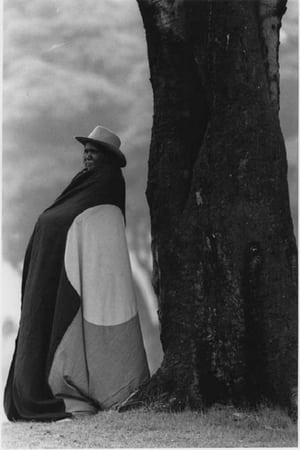
Sacred Ground tells the true story of Aboriginal people fighting to save the last remnants of their ancient heritage and culture.
About trauma, resilience and post-traumatic growth in the medics who served with Australia's special forces in Afghanistan. From losing mates in the battlefield to treating horrifically injured Afghan kids in remote surgical theatres.
From the ashes of Australia’s devastating bushfires, wildlife survivors begin their long journeys to recovery. Australia’s fauna have evolved to coexist with bushfire, but these Black Summer fires are unprecedented in their scale, speed and intensity. Many native animals are unable to escape, or endure, without human help. We follow iconic species like koalas, kangaroos, wombats, and an endangered parrot through their rescue, rehabilitation and eventual release. Remarkable tales of compassion and dedication are revealed along the way – from an orphan wombat growing too attached to her carer, to audacious helicopter airdrops to feed remote rock wallabies. When the fires finally burn out, Australia looks to the science, innovation and Indigenous knowledge that will be needed to safeguard fragile wildlife in an even hotter future.
From a high school art class to a local radio station, the day-to-day lives of several women coalesce into a poetic documentation of women’s presence and physicality across everyday spaces.
Frequently after talking to another artist, Todd Anderson-Kunert found himself thinking of another question he would have liked to have asked them, but didn’t. This film is about what happened if he did ask those questions. Between 2014 and 2017, in and around Melbourne, Australia, he conversed with a selection of 31 sonic artists, each time for 30 minutes. These conversations were edited down, each time finding a new question he wished he had of asked. This question was used as the starting point for the next conversation with a completely different artist. This documentary film follows that process. The conversation engages with a variety of themes, including temporality, performance, fragility, recording, artistic development, and creative process. It also offers an insight into some of the experimental sound communities operating within Melbourne, Australia.
Paul "Gator Boy" Bedard and croc hunter "Crocodile Mick Pittman" journey through the Northern Territory to explore the invasion of crocodiles.
There's a mysterious predator lurking in the depths of Australia's wild Southern Ocean, a beast that savagely devoured a great white shark in front of cinematographer David Riggs 11 years ago. Riggs's obsession to find the killer leads him to an aquatic battle zone that's remained hidden until now. Here, killer whales, colossal squid and great white sharks face off in an underwater coliseum where only the fiercest creatures of the marine world survive.
‘Bring Out a Briton’ was a short appeal for Australians to help the Immigration Department in its plan to form and assist a ‘Bring Out a Briton’ Committee in each district. It featured popular Australian actor Chips Rafferty as the spokesman for the campaign. Aimed at the Australian public rather than the prospective immigrants it was designed to allay a perceived anxiety amongst the public about non-British European migration.
The vexed question of how to live an artistic life is illustrated in DISAPPEAR HERE, the story of Australian 90's alternative group Glide and founding songwriter William Arthur - in an atmospheric, texturally rich exploration of thwarted ambition in the independent music scene of 1990's Sydney. This extraordinary artist and the shifting sands of the music industry are revisited by band members as well as Aussie music industry luminaries including Tim Rogers (You Am I), Jamie Hutchings (Bluebottle Kiss), Peter Fenton (Crow) and Jane Gazzo (ABC's Recovery and Triple J). DISAPPEAR HERE is a completely independent production which was directed, shot, edited and written by Ben deHoedt.
Sydney, the early 1950's... a city in the grip of a deadly crime wave. In just over a year more than one hundred people were poisoned. Most of the killers were women. Recipe For Murder tells the true story of three notorious poisoners; Yvonne Fletcher, Caroline Grills and Veronica Monty. The 52 minute film combines gritty archive with stunning film noir re-enactments and interviews with witnesses. Narrated by Dan Wyllie in classic pulp crime style, the film dramatically reveals the unique ingredients that created a Recipe For Murder.
Green Valley was a housing commission estate in western Sydney, much maligned by the media of the day. The residents were hurt by the criticism but lacked access to the media to respond. Supplied with equipment by Film Australia, they used this film to present a different image of themselves and their daily lives. In so doing, they answered the question of "Whatever happened to Green Valley?" The core of this film is the work of half a dozen residents, co-ordinated by acclaimed filmmaker Peter Weir in one of his earliest film projects. Weir also acts as the moderator at a public forum that is included in the film.
In 1954, recently crowned Queen Elizabeth II and HRH the Duke of Edinburgh embarked on a two month tour of Australia. It involved some 10,000 miles of travel by air and 4,000 miles by land and sea. The couple visited every state in the nation, and turned up at all sorts of events, from tennis at Kooyong to steel mills in Newcastle to woodchopping at Wagga to the Flying Doctor Service Service at Broken Hill. The film production arm of the federal government - the Film Division of the News and Information Bureau of the Department of the Interior - decided to cover the tour in 35mm colour film, sending the footage to England for processing and editing. Six weeks after the tour ended, the film was finished and became the first feature-length Australian film shot and financed by Australians in colour to be given a theatrical release.