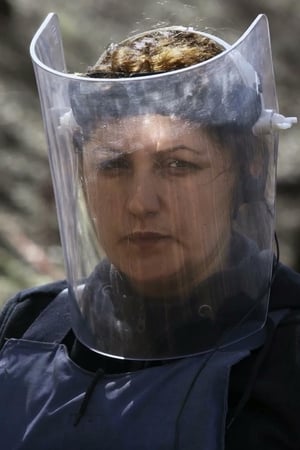
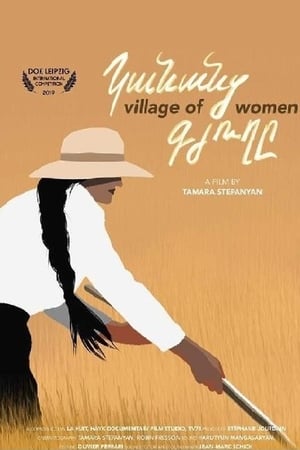
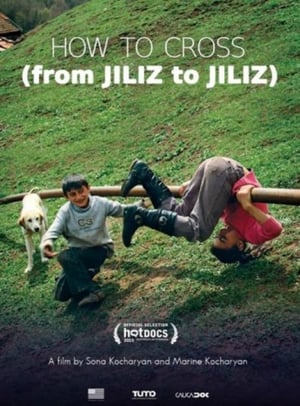
As a result of the second Karabakh war, a village should be ceded to Azerbaijan since a new highway is built through the Lachin corridor. The family of Narine, like many other Armenian families, needs to find a new place.
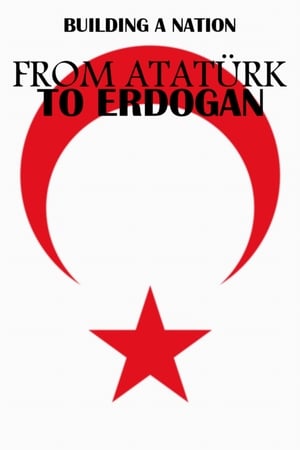
Turkey's history has been shaped by two major political figures: Mustafa Kemal (1881-1934), known as Atatürk, the Father of the Turks, founder of the modern state, and the current president Recep Tayyıp Erdoğan, who apparently wants Turkey to regain the political and military pre-eminence it had as an empire under the Ottoman dynasty.
The Falcons is an intimate, observational documentary that delves into the world of the Tshakhruk Ethnoband, a remarkable musical ensemble in the Armenian highlands. Comprised of special-needs children that reside at the state orphanage, these young musicians find solace, strength, and self-expression through the transformative power of music.
The last collaboration of Artavazd Peleshian and cinematographer Mikhail Vartanov is a film-essay about Armenia's shepherds, about the contradiction and the harmony between man and nature, scored to Vivaldi's Four Seasons.
Garod means longing in Armenian. Longing for a land that lost its people. Longing for the homeland. Longing for a time that is eternally lost. “Garod” is a story of longing. It is about the lives and the musical stories of two Armenian musicians - a father and his son, Onnik Dinkjian and Ara Dinkjian. It tells the story of the remaking of a musical tradition and life in diaspora, passes through different geographies and countries following the traces of a musical tradition. In this documentary, Garod means not only longing for loss but also remaking of a musical tradition and the life itself.
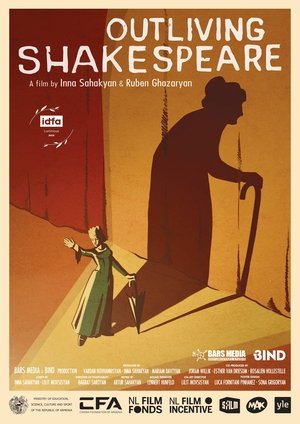
In a decaying Soviet-era retirement home, a vibrant group of elders cling to life by staging Shakespeare. Yet loneliness lingers beyond the theater’s doors, until drama begins to blur with reality.
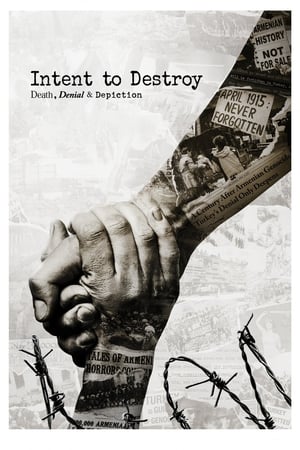
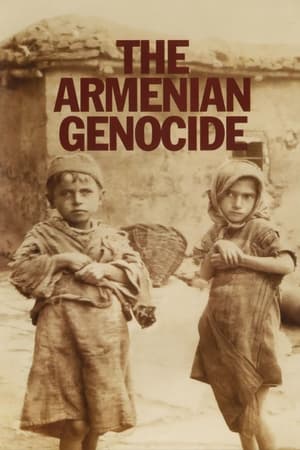
Explores the Ottoman Empire killings of more than one million Armenians during World War I. The film describes not only what happened before, during and since World War I, but also takes a direct look at the genocide denial maintained by Turkey to the present day.
The Grammy-winning lead singer of System of a Down, Serj Tankian helps to awaken a political revolution on the other side of the world, inspiring Armenia's struggle for democracy through his music and message.
Ab Fab stars Jennifer Saunders & Joanna Lumley share 25 years of friendship. The two funny ladies head to the Champagne region of France to find out how their favourite glass of fizz is made.
Comedy icon Joanna Lumley pursues a life-long dream to track down the elusive and beautiful Northern Lights. She travels North across the Arctic Circle, up through Norway and finally to Svalbard, the most northerly permanently inhabited place on Earth, where she has to cope with temperatures approaching minus 30° C. Joanna’s journey takes her from train to boat and huskysled to snowmobile as she is pulled ever northwards and finally, in a breathtaking climax to the film, Joanna gets to see with her own eyes the spectacular beauty of the Northern Lights. As seen on ABC1.
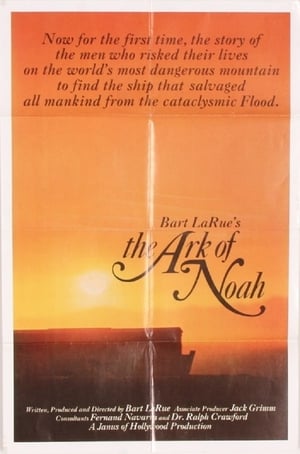
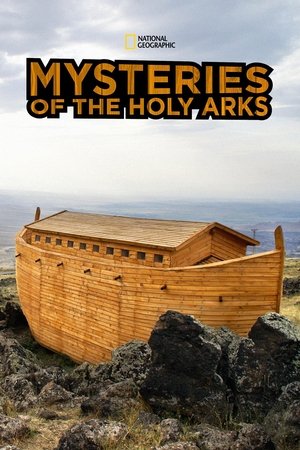
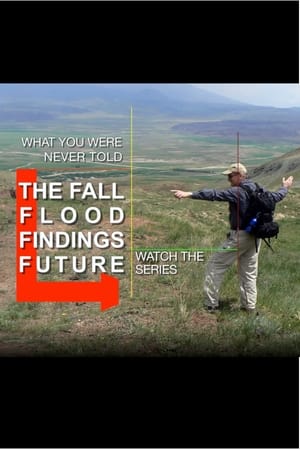
Prof. Robert Michelson takes you on a journey to a time when the Watchers roamed the Earth, corrupting it for their own pleasure and as an affront to its creator. So massive was this premeditated interference in God’s created order, that the Almighty used His creation to obliterate the monstrous works of corruption as well as the hands that created them. Learn why God would bring a great flood upon his world, and how such a flood of global impact might have been accomplished by God using only the forces of His own creation. See the physical evidence of the Great Flood and how it was recorded in eyewitness accounts. See the likely landing place of the Ark of Noah in the mountains of Urartu along the border between Turkey and Iran based not only on the ancient accounts of eyewitnesses, but on the physical evidence (actual artifacts) existing today. Finally, learn how ancient Egypt played a central role in the events just prior to, and immediately after the Great Flood.
Casimê Celîl was born into a Yezidi Kurdish family in 1908, in a village called Kızılkule, located in Digor, Kars. The village and family life, which he longed to remember throughout his life, ends with the massacre they endured in 1918. During his long road to Erivan, Armenia, he lost all his family members. Left all alone, Casim was placed into an orphanage and was forced to change his name. To remember who he was and where he came from, every morning he repeated the mantra “Navê min Casim e, Ez kurê Celîlim, Ez ji gundê Qizilquleyê Dîgorê me, Ez Kurdim, Kurdê Êzîdî me”, which translates to: “My name is Casim, I am the son of Celîl, I come from the village of Kızılkule in Digor, I am a Kurd, and I am Yezidi”. He clings to every piece of his culture he can find, reads, and saves whatever Kurdish literature or art he comes across. As the year’s pass, Casim finds himself with an impressive collection of Kurdish culture and history.
A bunch of stories, portraits and images about people of amazing destinies, including Parajanov and Tarkovsky, merging into a non-traditional and polemic image of Armenia.
A man paves his own way to his own soul through an intellectual quest, tragedies of nations and personal drama. The road moving through the cosmic distances is a flight into one's internal world. This flight and this drama are revealed in this philosophical film-poem.
On Easter 2018, a man put on a backpack and began to walk across Armenia. His mission: to inspire a velvet revolution and topple the corrupt regime that enjoys absolute power in his former Soviet nation. With total access to all key players, this documentary tells the story of what happened in the next 40 days.
A documentary short that presents evidence for a global flood, using geological research and historical evidence to support the Biblical account in Genesis. Intended for Christian audiences, the film argues the Bible's trustworthiness by addressing scientific and cultural evidence for the flood and concludes with an evangelistic message.
Joanna Lumley travels to the USA to follow in the King of Rock 'n' Roll's footsteps.
As we learn more about ancient shipbuilding we must ask the question, “When Noah constructed the Ark, wouldn’t he have used the technology of his day? Could he follow the Lord’s directions and actually build a ship able to withstand the cataclysmic tempest?” Following the example of Drs. Henry Morris and John Whitcomb’s ground-breaking book, The Genesis Flood, Ark researcher Tim Lovett applies new findings to the contours and interior design of the Ark, while maintaining an unwavering commitment to the Word of God.
Williamstown, Kentucky, is home to the Ark Encounter – a “life-size” creationist museum filled with all of the creatures that traveled in Noah's Ark, including dinosaurs. With incredible access to the park leading up to its opening, the filmmakers expose the larger system behind the creationist movement, piecing together the many factors that have led to the museum presenting its information as historical fact, and the people who are fighting to set the scientific record straight. Amid a climate of science denial and a well-funded corporate behemoth, three Kentuckians (a local geologist, an ex-creationist, and an atheist activist) try their best to challenge the movement that is taking over their home state. Meanwhile, fervent believers work diligently to create the lifelike animatronics that will be on display in the Ark.
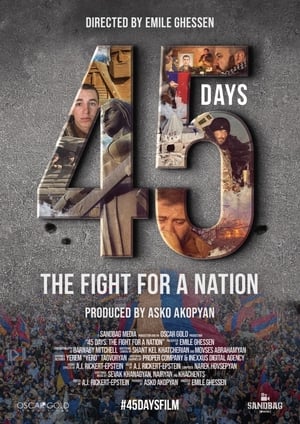
A feature documentary presented and directed by former Royal Marines Commando Emile Ghessen. The documentary tells the story of the 2020 war between Armenia and Azerbaijan over the disputed region of Nagorno Karabakh. In the fall of 2020, Armenia and Azerbaijan fought a brutal bloody war. Azerbaijan won, decisively. The feature documentary 45 Days: The Fight for a Nation tells the story of this conflict, from the Armenian perspective, focusing on the human cost of war and its impact on the large Armenian diaspora.