Prodaná nevěsta
Since its premiere on 2 June 1937 in Zurich, Alban Berg's second opera "Lulu" has the reputation of being surrounded by scandals. On the one hand, this is due to the dubious character of the subject, the man-eating femme fatale, which Berg had taken from Frank Wedekind's two Lulu tragedies – "The Earth Spirit" and "Pandora's Box" – and combined into one opera libretto. On the other hand, Berg's widow had (for personal reasons) repeatedly refused to have the opera completed, which was unfinished when Berg died. This video is of the unfinished two-act torso of "Lulu."
Written for exceptional singers, Il Trovatore has remained popular ever since its first performance at the Teatro Apollo in Rome on 19 January 1853, when even the toughest critics were convinced of its place in the repertoire. People are attracted to Il Trovatore because of its rousing melodies, its brutal, powerful plot, and its simple structure: elements that make it one of the best examples of Verdi’s theatre pieces. Recorded live at the Sferisterio theatre of Macerata in the summer of 2016, under conductor Daniel Oren's vibrant and incisive direction, this production boasts a first-rate cast and elegant direction from Francisco Negrin. The sets and costumes by Louis Désiré and lighting by Bruno Poet were well received by the Sferisterio audience.
Disciplined Italian composer Antonio Salieri becomes consumed by jealousy and resentment towards the hedonistic and remarkably talented young Salzburger composer Wolfgang Amadeus Mozart.
Composer Thomas Adès conducts the Met premiere of his powerful opera based on Shakespeare’s last play, in Robert Lepage’s brilliantly inventive production. Simon Keenlyside is the magician Prospero, who conjures the storm that shipwrecks his enemies and sets in motion the course of events. Rising Met stars Isabel Leonard and Alek Shrader are the young lovers, Miranda and Ferdinand, Alan Oke sings the sinister Caliban, and Audrey Luna gives a memorable performance as the sprite Ariel.
This all-star cast is framed by Peter Hall’s gritty, realistic production and conducted by James Levine, who brings out all the surging emotion and gripping drama in Bizet’s score. At the center of the story is Agnes Baltsa, whose smoky mezzo is tailor-made for the gypsy Carmen, an independent woman who glories in obeying only her own rules, but who is haunted by fate. Superstar tenor José Carreras is Don José, the solider from a small town who catches Carmen’s eye and is destroyed by his growing obsession with her. Samuel Ramey is the charismatic matador Escamillo, who lures Carmen away from Don José with tragic result. Leona Mitchell is Micaëla, the simple girl from Don José’s hometown who cannot save him. March 21, 1987 Matinee Broadcast.
With their “musical comedy” in the spirit of Mozart, Richard Strauss and his brilliant librettist Hugo von Hofmannsthal created the most popular of all their works and one of the most frequently performed operas of all time. Disguised as a refined comedy, light as a feather and extremely entertaining, “Der Rosenkavalier” tackles universal themes such as love, sexuality, marital fidelity, and the changes that human relationships undergo over time. All set to music of the most sumptuous kind. With its prestigious cast under the inspired direction of Harry Kupfer, the 2014 Salzburg Festival production of *Der Rosenkavalier* was one of the most internationally acclaimed interpretations of the work since the start of the new millennium.
Director David McVicar’s new production brings opera’s favorite double bill to new life, setting the two operas in the same Sicilian setting, separated by two generations. Marcelo Álvarez takes on the rare feat of singing both leading tenor roles. In Cavalleria, he is Turiddu, the young man who abandons Santuzza (Eva-Maria Westbroek) in his pursuit of the married Lola (Ginger Costa-Jackson)—and ends up being killed in a duel with her husband, Alfio (George Gagnidze). In Pagliacci, Álvarez is Canio, the leader of a traveling vaudeville troupe. Patricia Racette sings Nedda, his unfaithful young wife, whose plans to run away with her lover are foiled by her spurned admirer Tonio (George Gagnidze)—with equally tragic consequences. Met Principal Conductor Fabio Luisi is on the podium.
This film takes you through the inspiring journey of Venezuela's Coro de Manos Blancas (White Hands Choir) while exploring their daily struggles and lives. Established in 1995 as part of Venezuela's El Sistema program, the White Hands Choir provides artistic opportunities for children, youth, and adults with disabilities, utilizing music for social development and inclusion.
Originally set in the 15th century, Tchaikovsky's "The Enchantress" is updated to the present day in this innovative production. The charismatic, emancipated Nastasya, who rejects the advances of the devious Mamïrov, duly faces the implacable forces of traditional values in a society riven by divisions between liberal freedoms and religious orthodoxies. The tragic outcome engulfs everyone...
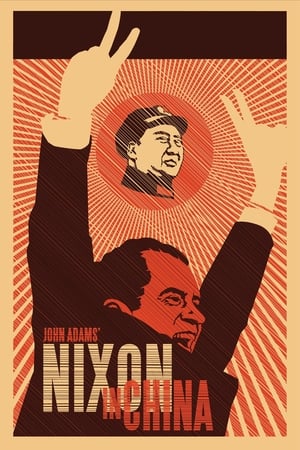
In February 1972, the American president Richard Nixon went to China to meet Mao Zedong. In the context of the war in Vietnam and the cold war, this encounter marked a turning point in Chinese‑American relations. John Adams, a major musical figure of the last forty years, made this event of contemporary history the subject of his first opera. Nixon in China tackles the political thaw instigated by ping-pong diplomacy, begun by the invitation of the American table tennis players by their Chinese counterparts, one year before the presidential visit. A mesmerising work in which the pulsations and repetitions typical of minimalism are combined with melodic lines of great lyricism. For its entry into the Paris Opera repertoire, this work has been entrusted to the director Valentina Carrasco, who underlines the importance and the mediating power of Chinese national sport in history.
A destitute, crippled child and his mother are visited late one night by three traveling strangers who claim to be following a star so that they may bring gifts to a newborn king. The yearly live telecasts of Gian Carlo Menotti’s Amahl and the Night Visitors were a cherished Christmas tradition throughout the 1950s. In addition, since its premiere in 1951, Amahl has been performed regularly by community groups and small opera companies throughout the US, making it the single most popular American opera. This production, staged by the composer himself and originally telecast on Christmas Day, 1955, is a testament to the work’s enduring power to move the heart and stir the soul. Starring Rosemary Kuhlmann as the Mother and Bill McIver as Amahl. Members of the Symphony of the Air are under the direction of Thomas Schippers.
Madama Butterfly - Teatro alla Scala
When Barbe-bleue loses his fifth wife, the turbulent Boulotte is selected at random to be the next one. But Barbe-Bleue falls in love with Hermia – who loves the shepherd Saphir – and soon wearies of Boulotte. So, he asks his alchemist to concoct for him an “anti-wife” philtre. But, as on the previous occasions, it is merely a sleeping potion and Boulotte wakes up the other five “dead” wives. They reappear, dressed up as gypsies and bring the truth to light.
A collectively made filmic opera in 35 parts. The Black and predominantly queer art collective, an evolving line up of poets and artists from across the world, abstracts and reimagines opera in any traditional conception. Set to hip-hop, blues, noise, R&B and electronica, the piece uses the voice (chanting, singing, screaming; written by poet and activist Dawn Lundy Martin) as its primary tool, verbalising centuries of alienation, vulnerability and protest in the global African diaspora through its disruptive libretto.
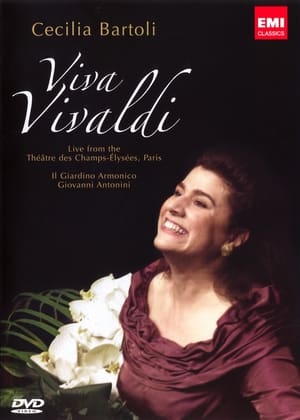
Viva Vivaldi! is a concert by the Italian mezzo-soprano Cecilia Bartoli interspersing arias from the 20 surviving operas of Vivaldi with two concertos. Given with the early music ensemble Il Giardino Armonico before a very appreciative audience in the Théâtre des Champs-Élysées, the performance is part of Bartoli's exploration of the Venetian composer's opera music which also includes The Vivaldi Album. There is a startling dynamic energy, which contrasts powerfully with the more restrained interpretations by singers such as Emma Kirkby. Bartoli's natural Italian and the live atmosphere of Maria Grazia d'Alessio's oboe gives her interpretation of the quietly haunting and melodically rich "Non ti Lusinghi la Crudeltade" from Tito Manlio a particular piquancy. The Flautino Concerto is a most attractive interlude, while the more famous Lute/Violin Concerto beguiles with its exquisite lyricism.
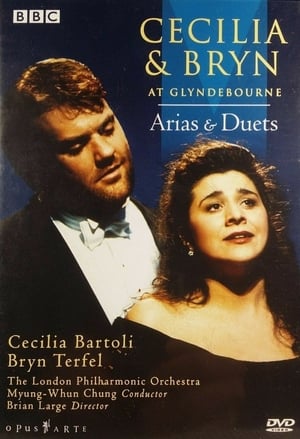
The celebrated mezzo-soprano Cecilia Bartoli joins Bryn Terfel for a recital of arias and duets recorded at Glyndebourne Opera House in 1999. The programme features favourite pieces from Mozart, Rossini and Donizetti, with the London Philharmonic Orchestra conducted by Myung-Whun Chung.
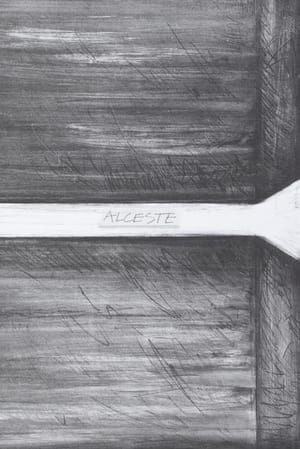
John Eliot Gardiner conducts Gluck’s 1776 French version of “Alceste” at the Théâtre du Châtelet in Paris. Soprano Anne Sofie von Otter takes the title role of Alceste, Queen of Thessaly, who offers to die at the hands of the gods in place of her husband, Admète (Paul Groves), so that the people will not lose their king. Alceste is then saved from the underworld by Hercule (Dietrich Henschel).
Based on a revolutionary play supposedly written by the Eternal President of the Democratic People's Republic, Kim Il-sung, and rumored to have been co-directed by Kim Jong-il. This revolutionary work is also popular among the Chinese, especially those who lived through the Cultural Revolution, and have fond memories of revolutionary antics.
Strauss's opera adapted to the screen by Gotz Friedrich.