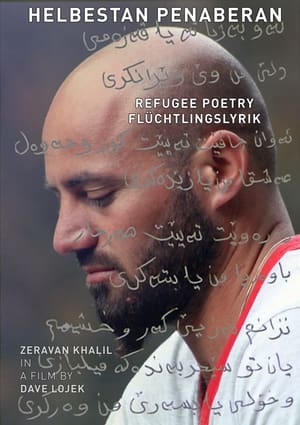
The Kurdish Iraqi poet and actor Zeravan Khalil travels with his dog through an Alpine gorge after fleeing from IS war and genocide. As he remembers the abomination, he writes a poem with the title “You drive me mad” in Kurmanji Kurdish. In his home country, Yazidic Kurds are forbidden to work in his profession. Then he eats his apple and wanders through Europe’s middle with more hope.
A super 8 projection which references the essay “On the Jewish Question” by Karl Marx.
Hosted by futurist moderator Chris Wallasch, this playful documentary speculates on what love and relationships might look like in the year 2002. Through interviews with travelers at Berlin-Schönefeld Airport and a collage of witty flashbacks and imagined flashforwards, the film reflects on enduring questions of romance, family, and changing social norms.
An unintentional irregularity of a clip from Fata Morgana (Werner Herzog).
After the capture of Shanghai, Japanese soldiers make a trip to Suzhou.
An intimate study of the life of a domestic cat, taking place over a period of months as she gives birth to a litter of kittens and cares for them as they grow.
“Ah humanity! reflects on the fragility and folly of humanity in the age of the Anthropocene. Taking the 3/11/11 disaster of Fukushima as its point of departure, it evokes an apocalyptic vision of modernity, and our predilection for historical amnesia and futuristic flights of fancy. Shot on a telephone through a handheld telescope, at once close to and far from its subject, the audio composition combines excerpts from Japanese genbaku film soundtracks, audio recordings from scientific seismic laboratories, and location sound.”—Ernst Karel, Verena Paravel & Lucien Castaing-Taylor
The vertiginous progress of modernity has caused the spaces that humanity previously inhabited, now remain forgotten.
Lindsay observes how the public's perception of transsexuals were negatively impacted by pop culture. Starting with the rise of Ed Gein and culminating in J.K. Rowling's controversial mystery novel "Troubled Blood."
It seems highly unlikely that Colonel Sanders ever thought that he would be selling his Kentucky Fried Chicken to the Japanese, but Kentucky Fried Chicken, Japan, Inc. is doing just that, and doing it successfully. The company, headed by an American director and staffed by the Japanese, has raised the business of fast-food retailing to an art. Here West meets East as the Japanese are shown how to prepare the product and the Americans are introduced to the fine art of Japanese business. –cte.uw.edu
P. Adams Sitney, Professor of Visual Art at Princeton University, wrote a short essay for Artforum International "Medium Shots: the films of Morgan Fisher" in which he describes the film "()." "Fisher's most recent film, (), succeeds astonishingly where Frampton's parallel effort, Hapax Legomena: Remote Control (1972) failed; it uses aleatory methods to release the narrative unconscious of a set of randomly selected films. () is made up entirely of "inserts" from feature films organized according to Oulipian principles. Inserts were usually shot by assistants when star actors, large crews, or expensive sets were not needed. These include details of weapons, wounds, letters, signs, tombstones, machinery, games of chance, timepieces, money, and even intimate caresses.
In this documentary, we learn about five stories that converge at the same point, the bathroom. Each bathroom tells the story of its inhabitant.
Mukunan prepares to become the Shaman of the Potiguara Katu RN village. Older than us, the power plants become the teacher giving environmental care lessons.
A music documentary about Olivier Messiaen's transcendent masterpiece, that he composed in a World War II prison camp, and debuted there on January 15, 1941. This film was completed on the 75th Anniversary of that historic premiere, and features "The President's Own" United States Marine Band Ensemble performing in rehearsal and at The Phillips Collection, in Washington, D.C. (Note by H. Paul Moon)
A short film about the curse of making plans.
Costumes on Review
Chesterton, Indiana's annual WIZARD OF OZ parade (as well as their many Oz-themed festivities) provides the backdrop for I MARRIED A MUNCHKIN, Tom Palazzolo's study of the life and career of Mary Ellen St. Aubin. Self-described as "normal, but little," Mary Ellen details her early start in show business as a performer in an all-dwarf vaudeville act, her brief appearance in 1946's THREE WISE FOOLS, her 1948 marriage to former Munchkin Parnell St. Aubin and their subsequent retirement from entertainment to run a bar (called the Midget Club) in the South Side of Chicago. Two other former Munchkins (Margaret Pellegrini and Clarence Swensen) briefly appear among the day's revelry. Also included is a postscript (shot some time after the initial film) featuring Mary Ellen briefly describing the original size of her role in THREE WISE FOOLS, which originally featured a line and an ill-fated "flying" effect. - Tom Fritsche
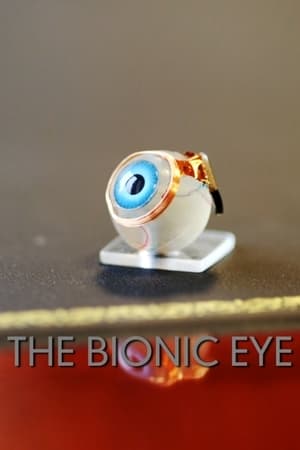
The Bionic Eye
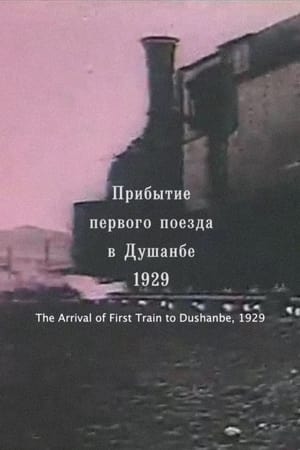
Events that took place in the capital of the Tajik SSR, the city of Dushanbe in 1929.
On September 11, 1929, the first Termez-Dushanbe train arrived at the newly built station in the Tajik capital. However, not only the train was the first that day - the shots of the arrival of the locomotive, as well as people waiting for it with excitement, became the basis of the first Tajik film.