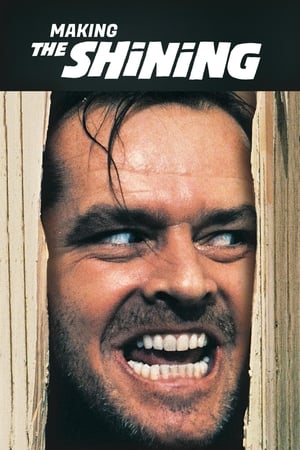
A chronicle of the production problems — including bad weather, actors' health, war near the filming locations, and more — which plagued the filming of Apocalypse Now, increasing costs and nearly destroying the life and career of Francis Ford Coppola.
María is an Amorúa girl; an indigenous group that traveled the savannas of Orinoquía as nomads. She lives with her grandmother Matilde, her sister diana and her cousins in Puerto Carreño, in the Colombia-Venezuela border. The amorúa are considered wild and are not literate. Matilde wants her granddaughters to learn to write and read to live better in this town of "rational whites" as they call us. The director follows María's life for 8 years from her childhood to her adolescence and invites her to travel the places her grandma did as a nomad.
How to combine modernity and fundamentalist Islam. "Saudi Solutions" is a unique and revealing documentary about the lifestyles and attitudes of ambitious career womenin conservative Saudi Arabia - the only country in the Arabworld where women are obliged to cover themselves inabayas and aren't allowed to drive cars. Because of the strong influence of fundamentalist Islam on society, filmingis severely restricted in Saudi Arabia. With unique access to the Kingdom, Backlight had the opportunity to film the daily routines of Saudi working women. This documentaryfeatures a top gyneacologist, a TV news anchor woman, a photographer, and a university professor. It also introducesthe wealthy Prince Al-Waleed, who passionately promotes the acceptance of women into the workforce. He kindly invitesBacklight to his luxury desert camp, but there are no women to be found - only thousands of men.
A look at the state of the global environment including visionary and practical solutions for restoring the planet's ecosystems. Featuring ongoing dialogues of experts from all over the world, including former Soviet Prime Minister Mikhail Gorbachev, renowned scientist Stephen Hawking, former head of the CIA R. James Woolse
Clouds 1969 by the British filmmaker Peter Gidal is a film comprised of ten minutes of looped footage of the sky, shot with a handheld camera using a zoom to achieve close-up images. Aside from the amorphous shapes of the clouds, the only forms to appear in the film are an aeroplane flying overhead and the side of a building, and these only as fleeting glimpses. The formless image of the sky and the repetition of the footage on a loop prevent any clear narrative development within the film. The minimal soundtrack consists of a sustained oscillating sine wave, consistently audible throughout the film without progression or climax. The work is shown as a projection and was not produced in an edition. The subject of the film can be said to be the material qualities of film itself: the grain, the light, the shadow and inconsistencies in the print.
Good Grief is a short stop motion animated documentary that explores the lessons we learn from dealing with grief and loss. Five real people share their true stories of losing something precious and what it has taught them about living.
Six blind Tibetan teenagers climb the Lhakpa-Ri peak of Mount Everest, led by seven-summit blind mountain-climber Erik Weihenmayer.
A film about rural houses in the interior of the Algarve, showing the relationship between the present and memories evoked in the intimacy of the home. Working architecture from the "social imaginary", focusing on how homes were and are lived.
"One Last Hug" chronicles a three day summer camp for children learning to cope with the death of a loved one. With the guidance of trained professionals, grieving children as young as seven years old learn that their feelings are normal, and that by talking about them they can begin to heal. A testament to the healing power of shared sorrow, One Last Hug shows the often-unseen and particular experience of children's grief.
The film follows teenage girls Mairéad Mc Ilkenny and Christine Savage. The two young women live in the same city but at the same time in two different worlds, cut off from each other by high walls that separate people.
The story of Pixar's early short films illuminates not only the evolution of the company but also the early days of computer animation, when a small group of artists and scientists shared a single computer in a hallway, and struggled to create emotionally compelling short films.
An intimate video work depicting a Nepali family’s struggles for cohesion, despite everyday travails and the absence of a beloved son.
Anônimo e incomum
A woman's walk through time and search for true freedom. The inner look breaks with the punishment of immobility, and the woman's destiny becomes a symbol of poetry and freedom.
Documentary on the events that took place in Alsasua during the Civil War, with specific reflections on the figure of the parish priest Marino Ayerra, interviews with the people of Alsasua, and general historical comments by the historian Tuñón de Lara.
Basically an artist is also a terrorist, the protagonist thinks in an unguarded moment. And if he is a terrorist after all, then he might just as well be one. Not an instant product, but an experimental feature in which diary material is brought together to form an intriguing puzzle.
Sarah is a debt collector who lives among the inhabitants of the village of Guimbal on the island of Panay. She wants to find the young man who appeared to her in a dream and goes to the island of Negros. Here, as she interacts with the inhabitants, Sarah continues her search, gathering memories of life and war, dreams, myths, legends, songs and stories that she takes part in and at times revolve around her. She is the daughter of an ancient mermaid, a revolutionary, a primordial element, a virgin who was kidnapped and hidden away from the sunlight. “The film is a retelling of fragments of the American occupation. Dialogue, shot in the Hiligaynon language, is not translated but used as a tonal guide and a tool for narration. Using unscripted scenes shot where the main character was asked to merely interact with the villagers, I discard dialogue and draw meaning from peoples’ faces, voices, and actions, weaving an entirely different story through the use of subtitles and inter-titles.”
A short documentary that follows Korean grandparents as they share their modern-day reckoning of their immigration story and grandparenthood.
A diffraction of the autobiography using family footage filmed between the 1940s and today, this "science fiction documentary" creates multiple "I"s and transcends a story of mourning
When Ariel was just 33, his legs were shredded by an industrial dough mixer in Mendoza, Argentina. He became a living embodiment of the ongoing duel between man and machine. From that point on, he began to rediscover the meaning of freedom: to rebuild his broken identity, keep his family together and design his own prosthetic legs. Following Ariel for 10 years from the time of the accident, director Laura Bari has created an intimate and metaphorical portrait of Ariel’s newfound transhumanity, juxtaposing his daily life with dreamlike inner worlds—and pushing the boundary between the real and the imaginary.