This is the story of an ordinary man transformed by history. A simple baker from Besançon who became a political symbol of resistance. That of a France that knows how much it needs others to grow. Of working classes rejecting the siren calls of populism. He says: "I was nothing and I became a monster" to express the vertigo of his transformation. And so the baker entered politics, visited the United States in the footsteps of Martin Luther King, brought aid to the Ukrainians, and ran for legislative elections. Fearless. Fighting with all his heart. It is this inspiring, touching, and funny human epic that Pedro da Fonseca's camera followed closely, capturing his doubts, his hesitations, and his emotions.
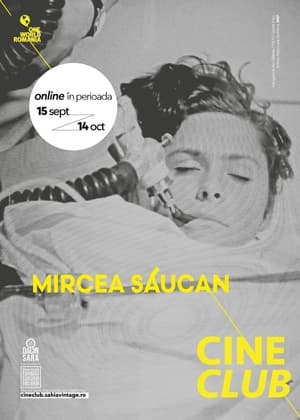
A more experimental aproach to labor protection films. In the line of Săucan's style, the soundtrack is as important as the image, the threatening music, full of shrillness, composed by Ion Dumitrescu potentiating the visual construction that mixes - in a montage reminiscent of the Soviet avant-garde school of the 1920s - all kinds of shooting techniques and frame combinations.
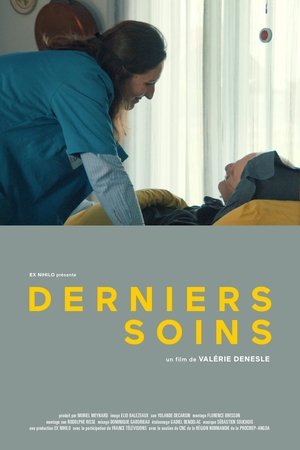
While everyone wants to die "at home" without suffering and surrounded by loved ones, in reality almost everyone dies in hospital. What healthcare provisions enable people to die at home? Are we all equal in terms of the support we receive, regardless of where we live? Young caregivers in a home hospitalization unit drive day and night along the Alabaster Coast. From house to house, from dying person to dying person. Accompanying a dying person at home also means accompanying their loved ones, immersing oneself for a few days or weeks in the intimacy of a family history. Thanks to them, the end of life returns to the home, to the family, and is rehumanized.
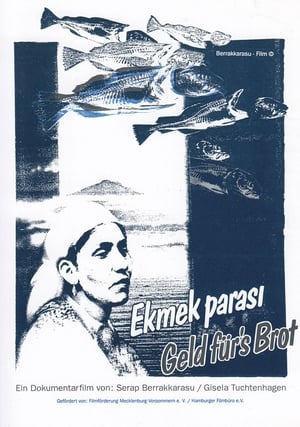
Women from Turkey and Mecklenburg are working together side-by-side at a fish-processing factory in Lübeck. As they work, they share stories about their lives, including their sorrows, griefs, hopes, and dreams, while expressing their longing for home and feelings of being lost in a foreign place.
Der Film portraitiert eine Gruppe von Microsoft-Aussteigern: im Ruhestand mit 32, Multimillionäre und ohne die geringste Idee, was sie mit dem Rest ihres Leben anstellen sollen. Ihre Jahre im Unternehmen, der Hype des Goldrausches und das Adrenalin des Erfolges hat sie ausgebrannt und doch sind sie entschlossen mehr aus ihrem Leben zu machen - vor allem Sinn und Bedeutung in der wirklichen Welt zu finden.
La Meilleure Façon de tracer
It is a fetish, a mantra, a secret religion to modern man: work. In times of the financial crisis and massive job reductions, this documentary movie questions work as our 'hallow' sense in life in a way that both humors and pains us.
Intimate and fragmented moments unfold in a community of zoos and animal rescue centers across Argentina. As histories of these institutions are uncovered, dedicated workers commit both day and night to caring for the remaining enclosed animals, fostering a mutual bond that transcends imagined boundaries between human and animal.
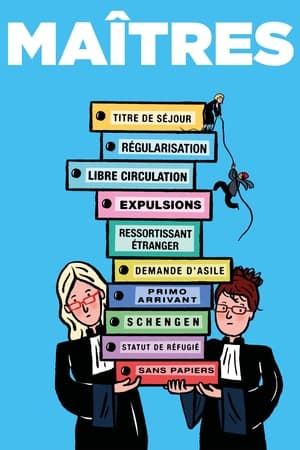
A Sense of Justice, immerses us In a law firm in this same city. There, we can find Christine Mengus and Nohra Boukara, specialized in the rights of foreigners, supported by Audrey Scarinoff and their co-workers.. Stories from their sad, appalling or tragicomic cases alternate with their daily legal work. And as we hear snatches of consultations involving illegal entry or departure, deportation orders, the right to reside or medical assistance, we become witnesses to predictable tragedies, to the administrative or social precariousness induced by such predicaments, and to whole lives depending on court rulings.
In 2019, the director Leos Carax proposes to Estelle Charlier and Romuald Collinet to design, make and animate "Annette", the puppet of his new film. This one will be the child of the couple Marion Cotillard and Adam Driver. Propelled into the world of cinema, begins for this charismatic duo a unique and singular adventure in their career as puppeteers. Faced with the demands of the filmmaker, the impossible, they are held.
What we tend to identify with the acting profession has little to do with what is really this profession. Thirty-six Spanish actors reflect on their work and contrasted their experiences. As thread, the contrast between the voices of veterans and images of young theater students , for whom everything is still possible. Among the many actors are interviewed Javier Bardem, Antonio Banderas, Victoria Abril, Carmen Maura, Fernando Fernán Gómez, José Luis López Vázquez, José Coronado, Emma Suarez, Alberto San Juan, Ariadna Gil, Ana Belén, Pilar Lopez de Ayala and many other.
Oscar, not quite a child anymore, scavenges for scrap metal for his father. He spends his life in improvised landfills among what remains of leftovers. Worlds apart, yet close-by, there is Stanley. He tidies the church in exchange for a monetised hospitality, picks fruits, herds sheep: anything that keep his foreign body busy. Oscar, the young Sicilian, and Stanley the Nigerian don’t seem to have much in common. Except for the feeling of being thrown into the world, to suffer the same refusal, the same overwhelming wave of choices imposed on them by others.
Departing from peripheral details of some paintings of the Bilbao Fine Arts Museum, a female narrator unravels several stories related to the economic, social and psychological conditions of past and current artists.
In Work A Lot, Memphis Depay steps off the pitch and into the daily lives of the people who keep São Paulo moving. The mini-documentary weaves interviews with Brazilian workers — from street vendors to truck drivers, from bakers to hairdressers — with behind-the-scenes moments of Depay’s own life in Brazil, spanning music, football, and visits to local communities. Stripped of glamour and filters, the film connects different realities through a shared truth: working hard isn’t a lifestyle choice, it’s survival. A raw, urban and honest portrait of daily struggle, belonging, and real life.
The viewpoints of women from a country that no longer exists preserved on low-band U-matic tape. GDR-FRG. Courageous, self-confident and emancipated: female industry workers talk about gaining autonomy.
Hannah, Laure, Adrien, and Halima are students at the Regional Institute of Social Work in Paris. Four students among the fifty in the first year of training to become educational support workers. They chose this profession out of commitment and vocation. Between the classroom and their field placements, they will confront their dreams and ideals with the realities on the ground, discover new sides of themselves, and begin to shape the contours of the profession they will practice—each in their own way.
There is a popular theory that it takes at least 10,000 hours of focused practice for a human to become expert in any field. In Japan, there are craftspeople who go far beyond this to reach a special kind of mastery. These people are called Takumi and they devote 60,000 hours to their craft. That's 8 hours a day, 240 days a year, for over 30 years. It's an almost superhuman level of dedication to a life of repetition and no shortcuts. This film asks the question: Will human craft disappear as artificial intelligence reaches beyond our limits?
Pushed to his breaking point, a master welder in a small town at the foot of the Rocky Mountains quietly fortifies a bulldozer with 30 tons of concrete and steel and seeks to destroy those he believes have wronged him.
Violeta and Vyollca Dukay live in the south of Kosovo, close to the border with Albania. Faced with a very high unemployment in their country since the end of the war, they became deminers. They’ve been going to the minefields every day for six years now. The unique and very strong relationship that exists between the two sisters helps them to overcome their fear and to keep hoping in spite of the precariousness of their situation and the risks they run each day to earn their living.
Work is becoming more service oriented and more and more services rely upon us doing harm to each other. In most people's lives, work operates as a degrading and debilitating force. It disables people's critical and perception capacities. Unless workers assume responsibility for evaluating the meaning and implications of the work they do, there will never be the capacity to redirect the modern work institutions from their courses of violence and exploitation. Built in seven parts which correspond to each day of the week, this film studies the relationship between work being done and the nature of the people that are doing it.