A thirty-three-minute documentary featuring interviews with director Pier Paolo Pasolini, actor-filmmaker Jean-Claude Biette, and Pasolini friend Ninetto Davoli.
In the summer of 1975, the young director Steven Spielberg set new standards for cinema worldwide with an oversized shark bite, a plastic shark fin and an unmistakable two-note main theme composed by John Williams. With the horror from the deep, a man-eating, gigantic great white shark, the film of the same name became a similarly traumatic reference as Alfred Hitchcock's "Psycho": it triggered lasting primal fears across generations. On the beaches of the world, there was clearly a "before" and an "after". Steven Spielberg, who was only 28 at the time, not only set new standards for the thriller genre, but also hid his biting criticism of US capitalism in the 1970s behind it.
This is not merely another film about cinema history; it is a film about the love of cinema, a journey of discovery through over a century of German film history. Ten people working in film today remember their favourite films of yesteryear.
How are the sex scenes filmed? What tricks are used to fake the desire? How do the interpreters prepare and feel? Spanish actors and directors talk about the most intimate side of acting, about the tricks and work methods when narrating exposed sex. In Spain the general rule is that there are no rules. Each film, each interpreter, faces it in very different ways.
After starting his career producing religious film shorts, J. Arthur Rank went on to become Britain's first and only movie mogul with his establishment of the legendary Pinewood Studios. Narrated by Michael Caine, THE GOLDEN GONG chronicles Pinewood's rise to success.
A documentary about the making of the television mini-series by Rainer Werner Fassbinder, including interviewees with the principal actors.
Capturar (Las 1001 novias)
The city of Madrid as it appears in the Spanish films of the 1950s. A small tribute to all those who filmed and portrayed Madrid despite the dictatorship, censorship and the critical situation of industry and society.
Actress Sally Field looks at the dramatic life and successful career of the superb actress Barbara Stanwyck (1907-90), a Hollywood legend.
A chronicle of the production problems — including bad weather, actors' health, war near the filming locations, and more — which plagued the filming of Apocalypse Now, increasing costs and nearly destroying the life and career of Francis Ford Coppola.
A 60-minute salute to American International Pictures. Entertainment lawyer Samuel Z. Arkoff founded AIP (then called American Releasing Corporation) on a $3000 loan in 1954 with his partner, James H. Nicholson, a former West Coast exhibitor and distributor. The company made its mark by targeting teenagers with quickly produced films that exploited subjects mainstream films were reluctant to tackle.
A documentary about the making of the Lone Wolf and Cub film series.
Four lives that could not be more different and a single passion that unites them: the unconditional love for their cinemas, somewhere at the end of the world. Comrades in Dreams brings together six cinema makers from North Korea, America, India and Africa and follows their efforts to make their audiences dream every night.
Omnibus: François Truffaut
Eva Ebner is a Berliner who gives the appearance of being rather eccentric. She knows the film business inside out – regardless of whether she’s work- ing behind the camera as an assistant director or in front of it as an actor. Her name is closely associated with a series of now-legendary adaptations of Edgar Wallace’s crime novels which were made in Germany during the 1960s. Upcoming young directors from local film schools have also profited from Ms. Ebner’s unbroken enthusiasm and passion for film. However, this eighty-year-old has a more than broken relationship to the events of her childhood and youth in Gdansk – a time when her life was characterised by an anti-Semitic step-mother and the dangers posed by the Nazi regime. This film portrait does not eschew any of the long dark shadows of that era, nor does it sidestep any friction between portrayer and his subject. (Lothar Lambert)
The story of how Norma Jeane Mortenson became Marilyn Monroe (1926-62), a lucid path of self-discovery, from anonymity to stardom: the painful birth of a myth.
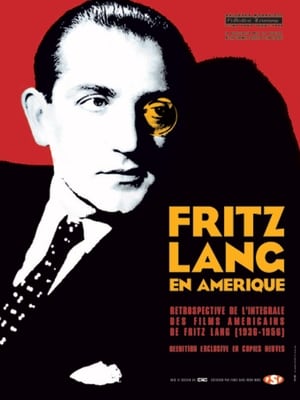
Interview with Fritz Lang on the roof of Villa Malaparte on Capri during the filming of the fictitious film "Odysseus" and the filming of "Contempt" by Jean-Luc Godard, in which Fritz Lang plays the role of an old film director. During the interview, excerpts from the Lang films "The Nibelungen", "The Tired Death" and "M" are shown.
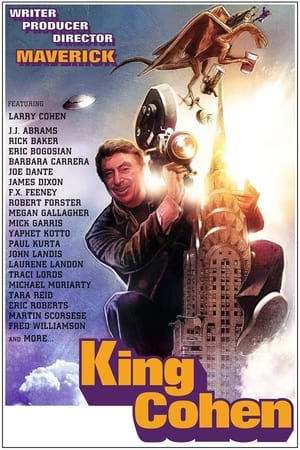
A feature-length documentary focusing on the acclaimed work and eclectic career of maverick filmmaker Larry Cohen, writer-director of "Black Caesar," "It's Alive," "God Told Me To," "Q," "The Stuff," and many more.
A documentary about the making of 1976's "Obsession" featuring interviews with director Brian De Palma, stars Cliff Robertson and Genevieve Bujold and more.
Famous Spanish film critic Alfonso Sánchez talks about his personal life, his work and Anouk Aimée. A sentimental tribute to one of the most relevant figures on the Spanish film scene.