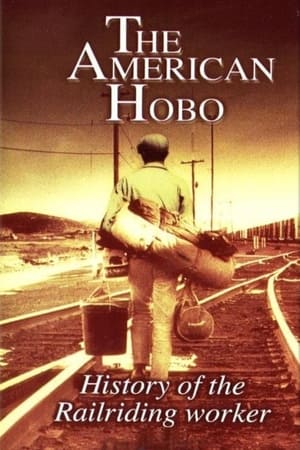
Ernest Borgnine, star of the classic train movie Emperor of the North, hosts and narrates this remarkable examination of the uniquely American Hobo.
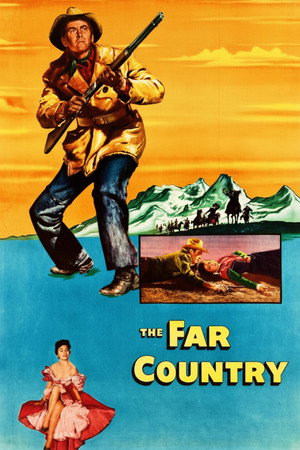
During the Klondike Gold Rush, a misanthropic cattle driver and his talkative elderly partner run afoul of the law in Alaska and are forced to work for a saloon owner to take her supplies into a newly booming but lawless Canadian town.
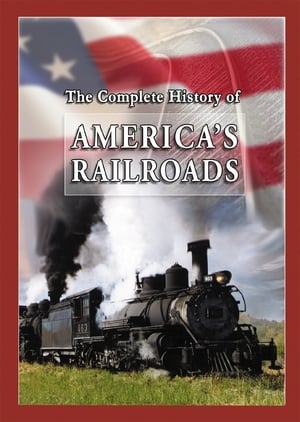
No matter what your age you'll love watching this impressive and comprehensive story of the development of railroading in America. Rail enthusiasts as well as history buffs, teachers and home schoolers, plus kids of all ages will appreciate this magnificent rail adventure covering live action historic operating railroads, rare photos of drawings and valuable memorabilia, and live action re-enactments. Featuring spectacular cinematography and an inspiring musical score, this Award-Winning four part DVD covers over one-hundred years of railroading evolution.
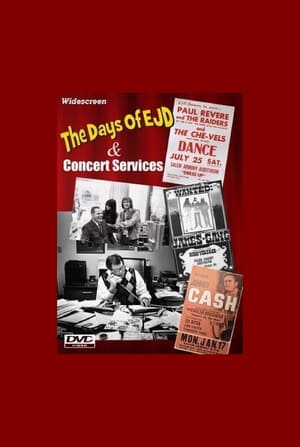
EJD's Teen Dances - a northwest rock n' roll story" is an amazing tale about a middle school math teacher answering the pleas of his young students, "there's nothing to do on the weekend". A northwest entertainment phenomenon was born when Ed Dougherty began organizing teen dances at the local armory auditorium in Salem Oregon. EJD Enterprises was soon formed and brought to town most of the biggest groups of the 1960's and 70's including The Dave Clark Five, Sonny & Cher, Paul Revere & The Raiders, Steppenwolf, Three Dog Night, The Doors and countless others. Ed Dougherty's method of operation which provided a safe place for teens to go and have fun made these dance/shows a huge success during this very special time in music history. His reputation of providing a safe, secure environment attracted artists in the entertainment world. His work as a respected concert promoter continued to grow into the next three decades to encompass the entire northwest region and beyond.
Two Brothers travel from Alaska to Northern California. They happen upon a certain evil in the woods.
An experimental look at the origin of the death myth of the Chinookan people in the Pacific Northwest, following two people as they navigate their own relationships to the spirit world and a place in between life and death.
"Who Is Bozo Texino?" is a film study on the 100-year-old tradition of hobo and railworker graffiti. Mostly shot on freight trips across the western US, the film includes interviews with some of the railroad’s greatest graffiti legends: Colossus of Roads, The Rambler, Herby (RIP) and the granddaddy of them all, Bozo Texino. The film also catches some of the socio-economic history of hobo subculture from its roots after the Civil War to the present day. The range of the interviews, and the film’s style deal with both the clichés and the harsh realities of tramp life.
The film explores the destruction of a unique train station in Zurich and the construction of the new prison and police centre in its place. From the perspective of the filmmaker’s window, and with testimony from prisoners awaiting deportation, the film probes how we deal with the extinction of history and its replacement with total security.
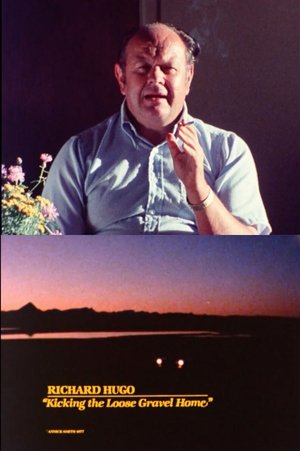
Filmed on location in Montana and Washington State, this 1976 biography of poet and teacher Richard Hugo features readings of some of his most famous poems as well as interviews with his family and friends.
John T. Davis stashes a camera in his bedroll, catches out, and rides the rails from Minneapolis to Seattle with Beargrease - a part-time hobo and full time philosopher, who narrates their way through the incredible scenery of the Northwest and gives us his views on life, liberty, and the pursuit of happiness. Along the way, the pair meet with several other men living life on the margins.
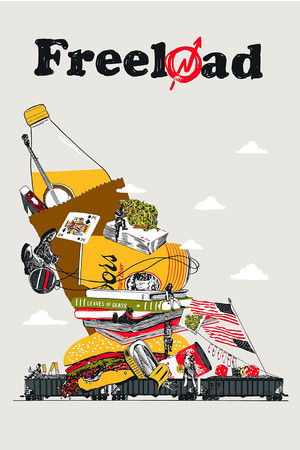
The Great American Hobo produced in 1980 features the music of Supertramp's "Take the Long Way Home" documenting the men and women who rode freight trains. Shot in 14 states and culminates with the Hobo Convention in Britt Iowa. Premiered the Independent Eye series for PBS in 1980.
A documentary about the search for the legendary Bigfoot, a large humanoid creature (also known as Sasquatch) who is rumored to inhabit the forests of the U.S. Pacific Northwest.
Outlaw gangs are plundering the freight lines that bring supplies into Yellow Creek. The only thing that will save the town is the insurance money on the freight, but the outlaws are looking to steal that also. Lane comes to town as the best man for the wedding of Tom and Judy, but it will be up to him to find the outlaw boss.
Short documentary on the shunters in the Darling Island, Sydney, Australia railyard. Filmed in 1977.
From totem poles to language revitalization and traditional agriculture, host Chris Eyre (Cheyenne Arapaho) discovers the resilience of the Coast Salish Tribes of the Pacific Northwest. Travel down historic waterways as the tribe revisits their ancient connection to the water with an annual canoe journey.
An unexpected speeding freight train ploughs into the film crew, a camera assistant is struck and killed by the locomotive. The film's director is subsequently charged with criminal trespass and involuntary manslaughter. An Australian crime author starts to dig and an exhaustive three-year investigation ensues, uncovering shocking new evidence of cover up, collusion and corruption.
From headwaters in Canada, the Columbia River flows over twelve hundred miles to the Pacific Ocean and for many of those miles it marks the boundary between the states of Washington and Oregon. Cutting through the Cascade Mountains, the river slices through an 80-mile stretch known as the Columbia River Gorge where the basalt mountains tower up to 4,000 feet above the water. Nearby dormant volcanoes such as Mount Hood and Mount Adams add to the incredible beauty of the Gorge area. Following the north bank of the river between Vancouver and Pasco, Washington is Burlington Northern Santa Fe's Fallbrook Subdivision. This is a prized site for railfans, offering spectacular vistas and nonstop railroading. Journey with Pentrex from Vancouver east to Maryhill along this scenic route and experience the variety of trains and motive power that ply this famous line.
A fearless horse bonds two men to each other and to the traditions that define their community.
When moist Pacific Ocean air collides with cold mountain temperatures, it creates an opportunity to see mother nature in her finest white dress. Railroads traverse these mountains by way of scenic routes and steep grades. Put winter and railroads together, and the result is something special: mile long freight trains braving white flurries, passenger coaches on mountain excursions, and small operators battling the elements. This is a Western Winter Wonderland. Featuring: Stevens Pass, Marias Pass, Mullan Pass, Deer Lodge Pass, Canadian Rockies, Donner Pass, Shasta, McCloud, Pengra Pass, and Port of Tillamook Bay Railroad.
Flanking the western shore of the upper Mississippi River runs Canadian Pacific's River Subdivision, a busy main line that supports a nonstop flow of traffic. Pentrex traveled the line in 1999, through hot summer days and cold winter chill to bring you the excitement of railroading in this scenic territory. Beginning at River Junction, just west of LaCrosse, Wisconsin, we follow the line to St. Paul, Minnesota. As much of the subdivision hugs the mighty Mississippi, we spot the trains against backdrops of wooded bluffs and sometimes blue, sometimes frozen waters. Milwaukee Road and Soo Line operated this route prior to Canadian Pacific. You'll see motive power and varied paint schemes from all three appearing frequently, such as Milwaukee Road GP40s, Soo Line SD60s, and Canadian Pacific's AC4400s. Highlights include a candy apple red Soo Line SD40-2 and a Canadian Pacific SD40-2F "Red Barn" wearing the dual flag paint scheme, not to mention plenty of Soo Line cabooses.