A story of an artist entertainer who swallowed razors, glasses, records, light bulbs, nails, forks and everything else hard to swallow. Cannibalism and auto-cannibalism included.
The final 17 years of American singer and musician Karen Carpenter, performed almost entirely by modified Barbie dolls.
To break in their new studio, EMPRESS, Castle Atom performs four songs and give us a glimpse behind the scenes of how they record. Songs include: "Years of Blood", "Where Have You Been", "Farewell My", and a previously-unheard track, "Hey-E".
CREMASTER 5 is a five-act opera (sung in Hungarian) set in late-ninteenth century Budapest. The last film in the series, it represents the moment when the testicles are finally released and sexual differentiation is fully attained. The lamenting tone of the opera suggests that Barney invisions this as a moment of tragedy and loss. The primary character is the Queen of Chain (played by Ursula Andress). Barney, himself, plays three characters who appear in the mind of the Queen: her Diva, Magician, and Giant. The Magician is a stand-in for Harry Houdini, who was born in Budapest in 1874 and appears as a recurring character in the Cremaster cycle.
Beneath towering Brutalist architecture, a man is driven to do what must be done.
WHAT YOU MEAN WE is a surreal short film by experimental artist Laurie Anderson.
This fantastical movie inspired by the music of Michael Jackson features imaginative interpretations of hit tracks from the iconic 1987 album “Bad”.
Beyond all human restraint lies one's lugubrious layers of paint.
A surreal musical comedy set in a world where the avant-garde and the mainstream are reversed.
Surrendering the mind to the hypnotic dance of fire, a candle's glimmer reveals dreamlike memories, illustrated by flickering fragments of experimental films that overlap alongside a deconstructed soundscape. Entering a hallucinatory state in a haunted ambience, one's own subconscious is put on display.
Naked bodies are buffeted by water accompanied by the music Il Temporale from the opera La Cenerentola and the overture to Il Barbiere di Siviglia both by Gioacchino Rossini.
An experimental film from Jirí Lehovec, mixing the sound process with animated rhythms.
A.D. 2015: A virus has been spreading in many cities worldwide. It is a suicidal disease and the virus is infected by pictures. People, once infected, come down with the disease, which leads to death. They have no way of fighting against this infection filled with fear and despair. The media calls the disease the "Lemming Syndrome".
An unnamed passer-by is forced to trace a circular route inside an abandoned tram station, facing loss and time. The broken walls act as a channel, transmitting fragmentary, blurred and analogical memories.
In a deconstruction of classic Hollywood codes, using repetitive single frame images, the re-editing of teenager movies produces an intense Oedipal drama.
The film is made up of one single take. The camera pans to the left, focusing on a dilapidated fence in a rural field, as Ella Fitzgerald's "All My Life" plays on the soundtrack. At the end of the 3 minute film, the camera tilts up to the blue sky just as the song ends.
Cinematic magician, legendary provocateur, and author of Hollywood Babylon, Kenneth Anger was a unique figure in post-war American culture. His iconic short films are characterised by a mystical-symbolic visual language and phantasmagorical-sensual opulence that underscores the medium’s transgressive potential. Anger’s work fundamentally shaped the aesthetics of 1960s and 1970s subcultures, the visual lexicon of pop and music videos and queer iconography. These nine films form the basis of Anger’s reputation as one of the most influential pioneers of avant-garde film and video art. Fireworks, 1947, 14 min Puce Moment, 1949, 6 min Rabbit's Moon, 1950/1971, 16 min Eaux d'Artifice, 1953, 13 min Inauguration of the Pleasure Dome, 1954, 37 min Scorpio Rising, 1964, 28 min Kustom Kar Kommandos, 1965, 3 min Invocation of My Demon Brother, 1969, 11 min Lucifer Rising, 1981, 27 min
This episode focuses on Zappa's early 70s albums, Overnight Sensation (1973) and Apostrophy (') (1974). Together they encapsulate Zappa's extraordinary musical diversity and were also the 2 most commercially successful albums that he released in his prolific career. Included are interviews, musical demonstrations, rare archive & home movie footage, plus live performances to tell the story behind the conception and recording of these groundbreaking albums. Extras include additional interviews and demonstrations not included in the broadcast version, 2 full performances from the Roxy in 1973 and Saturday Night Live in 1976, and new full live performance done specially for these Classic Albums.
Incredible phantasmagoria of merry-go-round people, who are usually called the dregs of society . The clip of the band "Holy Hares" ("Inflatable pistol"). Vocalist Slava Martov.
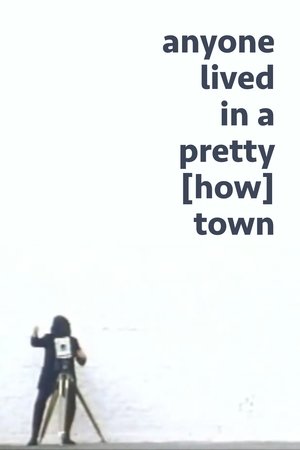
A visual interpretation of the poem by E.E. Cummings about the life cycle of a townspeople and of one ignored couple.