A day in the city of Berlin, which experienced an industrial boom in the 1920s, and still provides an insight into the living and working conditions at that time. Germany had just recovered a little from the worst consequences of the First World War, the great economic crisis was still a few years away and Hitler was not yet an issue at the time.
For the past ten years, Jürgen Henn has filmed over-height trucks crashing into the 11foot8 train bridge affectionately nicknamed the "Can Opener." In that time, millions have viewed the crashes online. Regional, national, and international news organizations have dined out on the story and the goofy crash reels. But why do motorists continue to crash despite the many warnings, sensors, and signs? And what is it about these crashes that holds our attention? In this piece, we look for the humanity in human error.
Award-winning war photographer Rita Leistner goes back to her roots as a tree planter in the wilderness of British Columbia, offering an inside take on the grueling, sometimes fun and always life-changing experience of restoring Canada’s forests. Leistner, who has photographed some of the world’s most dangerous places, credits the challenge of tree-planting for her physical and mental endurance. In Forest for the Trees, her first feature film, she revisits her past to share the lessons she learned. The film introduces us to everyday life on the “cut-block” and the brave souls who fight through rough terrains and work endless hours to bring our forests to life. The rugged BC landscape comes to life magically in Leistner’s photography, while the quirky characters and nuggets of wisdom shared around the campfire tell a sincere story of community.
On the Train captures from the birth to the last moment of the railway, 98.2 kilometers long and opened in 1992, crossing southern Taiwan.
Take a breathtaking train a ride through Nothern Quebec and Labrador on Canada’s first First Nations-owned railway. Come for the celebration of the power of independence, the crucial importance of aboriginal owned businesses and stay for the beauty of the northern landscape.
An experiment with three dimensions in a moment of clarity: the focus of the camera's lens towards the present, the speed of the train and the material world distorted by the movements of the train.
A unique look inside over 70 signal boxes taken from Video 125's archive filmed over a period of 30 years. Features 'boxes of all shapes and sizes, all kinds of operating methods from 19th century mechanical lever frames to 20th century panels to 21st century state-of-the-art Rail Operating Centres.
Neil Oliver describes the worst ever railway accident in the UK, which happened a hundred years ago on 22 May 1915, in which three trains collided at Quintinshill near Gretna Green. One of the trains was a troop train taking soldiers to fight in World War I at the Battle of Gallipoli: many of the dead were in this train which caught fire due to escaped gas from the archaic gas lighting in the carriages. The cause of the crash was attributed to a catastrophic signalman's error, but Neil examines whether there were other contributory factors and whether there was a cover-up to prevent investigation of them, making convenient scapegoats of the signalmen.
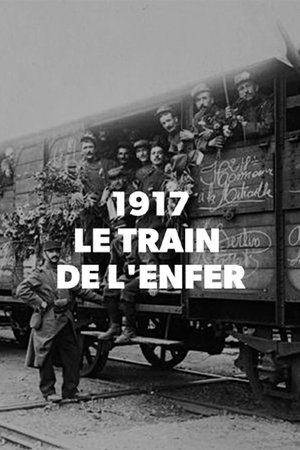
1917, The Train from Hell is an historical documentary about a train accident during WW1.
The pilgrimage to Mecca is one of the most important religious journeys for millions of people around the world. But how to get there? This documentary shows us how 12 companies met the immense challenge of running a high-speed train through Saudi Arabia's sandy rocky desert in temperatures of up to 50 degrees Celsius. A true marvel of engineering and cooperation, and together, overcoming obstacles.
Celebrating 200 years of rail, Guy helps to rebuild, and learns to drive, the world’s most important train for a recreation of the journey that changed history: the Stockton to Darlington Railway
In volume two, we take a look at the Grafton & Upton railroad's Caboose Extra ("Santa Train") on December 18th, 2010. Then during the Spring of 2011 we spend a day with G&U's newest locomotive, GP9R #1751 for a trip from North Grafton yard to West Upton yard and return. We see the crew of 3 put the day's train together in North Grafton and then chase it to West Upton yard. In West Upton we capture the crew switching out the Trans-loading facility and making the train up for the return trip to North Grafton. We then chase the train back to North Grafton yard! Non stop action on the G&U with #1751 & GP9R #1750!
In this 2 DVD set, we take a unique perspective look at the Grafton & Upton Railroad! We mounted a Pro 180° HDV camera to the hood of G&U GP9-R #1751 and travel from Hopedale yard to the yard in North Grafton. We travel over the recently reopened section from the newly rebuilt Hopedale yard through the scenic woodlands to West Upton yard. From the West Upton yard we travel through more scenic woodlands and scenic fields as we traverse the grades to Grafton Center and descend to the yard in North Grafton and CSX interchange.
Discover the "character" of one of Missouri's oldest tie and lumber operations through this archival black-and-white film that documents one of the last railroad tie drives on the Black River made by the T.J. Moss Tie Company of St. Louis in the 1920s. Thanks to release of the film by the Kerr-McGee Chemical Corporation, the rare footage in "Stamp of Character" takes us through the entire process of making railroad ties, at a time when forests covered almost two-thirds of the state. The original silent motion picture was shown in movie theaters as an advertisement by the T.J. Moss Tie Company. Using digitally edited narration and realistic sound effects, this video makes the past live again.
The sory of the railroad's roll in getting beef to your local market
A documentary on railroads doing their daily tasks created by trhe The Milwaukee Railroad
The story of the railroad man in his role in keeping the trains moving on the rails.
The story of the railroad in Illinois and the train's role in moving product out of the states to the rest of America.
After the last train at night and before the first in the morning, 800 people are hard at work behind the scenes making London's Underground fit to travel on. Including brushing dust from ventilation ducts, ‘fluffers’ cleaning up rubbish, routine rail replacement and fixing a broken rail discovered at 3.30am.
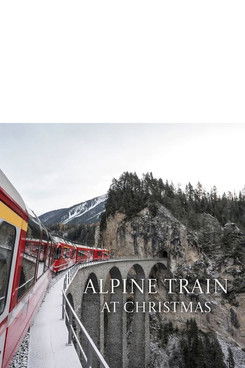
Climb aboard the illustrious Bernina Express for a festive ride through spectacular Alpine landscapes, taking in snow-covered peaks, architectural wonders, and majestic glaciers.