La saga du rail
This documentary features about 20 minutes of footage of and from North Korea's aging rolling stock - steam trains being used quite in earnest rather than for the historical interest of kids and hardcore train geeks - and then about six minutes of footage of Pyongyang's subway and trams.
What would your family reminiscences about dad sound like if he had been an early supporter of Hitler’s, a leader of the notorious SA and the Third Reich’s minister in charge of Slovakia, including its Final Solution? Executed as a war criminal in 1947, Hanns Ludin left behind a grieving widow and six young children, the youngest of whom became a filmmaker. It's a fascinating, maddening, sometimes even humorous look at what the director calls "a typical German story." (Film Forum)
A group of people are standing along the platform of a railway station in La Ciotat, waiting for a train. One is seen coming, at some distance, and eventually stops at the platform. Doors of the railway-cars open and attendants help passengers off and on. Popular legend has it that, when this film was shown, the first-night audience fled the café in terror, fearing being run over by the "approaching" train. This legend has since been identified as promotional embellishment, though there is evidence to suggest that people were astounded at the capabilities of the Lumières' cinématographe.
A day in the city of Berlin, which experienced an industrial boom in the 1920s, and still provides an insight into the living and working conditions at that time. Germany had just recovered a little from the worst consequences of the First World War, the great economic crisis was still a few years away and Hitler was not yet an issue at the time.
Martha Bieder is the last rubble-woman in Berlin Rummelsburg. Every day, rain or shine, she stands at the conveyor belt - as she has for decades - sorting through rubble. After a retirement party thrown for her by her male colleagues, she tells her story of being a rubble-woman in post-war Germany.
The Unreserved is an inquiry into the lives of passengers who use the Unreserved Compartment, the cheapest way to travel across India on the Indian Railways system. The film portrays the passengers’ aspirations, efforts and opinions through conversations and personal stories.
This incredible journey features the famous steam trains that power through the spectacular San Juan Mountains of southwestern Colorado. From Durango to Silverton, see the forested wilderness, and its beautiful lakes, waterfalls, and rivers. Be amazed at the route that travels over narrows passes, high bridges, and steep cliffs!
Could our mounting modern problems have ancient solutions? Travel to the depths of China to find out.
Karen Zaitchik jumps on and off moving boxcars, throws switches, pulls brakes and uncouples freights with ease and confidence. She's a railroader for CN and that's what this 21-year-old highly individualistic woman wants out of life for the moment. This colourful short film shows how Karen manages in the traditionally male world of the railroad.
TGV, 30 ans de vitesse
Bofi
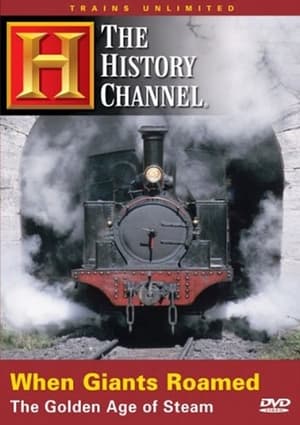
In the first half of the 20th century, America's railroads were radically transformed by the innovation of gargantuan steam locomotives. Pushed by the need to haul ever longer and heavier trains, the nation's locomotive works responded with the invention of awe-inspiring articulated engines. Delivering up to 7,500 horsepower, these steel behemoths could haul mile-long, 15,000-ton trains. In this riveting program, journey back to the golden age of steam for an up-close look at these legendary locomotives. See the Union Pacific's famed "Big Boy" in action and ride the rails of the Chesapeake & Ohio and Norfolk & Western railways. Meet the men who drove engines like the Allegheny and Yellowstone, and visit the museums and yards where the largest steamers ever built remain preserved in time. THE HISTORY CHANNEL' proudly presents this rollicking retrospective, sure to set any rail fan's heart pounding
For the first time, survivors talk about life after the camps. How does one return to a life that was interrupted with such violence? How does one reconstruct oneself when all or most of one’s family were butchered? How does one resume studies and earn a living in a society that had cast you out a few years earlier?
Osudová Strela
Été 44, un train pour l'enfer
Director Agnès Varda and photographer/muralist JR journey through rural France and form an unlikely friendship.
A family embarks on an annual tormenting journey along with 130 million other peasant workers to reunite with their distant family, and to revive their love and dignity as China soars as the world's next super power.
1917, The Train from Hell is an historical documentary about a train accident during WW1.
The story of how newspapers were distributed during the Blitz, stressing the importance of an accurate and objective press on the home front.