Music and politics collide when international music star, Pras Michel of the Fugees, returns to his homeland of Haiti following the devastating earthquake of 2010 to mobilize a presidential campaign for Haiti's most controversial musician: Michel Martelly aka Sweet Micky. The politically inexperienced pair set out against a corrupted government, civil unrest, and a fixed election. When Pras's former bandmate, superstar Wyclef Jean, also enters the presidential race, their chances seem further doomed. But with the help of a few friends, including Ben Stiller and former president Bill Clinton, they never give up on their honest dream of changing the course of Haiti's future forever
In an effort to understand where she came from, Fabiola asked a question that became the central phrase of the film: what would my life have been like if I'd stayed in Haiti? Taking as her starting point her biological mother's precarious economic situation, she had no choice but to entrust her daughter to her care. Fabiola could have ended up restavek, or in a loving foster family, or on the streets abandoned to her fate, or adopted abroad.
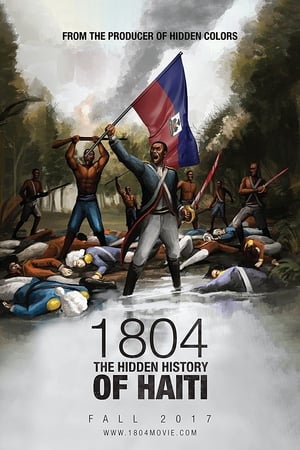
1804 is a feature length documentary film about the untold history of the Haitian revolution
A young Boston lawyer, Albron Hamlin, goes to Haiti in 1802 to find Lydia Bailey, whose estate he must settle. The island is war-torn in the strife between Toussaing L'Overture, the black president, and the French who are trying to retake possession of the country. Hamlin finds Lydia and, against the background of war and rebellion, they fall in love while helping the Haitians against the French.
Shot in early 2004 during the commemoration of the bicentennial of Haiti, this film offers a unique light on the last days to the presidency of Aristide, former priest of the poor became apprentice dictator. It is a reflection on the history of the first black republic in the world, a nation shared between the memory of its glorious revolution and the tragic litany of despots that have overwhelmed it since its independence.
Director Michèle Stephenson’s new documentary follows families of those affected by the 2013 legislation stripping citizenship from Dominicans of Haitian descent, uncovering the complex history and present-day politics of Haiti and the Dominican Republic through the grassroots electoral campaign of a young attorney named Rosa Iris.
A documentary that reveals the underbelly of the global aid and investment industry. It's a complex web of interests that span the earth from powerful nations and multinational corporations to tribal and village leaders. This documentary offers unique insights into a multi-billion dollar world by investigating how aid dollars are spent.
A love letter to a place that will forever be home, a visual ode, and a farewell to a neighborhood that is rapidly changing due to the forces of gentrification and Miami’s housing crisis.
Exiled after Haiti’s political struggles of the 90s, Mikerlande—a former activist and now entrepreneur—rekindles memories of resilience and commitment. Through griot, she shares a story of struggle, legacy, and strength, bridging past and present to preserve her heritage.
Living Memories is a documentary film that traces the history of the director’s neighborhood and native country, Haiti, through a personal and engaged perspective. Brick by brick, through encounters and wanderings throughout Port-au-Prince’s neighborhoods, archival photos, graffiti, and animations, the filmmaker introduces us to architect Léon Mathon and the residential architecture of the early 20th century. Over the ruins of her family home, Dominique, the director's mother, an architect like her father and grandfather before her, searches through her memories and significant places for traces of the past and the history of her country. Many of her landmarks are no longer there. From this tragedy arises a quest — a need to reconnect memory and history to understand the present better. The filmmaker follows her mother during her journey, capturing her reflections and conversations and documenting them to bring memories back to life.
Special broadcast of Aimé Césaire's text, directed by Hervé Denis for the Cooperation and Cultural Action Mission of the French Embassy in Haiti.
Arcade Fire’s first feature film is called 'The Reflektor Tapes'. The project is “a unique cinematic experience, meeting at the crossroads of documentary, music, art and personal history.”
Shot in the aftermath of the 2010 Haiti earthquake, the documentary looks at what really happens with the money donated to help with disaster aid.
Follows the defiance of two art institutions in the Caribbean: one closed but squatted by artists, the other fighting to stay open. Against the backdrop of political strife, Haitian and Guadeloupean artists grapple with the concept of freedom in their battle to preserve their spaces.
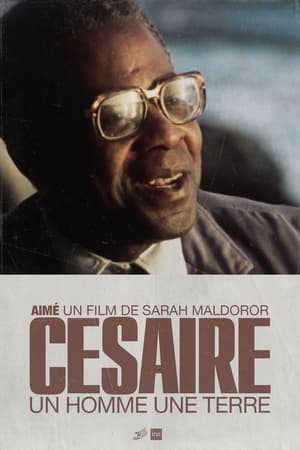
Alternating interview segments, shots of Martinique landscapes and scenes from Aimé Césaire's play La Tragédie du roi Christophe (1963), Sarah Maldoror portrays her friend as a politician, a poet, and a founder of the Négritude movement.
Carnets d’un Black en Ayiti
As a Cholera epidemic rages in Haiti, the United Nations denies it is responsible for introducing the disease despite glaring evidence suggesting Nepalese peacekeepers are to blame. Baseball in the Time of Cholera is the story of a young Haitian boy who plays in Haiti's first little league baseball team and the Haitian Lawyer seeking justice against the UN. As the epidemic spreads, the two stories intersect in the struggle for survival and justice.
John is a Haitian migrant who fled his country due to political instability and death threats. After a long journey, he managed to be recognized as a refugee in Mexico, allowing him to start a new chapter in a new land. However, for John, this story is far from over as his wife and baby remain stranded in Chile. Every day, John takes steps towards family reunification, longing to embrace those who are his true refuge.
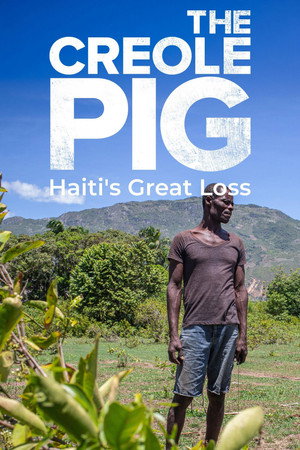
In the 1980s, a swine flu crossed the Haitian-Dominican border and started to affect the Creole pig, an important commodity in Haiti. The flu also threatened livestock in the United States. As a preemptive measure, the USAID in conjunction with the Haitian government proceeded to exterminate all Creole pigs from the island, leading to a crushing economic blow for an already impoverished country.
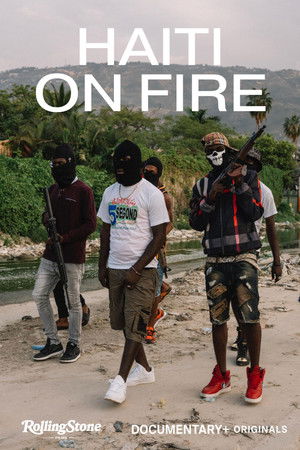
This film chronicles the turbulent gang war and the spiraling violence happening on the ground in Haiti and attempts to cut through the hype surrounding Chérizier, the former police officer-turned-gang chieftain at the center of Haiti’s of it all. It offers a sobering look at the man behind the myths.