Two friends try to re-unite by going on a road-trip to the forests and mountains. Their attempt to reconcile does not go easy due to the secrets they hold, and a shocking revelation ends their journey.
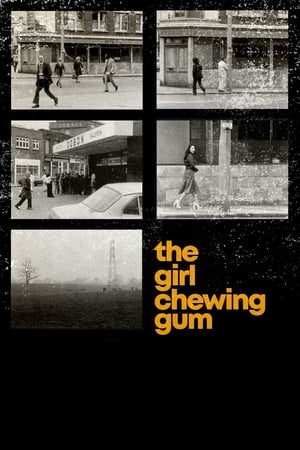
At Stamford Road in Dalston Junction of east London, the camera follows pedestrians, cars and birds while a narrator, who appears to be the director behind the camera, seems to instruct the objects.
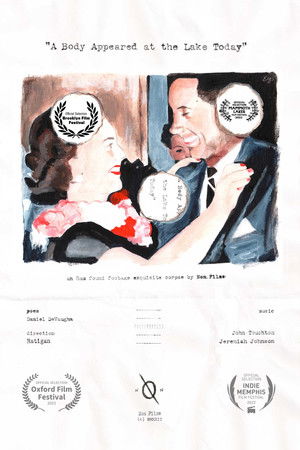
A found footage examination of what happened at the lake today. Where were you? An exquisite corpse by Non Films. 8mm images randomly selected from found footage; poem written without images; music written without images or words. WINNER: BEST BROOKLYN PROJECT (Brooklyn Film Festival).
An experimental media installation of three windows exploring fragments of liminality. Three unique re-constructions of experiential instances volumising the cataclysms of thresholds. Experience the absence of definition, the absence of boundaries set and the absence of rationale. A myth is not to be understood, a myth is passed on, like a game of Chinese whispers, it takes its course and ages with time, suiting the demography and tale, it warps and distorts
In this fragile yet frightening poetic fantasy set against a dark industrial landscape, a woman sits knitting on the porch of her home when a man appears and takes the knitting from her.
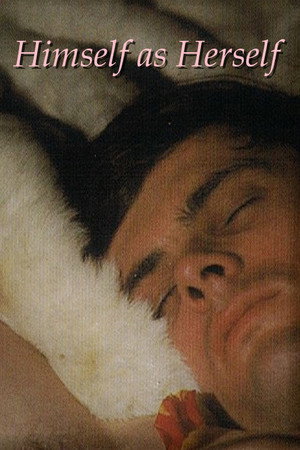
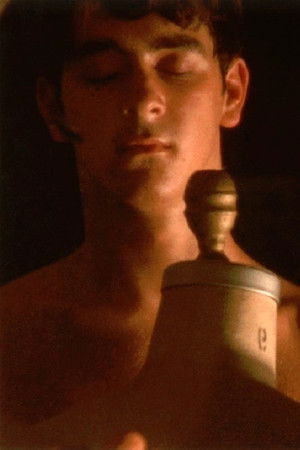
The young hero seems the essence of maleness, yet he's troubled by vaguely feminine objects. Soon his masculine and feminine selves are intercut, as each of his identities appears to look and gesture at the other. The film, at once melancholy and transcendent, consists of a shimmering, nearly plotless evocation of gender identity in flux through haunting, densely interlaced images.
Structured in nine tableaux each a study of a simple action or situation involving a lone, naked figure, the blind Eros, searching for fulfilment, for self. The objects he touches - books, paintings - can be seen as icons of the creative spirit; there is also a motor cycle and film equipment. In succeeding scenes he appears to try on identities offered by institutional doctrines of religion and social traditions of (overt) masculinity. Much of the film was constructed in-camera with a small amount of editing afterwards. An innovation was the use of in-camera fade-outs as phrase markers, not as terminal points, within a single set-up or shot.
Psyche 1947, made while a student at USC, shows Markopoulos’ developing style and his sensuous use of colour and composition. Shot in the Hollywood hills, the film was inspired by an unfinished novella by Pierre Louÿs. - Tate Modern
Markopoulos called Lysis “a study in stream-of-consciousness poetry of a lost, wandering, homosexual soul” and felt that the film foreshadowed The Illiac Passion.
Based on Plato's dialogue Charmides.
The script is composed of three stories set in three different time periods and three different locations. One story takes place during an ascent of the Himalayas, another on a crossing of the Atlantic Ocean, while the third happens on an ocean-going fishing trip. The motivation/objective in every story is a quest, and hiding underneath under every motivation is the deepest level of human nature.
A representation of my own memory during the course of this year, illustrated by visuals.
Hotel guests look restrained, sedated in the diffuse light of the service provider’s shimmering cage. A network of joists, pilasters and fluting exposes the proverbial off-season chill in the seating arrangements. Smart-phones and tablets mask a total lack of communication.
Cissie Colpitts drowns her cheating husband and, in the ensuing cover-up, enlists the help of lonely coroner Henry Madgett, an old friend with a longstanding weakness for her charms. But when Cissie's daughter and granddaughter—both also named Cissie Colpitts—decide to resort to the same methods for solving conflicts with their own frustrating husbands, the women and their repeated appeals for help begin to wear on Madgett's conscience.
A couple stroll through a wintry landscape - Is this a dream? Is this Heaven?
The world shifts subtly while silent watchers already understand.
A short Avant-Garde experimental film
The veneer of the story is a tale of chance love: two French expatriates strike up a chance romance when they meet on a ship headed back to South America.
The film appears like a ritual with splendids and crypteds psalms. The Great Master of Order (Marcel Mazé, new fetish actor after Aloual) seduces the young male prey with a running cinema projector which carves Murnau's Nosferatu extracts on their bodies. Metamorphosis, rituals passages, Eros and Thanotos, illusion and reality, film into the film are the themes and images in perpetual osmosis in this Stéphane Marti's opus.
An artist strives to achieve a state of pure existence. Caught between inertia and movement, her body strains, adapts, and responds to what is happening around her.