Working men and women leave through the main gate of the Lumière factory in Lyon, France. Filmed on 22 March 1895, it is often referred to as the first real motion picture ever made, although Louis Le Prince's 1888 Roundhay Garden Scene pre-dated it by seven years. Three separate versions of this film exist, which differ from one another in numerous ways. The first version features a carriage drawn by one horse, while in the second version the carriage is drawn by two horses, and there is no carriage at all in the third version. The clothing style is also different between the three versions, demonstrating the different seasons in which each was filmed. This film was made in the 35 mm format with an aspect ratio of 1.33:1, and at a speed of 16 frames per second. At that rate, the 17 meters of film length provided a duration of 46 seconds, holding a total of 800 frames.
A visual interpretation of the massive disarmament rally held in New York City on June 12, 1982. With huge rallies held simultaneously around the world, people gathered together on this day at the height of the Regan-era nuclear standoff with the Soviet Union.
This historical drama tells the story of Qin Shihuang, who unified China's vast territory and declared himself emperor in 221 B.C. During his reign, he introduced sweeping reforms, built a vast network of roads and connected the Great Wall of China. From the grandiose inner sanctum of Emperor Qin's royal palace, to fierce battles with feudal kings, this film re-creates the glory and the terror of the Qin Dynasty, including footage of Qin's life-sized terra cotta army, constructed 2,200 years ago for his tomb.
Stranded in Cold War-era Berlin, a British counterintelligence officer awaits the day his handlers will finally arrive to collect him. Given no information but a time and place, he diligently keeps his appointment, watching and waiting for something to happen; even as weeks turn to years . . .
This MGM Passing Parade series short presents how separate events led to the creation of three provisions - freedom of speech, freedom of the press, and prohibition of the infliction of cruel and unusual punishments - in the U.S. Constitution's Bill of Rights.
A boy accidentally lets loose his father's pigeons, and goes on a dramatic journey in order to retrieve them. After leaving for the war, they are one of the only things he has left of his father.
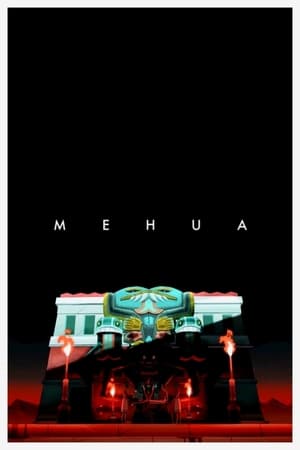
Two young women are about to receive the great honor of being sacrificed to their Mexica gods; but the cruel and bloody ritual does not go as expected.
Take a technological thrill ride The Magic of Flight takes you on a technological thrill ride faster, higher and wider than modern science or even your imagination! Relive the first flight of the Wright Brothers, then soar with the Blue Angels as they defy the laws of gravity. Narrated by Tom Selleck.
The true story of 5-year-old Palestinian girl Hind Rajab, who was separated from her mother and trapped in a car under heavy attack in Gaza surrounded by an Israeli tank in January 2024.
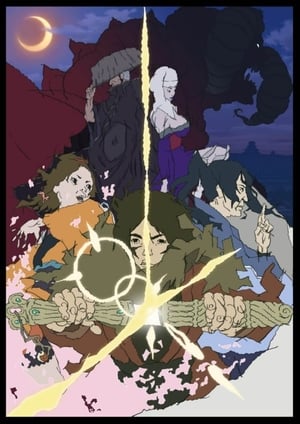
A gentle physician saved an injured rabbit in the forest, not knowing that it was actually a Rabbit Spirit. The Rabbit Spirit decided to visit the physician in a human form, and they started to become closer. But when the Rabbit Spirit hears the story of the White Snake, and how human and demons are not destined to be together, she begins to doubt if she should stay at the physician's side. (Short film sequel to the 医女和兔子精的故事 music video)
During the Revolutionary War, Emily, her daughter Sarah and her two young grandchildren have to look after themselves and run the family farm while the men fight for the patriots' cause. With winter approaching, crops dwindling and food shortages mounting, the women face their greatest fears when three lost British soldiers storm into their house demanding food, drink and anything else they can get their hands on.
Two women living alone are visited by a young strange man whose identity and intentions they begin to question as the evening progresses.
Toto, a worker in Catalonia, analyzes the violence spiral experienced in Barcelona in October 2019.
In November 1936, a few months since the beginning of the Spanish Civil War, the government of the Second Republic moves to Valencia. In this situation, several Valencian artists and intellectuals decide to build four fallas — satirical plasterboard sculptures created to be burnt — to mock fascism.
Based on an excerpt from the novel by L.N.Tolstoy "War and Peace." The war of 1812. The defeated Napoleonic army is retreating. Three Russian soldiers settled in a snowy forest near a fire: a young (Zaletayev), an elderly and a middle-aged one. Zaletayev fantasizes — as if he had captured Napoleon. The soldiers laugh good-naturedly at him. After dinner, they fall asleep... Two Frenchmen go to the clearing — an officer and a soldier. Russian soldiers wake up and, seeing that the officer is barely standing on his feet from cold and hunger, take him to the colonel. The French soldier sits down to the fire. The Russians give him porridge and vodka. The soldier, encouraged, sings a french song. Zaletayev echoes him. A tired Frenchman falls asleep on Zaletayev’s shoulder. The soldiers carefully shelter him. “Also people,” an elderly soldier says with a sigh.
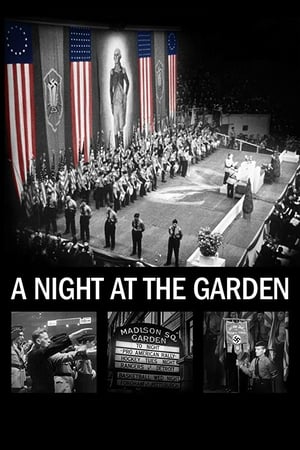
Archival footage of an American Nazi rally that attracted 20,000 people at Madison Square Garden in 1939, shortly before the beginning of World War II.
Mosholu Parkway is a short film comedy about a day in the life of a raucus family during World War II, a teenaged girl's disastrous blind date and her 80-year-old aunt who runs a crap game out of her apartment in The Bronx, New York in 1942 . Director Allison Robbins Writer Allison Robbins Stars Caroline AaronMatthew BrodskyMike Cefalo
The Béarnaise Girl
A film about peace, love and war. Dedicated to the 100th anniversary of the end of the Civil War in Russia. The film takes place at the end of the summer of 1917, when Russia and the whole world were at a crossroads between two eras. None of the people could even imagine how much his life would change in the very near future. In a strange way, the atmosphere of the film echoes our current reality and what is happening in Russia today. According to the form of visualization, the film belongs to experimental mockumentary cinema. To give greater authenticity to what is happening on the screen, the shooting was carried out on black-and-white negatives of 16 and 35 mm, hand-operated cameras were used and the material was developed in manual spiral tanks. The documentary chronicle of the Kolchak army of 1919 and the White army in the Far East of 1922 is embedded in the finale of the film.
This short film looks at the life of Michel Ney, who fought at Napoleon's side and was made a Marshall of France.