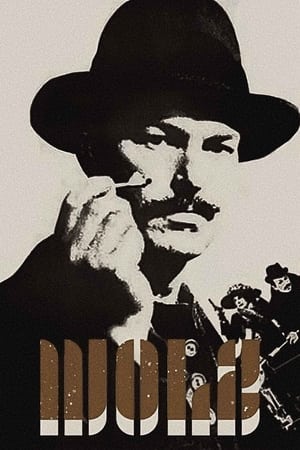
The story of Salvador Puig Antich, one of the last political prisoners to be executed under Franco's Fascist State in 1974.
In the years before World War II, a penniless Japanese child is torn from her family to work as a maid in a geisha house.
Nada, named after a gang of Spanish anarchists, is a small, confused band of French terrorists. They kidnap the American ambassador after one of his regular visits to an exclusive brothel. The gang starts to quarrel amongst themselves as to the diplomat's fate, while the police purge suspects in their attempts to destroy the Nada faction. As the violence escalates on both sides, the States and the terrorists are forced to use one another's methods in an increasingly desperate and relentless conflict.
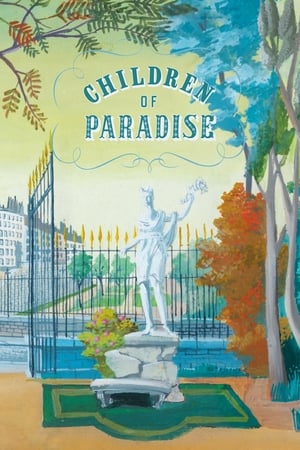
In a chaotic 19th-century Paris teeming with aristocrats, thieves, psychics, and courtesans, theater mime Baptiste is in love with the mysterious actress Garance. But Garance, in turn, is loved by three other men: pretentious actor Frederick, conniving thief Lacenaire, and Count Edouard of Montray.
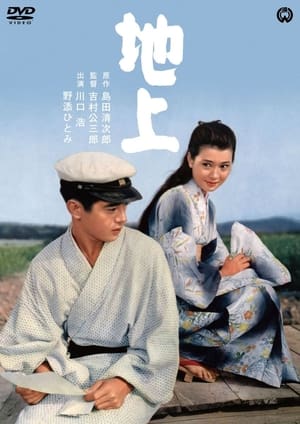
Ichiro’s family used to be a large landowner, but now he is living in poverty with his mother. His mother works hard to get her son through school. Under such circumstances, Ichiro meets Wakako, the daughter of a wealthy man, and they fall in love with each other, but they are opposed by those around them because of their different social status.
Austin, Texas, is an Eden for the young and unambitious, from the enthusiastically eccentric to the dangerously apathetic. Here, the nobly lazy can eschew responsibility in favor of nursing their esoteric obsessions. The locals include a backseat philosopher who passionately expounds on his dream theories to a seemingly comatose cabbie, a young woman who tries to hawk Madonna's Pap test to anyone who will listen and a kindly old anarchist looking for recruits.
Based on the true story of the Bandō prisoner-of-war camp in World War I. It depicts the friendship of the German POWs with the director of the camp and local residents at the stage of Naruto, Tokushima Prefecture, in Japan.
A film about sumo wrestler Wakanohana Kanji I. He was nicknamed "Devil of the dohyo" due to his excellent fighting spirit and endurance.
Impelled by a spirit which still preserves a patina of idealism, Alfredo arrives to Madrid with the intention to create "a performance that is free, straight from the heart, capable of making people feel alive". His concept of what acting should be begins beyond the stage, out in the streets face to face with the public. Outdoors, in any town square, in a park or in the city's most commercial street, Alfredo and his troupe November start the show; demons to provoke passers-by, displays of social conscience, actions taken to the extreme to put the forces of law and order on full alert. There are no limits, no censorship; only ideas which are always valid so long as the public ceases to be the public and becomes part of the show swept by surprise, fear, tears or laughter. Theater as life, life as theater… there is no longer any difference.
After her mother runs away from home, Tomoko is raised to be a geisha. One day Tomoko meets her mother in a red-light district in Tokyo and her life deeply gets in trouble.
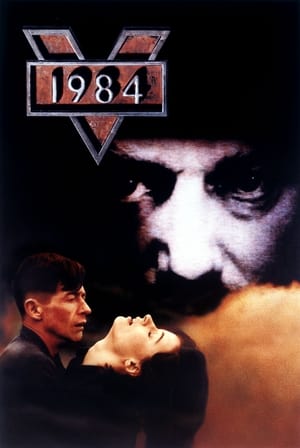
A school teacher discusses types of government with his class. His students find it too boring to repeatedly go over national socialism and believe that dictatorship cannot be established in modern Germany. He starts an experiment to show how easily the masses can become manipulated.
An adaptation of Akira Yoshimura's original suspense novel starring Rentaro Mikuni. 4th year of the Taishō era. About 15 families who moved in search of agricultural land to the land of the pioneers in Hokkaido led a peaceful life. One day, one of the pioneers, Mikio Shimakawa's wife Yura, and her child Taichi are attacked and killed by a bear that cannot hibernate. To resolve the situation, Shimakawa goes against all odds and turns to Ginshiro, the most hated hunter in the village, for help. While Shimakawa was away from the village, Yura and his friends were holding a funeral, the bear attacked again...
The tragic, true story about Hachikō, an Akita dog who was loyal to his master, Professor Ueno, even after Ueno's death.
Late Taishō period. The Shibatora family, led by Naojirō, held power over the Tomigawara area in Jōshū. After launching an attack on the Takayasu family for encroaching on their territory, they were instead ambushed by Takayasu's forces. Taking full responsibility, Naojirō turned himself in to the police. Six years later, upon his release, he is enraged to find that everything has changed drastically from how it once was.
David Carr is a British Communist who is unemployed. In 1936, when the Spanish Civil War begins, he decides to fight for the Republican side, a coalition of liberals, communists and anarchists, so he joins the POUM militia and witnesses firsthand the betrayal of the Spanish revolution by Stalin's followers and Moscow's orders.
Four overweight friends from the Israeli city of Ramle are fed up of dieting and the dieting club they belong to. When Herzl (155 kilos), the main protagonist, loses his job as a cook and starts working as a dishwasher in a Japanese restaurant in Ramle he discovers the world of Sumo where large people such as himself are honored and appreciated. Through Kitano (60 kilos), the restaurant owner, a former Sumo coach in Japan (who is supposedly hiding from the Yakuza in Israel), he falls in love with a sport involving "two fatsos in diapers and girly hairdos". Herzl wants Kitano to be their coach but Kitano is reluctant - they first have to earn their spurs. "A MATTER OF SIZE" is a comedy about a ‘coming out’ of a different kind - overweight people learning to accept themselves.
Boston, 1920. Italian immigrants Nicola Sacco and Bartolomeo Vanzetti are charged and unfairly tried for murder on the basis of their anarchist political beliefs.
In turn of the 20th Century Japan, a period characterized by widespread innovation and social restructuring, Benio Hanamura endeavors to take modernization to new heights. With a tomboy nature, Benio rails against traditional ideas that women should take care of the home—serving their husbands rather than pursuing their own dreams. Her values as a modern woman come under fire as the one man who supports her independence, Lieutenant Shinobu Ijuin, goes missing in action. Resurfacing back in Japan, Shinobu has lost all memory of his true identity. In this stunning sequel, will Benio be able to reconnect with Shinobu before she is married off to a new man?
Shogi, a Japanese form of chess, is a game that requires skill and determination. When poor sandal-maker Sakata decides to pursue his dream of becoming the Shogi Grand Master Champion, everything is at stake – including his family. What will it cost for Sakata to follow his passion?
In the late 1890s, coal is a precious new natural resource. During an era of rapid economic growth, dreams are instilled into the lives of many across Japan. A vigorous young man with a look of fearless determination, sets foot on the northern part of Kyushu, an area where Yakuza thrived. His name is Kingoro Tamai (Yujiro Ishihara). With plans to travel the world, Kingoro worked diligently at a coal mine. His loyalty and hard work earned the respect of his peers, his courage won the heart of the beautiful Mon (Ruriko Asaoka), and his success evoked jealousy in his enemies.