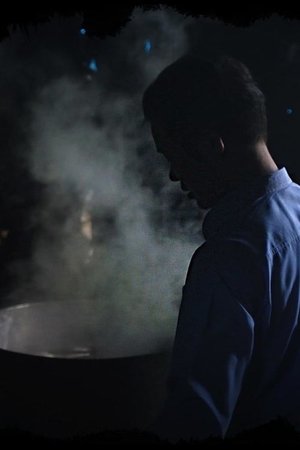
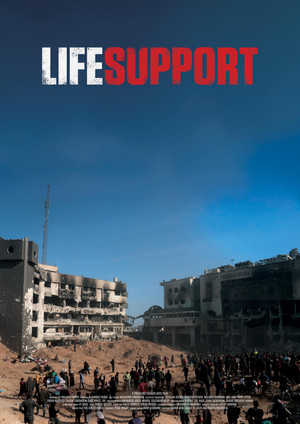
On December 15, 2024, the collision and sinking of two fuel oil tankers in the Kerch Strait caused one of the most devastating environmental disasters in the history of the Black Sea. Six months later, the tankers lying on the seabed are still leaking fuel oil, and of the thousands of volunteers who initially took part in the cleanup, only a few dozen remain along a 30-kilometer stretch of beach. The film was shot on the Taman Peninsula in early summer 2025, against the backdrop of a formally lifted, yet in reality already underway, beach season. In the face of scarce resources, the departure of their own leaders, and the daily release of fuel oil, the volunteers talk about themselves, rescue animals, combat the ignorance of those around them, and try to find the motivation to continue their fight against a disaster that at times seems endless.
Documentary short following French-Vietnamese artist Marcelino Truong on his journey back to Vietnam for the research on his 'roman graphique' 'Une si jolie petite guerre' (A Lovely Little War). Truong looks back to when his family lived in Saigon from 1961 to 1963 when his father served as a translator to then president of the Republic of Vietnam Ngo Dinh Diem. The film follows Truong as he ruminates over memories, photos and films, and also conducts a host of interviews with Vietnamese relatives and officials to present a personal and long awaited Vietnamese perspective to the war.
Skip Liberty enlisted in the Army in 1968. During his tour in Vietnam he shot 3,100 feet of Super 8 film, over 3 hours worth. Upon returning to the states the film was placed in storage, Skip had never seen the footage he shot. Until now.
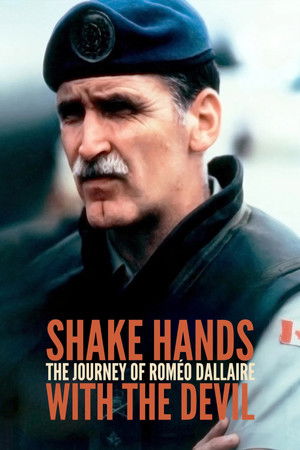
The story of Canadian Lt. Gen. Roméo Dallaire and his controversial command of the United Nations mission to Rwanda during the 1994 genocide. The documentary was inspired by the book Shake Hands with the Devil: The Failure of Humanity in Rwanda which was published in 2003.
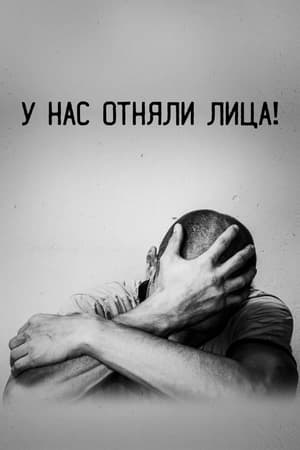
The film tells the story of modern slavery from the perspective of the only Russian organization carrying out mass rescue missions both within the country and abroad.
Migrant families experience violence, but they also keep beautiful memories when they arrive in new lands. Fantastic and intimate stories, recalled from childhood, travel across time and space, magically intermingling with the help of the four elements and breaking the boundaries of cinema.
While the war raged on, Henry Kissinger, national security advisor to President Nixon, and Lê Duc Tho, member of Vietnam's Politburo, held secret meetings in France.
Three decades after German-American pilot Dieter Dengler was shot down over Laos, he returns to the places where he was held prisoner during the early years of the Vietnam War. Accompanied by director Werner Herzog, Dengler describes in unusually candid detail his captivity, the friendships he made, and his daring escape. Not willing to stop there, Herzog even persuades his subject to re-enact certain tortures, with the help of some willing local villagers.
This film offers us a juxtaposed journey of two priests: Father Van Ban, a Vietnamese priest from the parish of Thy Hu in the Hé region, who after nine years of training in Paris decides to return to Vietnam, and Bernard de Terves, a young deacon from the Foreign Missions of Paris who decides to leave for China after his ordination. Their intersecting paths allow us to address themes related to East-West intercultural dialogue, particularly that of transmitting the Gospel message.
The story of U.S. fighter pilots shot down over North Vietnam who became POWs for up to 8 and a half years.
Many times during his presidency, Lyndon B. Johnson said that ultimate victory in the Vietnam War depended upon the U.S. military winning the "hearts and minds" of the Vietnamese people. Filmmaker Peter Davis uses Johnson's phrase in an ironic context in this anti-war documentary, filmed and released while the Vietnam War was still under way, juxtaposing interviews with military figures like U.S. Army Chief of Staff William C. Westmoreland with shocking scenes of violence and brutality.
Blood Road follows the journey of ultra-endurance mountain bike athlete Rebecca Rusch and her Vietnamese riding partner, Huyen Nguyen, as they pedal 1,200 miles along the infamous Ho Chi Minh Trail through the dense jungles of Vietnam, Laos, and Cambodia. Their goal: to reach the site where Rebecca’s father, a U.S. Air Force pilot, was shot down in Laos more than 40 years earlier.
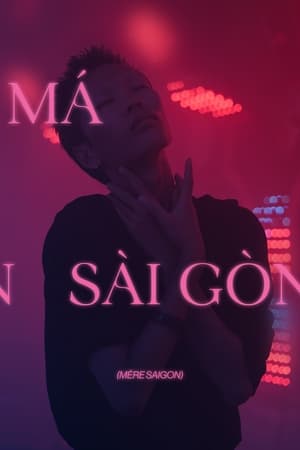
A documentary about a night café called Walkers, its workers and the youth – largely immigrants – populating the café during the night.
Země jihu – Vietnam
A portrait of a Vietnamese-Canadian family opening up a restaurant and cocktail bar in Calgary's Chinatown, amid the COVID-19 pandemic.
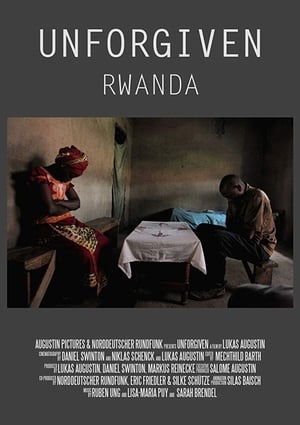
What is a socially acceptable conversation when your family's killer sits down to dinner? 'Unforgiven' explores the interactions between murderers, rapists, thieves and their victims in this documentary exploring the power of restorative justice, forgiveness and reconciliation 20 years after the Rwandan Genocide.
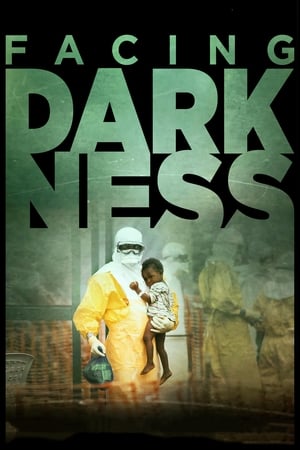
A Christian relief organization is met with the challenge of fighting the Ebola epidemic in west Africa, through this enormous challenge their faith grew.
In 1975, soon after the end of the Vietnam War, Hoa Thi Le and Hue Nguyen Che fled the country on a small boat. After nine days at sea, they docked in the Philippines, where they were utilized as background extras for “Apocalypse Now.”
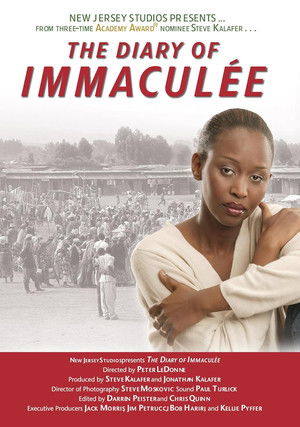
Coexist tells the emotional stories of women who survived the Rwandan genocide in 1994. They continue to cope with the loss of their families as the killers who created this trauma return from jail back to the villages where they once lived. Faced with these perpetrators on a daily basis, the victims must decide whether they can forgive them or not. Their decisions are unfathomable to many, and speak to a humanity that has survived the worst violence imaginable.
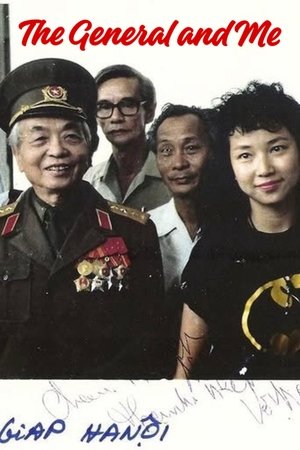
Over the period of 25 years the director met General Võ Nguyên Giáp, a legendary hero of Vietnam’s independence wars, a number of times. She was the first American who entered the home of the “Red Napoleon”. The fruit of this friendship is a film, personal and politically involved at the same time. Travelling across the country and talking to important figures as well as ordinary people, the director finds out more about her roots and offers the audience a unique perspective on Vietnam’s present and past.