From the sweaty basement bars of 70s New York to the glittering peak of the global charts, how disco conquered the world - its origins, its triumphs, its fall and its legacy.
Ricardo was once Sara, a homeless HIV positive transvestite, living in the underbelly of Manhattan. Today he is a churchgoing, married man, "saved" by a Dallas ministry. He has renounced his homosexuality, but is his conversion complete? Susana Aiken and Carlos Aparicio offer an intimate look at Ricardo's transformation.
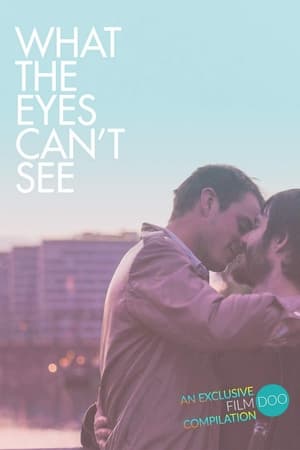
Four Spanish-language shorts about the importance and complexity of people's perception from award winning directors. Stories of identity, misconceptions, regrets, dreams and love are told in this diverse collection. Includes: Tenants [Inquilinos] (2018); My Brother [Mi hermano] (2015); Guillermo on the Roof [Guillermo en el tejado] (2018); You Are Not a Woman [Usted no es mujer] (2018).
Following the lives of Queer creatives behind Norwich’s queer collaborative ‘Stripped Sets’. We discover the reasoning behind the need for safe spaces, and the stories that come with them. Through live events, photoshoots and history, we see the process in creating such an important event.
An investigation of how Hollywood's fabled stories have deeply influenced how Americans feel about transgender people, and how transgender people have been taught to feel about themselves.
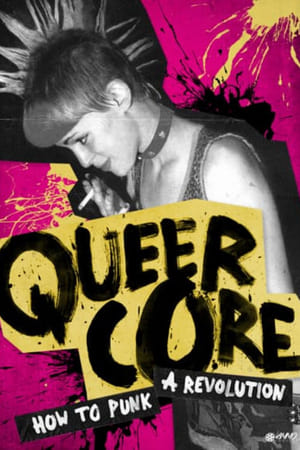
A documentary on Queercore, the cultural and social movement that began as an offshoot of punk and was distinguished by its discontent with society's disapproval of the gay, bisexual, lesbian and transgender communities.
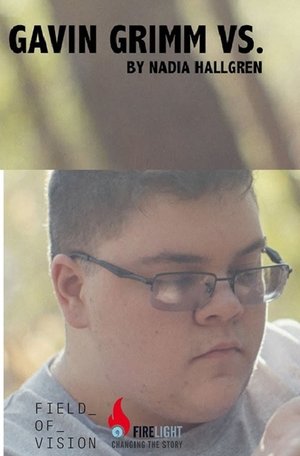
In 2016, transgender teen Gavin Grimm sued his local school board after its members refused to let him use the bathroom of his choice. He was ready to take his case all the way to the Supreme Court—and then the election happened.
Since the 1970s, lesbians from around the world have been drawn to the island of Lesvos, the birthplace of the ancient Greek poet Sappho. When they find paradise in a local village and carve out their own queer lesbian community, tensions simmer with the local residents. With both groups claiming ownership of lesbian identity, filmmaker Tzeli Hadjidimitriou—a native and lesbian herself—is caught in the middle and chronicles 40+ years of love, community, conflict, and what it means to feel accepted.
Teguh was dishonorably discharged as a policeman due to his sexual orientation. With the support of his partner Tonny, Teguh decided to purue justice by bringing his case to court, an act that has never been done before in Indonesia from the LGBTQI+ community. From this, the question arises, why would he put himself in potential danger by going against the institution? The film tells a love story between Teguh and Tonny, which becomes the foundation of why this fight needs to be fought for.
The history of New York’s Meatpacking District, told from the perspective of transgender sex workers who lived and worked there. Filmmaker Kristen Lovell, who walked “The Stroll” for a decade, reunites her community to recount the violence, policing, homelessness, and gentrification they overcame to build a movement for transgender rights.
Jon is a typical teenage boy in all respects except one: he was born a girl. He has now been diagnosed with gender dysphoria, a condition that affects over 100 British children every year, and is embarking on an extraordinary journey of transition. Director Julia Moon follows mother and son through the first three months of Jon's life-changing treatment as the testosterone pushes his female body into male puberty.
Archive footage from 2006 - 2010 of a young girl growing up during the ages of four to eight. Only fragments of what is remembered exists. Words from a transgender man float to the surface as fleeting memories go on.
In this documentary, director Rhys Ernst tells the previously untold histories of transgender pioneers. Trans people have always been here, throughout time, often hidden in plain sight.
The Purge traces a dark and little-known moment in Canadian history: the systemic discrimination faced by members of the LGBT community within the Armed Forces and the federal public service. From 1950 to 1996, it was yesterday, no effort was spared to flush out these men and women deemed "immoral" and representing a "danger to national security": intensive and coercive interrogations, humiliating tests, polygraphs, forced confessions and denunciations.
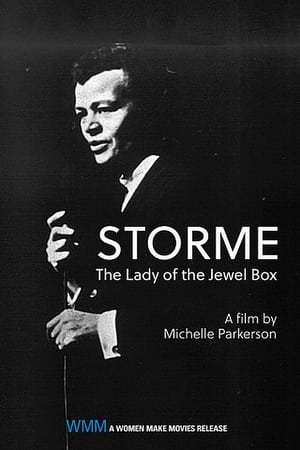
“It ain’t easy…being green” is the favorite expression of Stormé DeLarverie, a woman whose life flouted prescriptions of gender and race. During the 1950s and '60s she toured the black theater circuit as a mistress of ceremonies and the sole male impersonator of the legendary Jewel Box Revue, America’s first integrated female impersonation show and forerunner of La Cage aux Folles.
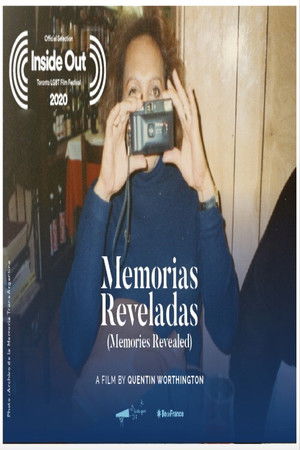
Over the course of 10 months, a camera travels to Buenos Aires, Argentina and Hanover, Germany to meet with Magalí, María Belén, Ivana and Carla, the founding members of the Archivo De La Memoria Trans Argentina, the first existing Trans Archive in the world. Taking the shape of a photo-novel, the documentary not only recounts the founding members lives as trans women under the Argentine dictatorship (1976-1983), the AIDS epidemy, state repression and mass assassinations but also years of fighting for their rights, sorority and the exaltation of life and laughter in times of death. Filming each one of them is filming them embracing their new role as curators, archivists and historians while a collection of 7,000 photos goes through the filter of their memories.
In Córdoba, far from the Argentine capital, the end of a military regime promises a spring that is all too brief. “La Delpi” is the only survivor of a group of friends who are transgender women and drag-queens, who began to die of aids in the late 80s. In a Catholic and conservative city, the Grupo Kalas made their weapons and trenches out of improvised dresses and lip-syncing. Today the images of unique and unknown footage are not only a farewell letter, but a manifesto to friendship.
Jon Sistiaga takes an immersive trip to Poland, a country divided into two zones: on the one hand, the urban and pro-European, and on the other, the rural and ultra-Catholic, still anchored in the traumas of the war and the post-war period. Is Poland a homophobic country or does it have a homophobic government? How does the European Union allow this situation?
The intimate journey and unpublished backstory of BeBe Zahara Benet – a charismatic drag performer originally from Cameroon, and the very first winner of the culture-changing phenomenon, RuPaul’s Drag Race. With over a decade of unprecedented access, we observe BeBe’s struggles with celebrity, authenticity, success, and failure.
Julie Peters is a legend in the trans community in Australia. She was the first person to transition at the ABC, at a time when there were no role models around her. From her early twenties, Julie started collecting anything trans or queer related to help her work out who she was. Over the years she’s collected one of the most comprehensive trans archives in the country. Including Interview with ABC MD David Anderson.