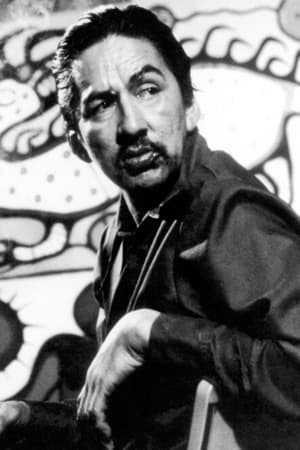
In this tape, Ko Nakajima and Video Earth Tokyo interview a homeless man. The subject is initially angry and frustrated, but gradually opens up and shares stories about his life. Under A Bridge was later broadcast on cable television.
Based on an unrealized film script written in 1964 for The Homosexual Law Reform Society, a British organisation that campaigned for the decriminalization of homosexual relations between men, "The Colour Of His Hair" merges drama and documentary into a meditation on queer life before and after the partial legalization of homosexuality in 1967.
Flubs and bloopers that occurred on the set of some of the major Warner Bros. pictures of 1938.
An exploration —manipulated and staged— of life in Las Hurdes, in the province of Cáceres, in Extremadura, Spain, as it was in 1932. Insalubrity, misery and lack of opportunities provoke the emigration of young people and the solitude of those who remain in the desolation of one of the poorest and least developed Spanish regions at that time.
Paparazzi explores the relationship between Brigitte Bardot and groups of invasive photographers attempting to photograph her while she works on the set of Jean-Luc Godard's film Le Mépris (Contempt). Through video footage of Bardot, interviews with the paparazzi, and still photos of Bardot from magazine covers and elsewhere, director Rozier investigates some of the ramifications of international movie stardom, specifically the loss of privacy to the paparazzi. The film explains the shooting of the film on the island of Capri, and the photographers' valiant, even foolishly dangerous, attempts to get a photograph of Bardot.
Generation Z shares their fears in the age of school violence.
Stuttgart in the mid-1930s: What did it look like in the past, what does it look like now and what will await the city in the future?
The original documentary on the Wigstock festival, back in the day when it was a much smaller affair in Thompkins Square Park. A full day of peace, love, and wigs…
Documentary featuring interviews with several of legendary Spanish director Luis Buñuel’s close friends and collaborators.
This film describes a psychological state "kin to moonstruck, its images emblems (not quite symbols) of suspension-of-self within consciousness and then that feeling of falling away from conscious thought. The film can only be said to describe or be emblematic of this state because I cannot imagine symbolizing or otherwise representing an equivalent of thoughtlessness itself. Thus the actors in the film, Jane Brakhage, Tom and Gloria Bartek, Williams Burroughs, Allen Ginsberg, Peter Olovsky and Phillip Whalen are figments of this 'Thought-Fallen Process', as are their images in the film to find themselves being photographed."
Twenty-five films from twenty-five European countries by twenty-five European directors.
A written testimony by co-director Jin Ryoo on his experience preparing for Korean compulsory military service is juxtaposed with images of an empty UCSD campus, the desolate construction sites sprawling off of it, and the Mt. Soledad Veterans Memorial.
In New York City, it’s illegal to idle a vehicle for more than three minutes, but for fifty years, it went unenforced. Now a small group of citizens are trying to enforce it.
Grindcore Vacation melds the expository documentary, diary film, and live performance footage to produce a portrait of the musicians who play grindcore, an extreme sub-genre of punk/metal characterized by high speed and full volume. Shot during a weekend trip from Victoria BC to Dallas TX for a single DIY concert, it interviews members of Deterioration, Cognizant, and Imperial Slaughter. Live concert footage combines with interviews and Super 8mm film to create an impression of the people who play grindcore, why they love the genre, and their experiences as practitioners of the niche style.
A multimedia short created for the U.S. millennium celebrations, The Unfinished Journey reflects on America’s history and spirit through six chapters—immigration, war, culture, civil rights, and innovation. Commissioned by President Bill Clinton and premiered at the Lincoln Memorial on New Year’s Eve 1999, the film features an original orchestral score by John Williams titled American Journey.
Short for his website, kickthemachine.
The past drags itself into the present day, taking us back to the era of the Dominican Republic's greatest dictator, while we explore the traces of Nazism in the corners of the island. This short documentary borders on a dark and little-known aspect of Dominican history, taking the viewer on a subversive journey through time and memory.
Hedda Hopper plays hostess at a party for her (grown) son William (DeWolfe Jr.). Hopper, attends the dedication of the Motion Picture Relief Fund's country home and goes to the Mocambo. There is also a sequence dedicated to the Milwaukee, Wisconsin world premiere of the first short in this series attended by more that a few film stars.
On Canada's Pacific coast this film finds a young Haida artist, Robert Davidson, shaping miniature totems from argillite, a jet-like stone. The film follows the artist to the island where he finds the stone, and then shows how he carves it in the manner of his grandfather, who taught him the craft.
The earliest surviving motion-picture film, and believed to be one of the very first moving images ever created, was shot by Louis Aimé Augustin Le Prince using the LPCCP Type-1 MkII single-lens camera. It was taken on paper-based photographic film in the garden of Oakwood Grange, the Whitley family house in Roundhay, Leeds, West Riding of Yorkshire (UK), on 14 October 1888. The film shows Adolphe Le Prince (Le Prince’s son), Mrs. Sarah Whitley (Le Prince’s mother-in-law), Joseph Whitley, and Miss Harriet Hartley walking around in circles, laughing to themselves, and staying within the area framed by the camera. Roundhay Garden Scene is often associated with a recording speed of around 12 frames per second and runs for about 2 to 3 seconds.